Deeply caramelized onions, a rich broth, and a cap of bronzed Gruyere turn a pan of gnocchi into something that eats like a full-on dinner. The gnocchi go straight into the sauce uncooked, so they soften right in the onion broth and pick up flavor all the way through instead of tasting like a separate layer tucked underneath. What you get is pillowy, savory, and just a little luxurious, with enough cheese on top to pull into long, stretchy strands when it comes out of the oven.
The part that makes this work is patience with the onions. They need time to collapse, sweat out their moisture, and go from sharp and pale to jammy and brown. Once that happens, the rest moves fast: a quick deglaze, a little thyme, broth and cream for body, then the gnocchi go in before the cheese blanket finishes the whole dish in the oven.
If you’ve ever wanted French onion soup to turn into a baked pasta-night dinner, this is that lane. Keep reading for the timing that keeps the onions from burning, the cheese swap that still gives you a good melt, and a few ways to make the dish fit what you’ve got on hand.
The onions turned out jammy and sweet, and the gnocchi soaked up the sauce without getting mushy. I baked it until the cheese was golden in spots and my husband scraped the skillet clean.
Love that golden Gruyere crust and those jammy onions? Save this Baked French Onion Gnocchi for the night you want something cozy, rich, and baked in one skillet.
The Onion Caramelization Is the Whole Foundation Here
The biggest mistake with a dish like this is rushing the onions. If they only soften, you get a sweet onion sauce that tastes flat. When they cook low and slow until the pan bottom goes from pale to deeply browned, they give the broth depth and that French onion character people are actually here for. Those browned bits on the skillet matter, too. Once you pour in the wine, they dissolve into the sauce instead of getting left behind.
This is also why the gnocchi go in uncooked. They absorb some of that savory broth as they bake, which keeps the dish from feeling heavy or gummy. If you pre-cook them, they can turn soft before the sauce has a chance to tighten. The oven finishes the gnocchi gently while the cheese browns on top.
What the Gruyere, Wine, and Broth Are Doing in the Pan
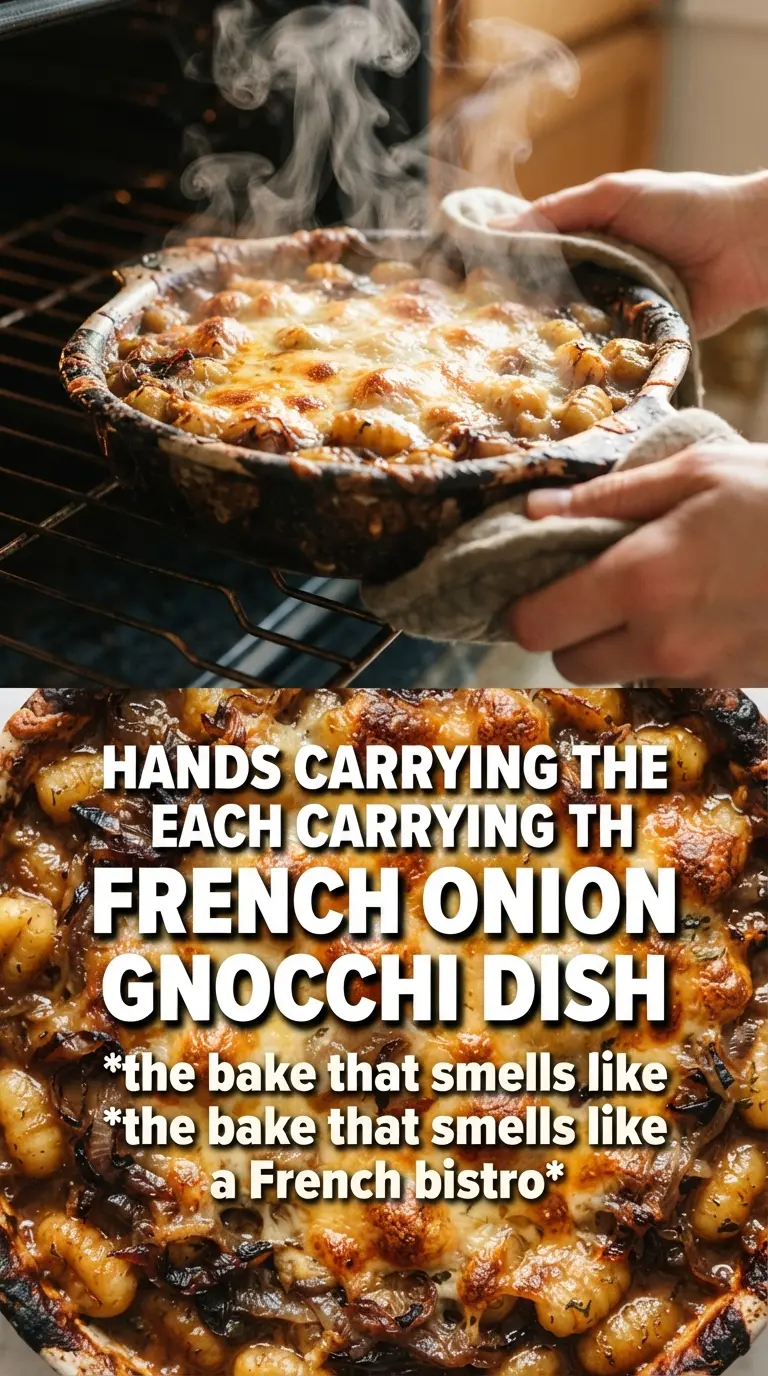
The ingredient list is short, which means each part has a job. The onions are the base of the whole dish. Use yellow onions if you can; they caramelize well and bring the right balance of sweetness and savory depth. White onions work, but they can taste a little sharper. Red onions will skew the flavor and aren’t my first choice here.
- Dry white wine or dry sherry — This lifts the browned onion bits from the pan and adds acidity so the sauce doesn’t taste one-note. If you don’t want to cook with wine, use extra broth plus a teaspoon of white wine vinegar stirred in at the end.
- Beef broth — This is what gives the dish its French onion soup feel. A good broth matters here; if yours tastes thin, the finished sauce will taste thin too. If you need a substitute, chicken broth works, but the flavor will be lighter.
- Gruyere — This is the cheese that gives you the nutty, stretchy top. Swiss cheese will melt similarly, though it’s a little milder. Pre-shredded cheese can work, but freshly shredded melts more cleanly and browns better.
- Heavy cream — Just enough to round out the broth and keep the sauce from tasting austere. Half-and-half can stand in, but the sauce will be thinner and a bit less luxurious.
- Fresh thyme — Use fresh if you can. It perfumes the onions without taking over. Dried thyme works in a pinch, but use less because it reads stronger once it’s baked.
Building the Sauce Before the Gnocchi Go In
Slow the Onions Down and Let Them Brown
Start with butter and olive oil in a large oven-safe skillet, then add the sliced onions and let them cook over medium-low heat. They should soften first, then slowly turn amber, then finally darken into a glossy, jammy pile. If the heat is too high, the edges will scorch before the onions lose enough moisture, and the sauce will taste bitter instead of sweet and deep.
Use the Wine to Pull Up the Good Stuff
When the onions are deeply caramelized, pour in the wine or sherry and scrape the bottom of the pan. The liquid should sizzle and loosen every browned bit. Cook it for about two minutes so the raw alcohol taste cooks off; if you rush this, the finished dish can taste harsh.
Build the Broth, Then Stop Stirring for a Minute
Add the garlic and thyme for just a minute, then pour in the broth, Worcestershire sauce, and cream. Bring it to a gentle simmer so the flavors come together and the sauce starts looking cohesive. At this point it should smell rich and savory, not sharp. If the sauce looks separated, keep the heat low and give it a minute before adding the gnocchi.
Bake Until the Gnocchi Are Tender and the Top Is Golden
Stir in the uncooked gnocchi so every piece is coated, then scatter the Gruyere over the top. Bake or broil at 425°F until the cheese is bubbling and spotted with deep gold and the sauce has thickened around the edges. The gnocchi should be tender when pierced, but still hold their shape. If the top browns before the center is hot, tent it loosely with foil and give it a few more minutes in the oven.
How to Adapt This for Different Kitchens
Dairy-Free Version That Still Feels Rich
Swap the butter for more olive oil and use a rich unsweetened dairy-free cream, then finish with a melty plant-based cheese that browns well. The sauce won’t have the same nutty finish as Gruyere, but you’ll still get a silky onion broth and soft gnocchi. Taste carefully at the end, since dairy-free cheese often brings less salt.
Gluten-Free Swap That Keeps the Texture
Use certified gluten-free gnocchi and check your Worcestershire sauce, since many brands contain gluten. The cooking method stays the same. Gluten-free gnocchi can soften a little faster, so pull the dish once they’re tender and the sauce is bubbling instead of leaving it in the oven too long.
Swap the Broth for a Lighter Finish
Chicken broth can replace beef broth if that’s what you have, but the flavor will be less dark and savory. To bring some of that missing depth back, add a little extra Worcestershire and let the onions caramelize fully. That extra time in the pan matters more than the broth brand.
Storage and Reheating
- Refrigerator: Store leftovers in an airtight container for up to 3 days. The gnocchi will absorb more sauce as it sits, so the dish gets thicker.
- Freezer: This is best eaten fresh. Cream sauces and baked gnocchi can turn grainy after freezing, so I don’t recommend it.
- Reheating: Warm it covered in a 350°F oven until hot, adding a splash of broth if the sauce has tightened too much. The main mistake is blasting it in the microwave until the cheese separates and the gnocchi turn tough.
Answers to the Questions Worth Asking
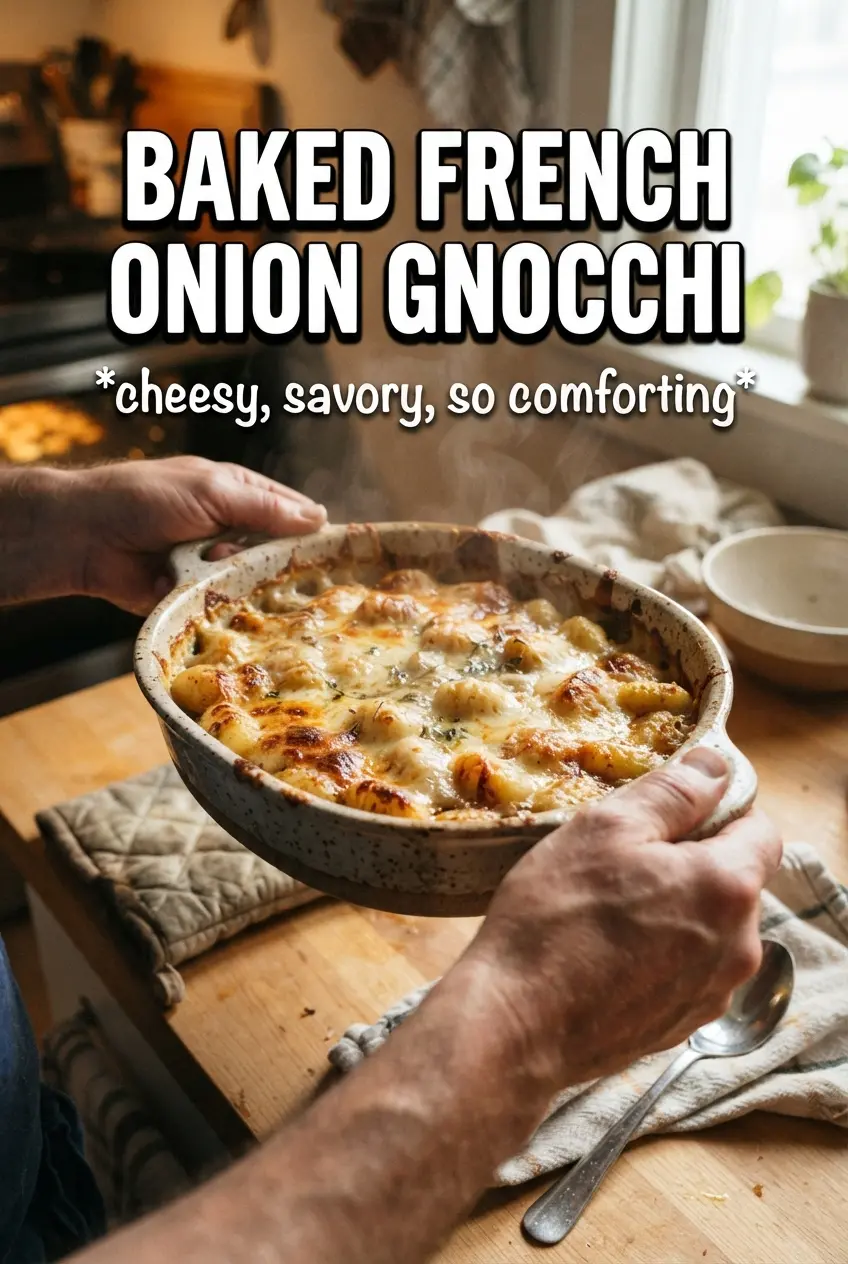
Baked French Onion Gnocchi
Ingredients
Equipment
Method
- Melt the unsalted butter with olive oil in a large oven-safe skillet, then add the thinly sliced onions. Cook over medium-low heat for 35-40 minutes, stirring occasionally, until deeply caramelized.
- Deglaze the skillet with the dry white wine (or dry sherry), scraping up browned bits. Cook for 2 minutes, then add the minced garlic and fresh thyme and cook for 1 minute.
- Add the beef broth, Worcestershire sauce, and heavy cream, then bring the mixture to a simmer. Simmer until it looks cohesive and lightly thickened, then reduce to a steady bubbling base.
- Add the potato gnocchi to the simmering onion broth and stir to coat thoroughly. Cook only briefly at the simmer so the gnocchi starts absorbing flavor.
- Scatter the shredded Gruyere cheese over the top of the skillet, then season with salt and pepper to taste. Broil or bake at 425°F for 15-18 minutes until the gnocchi are cooked through, the sauce is bubbling, and the cheese is golden.