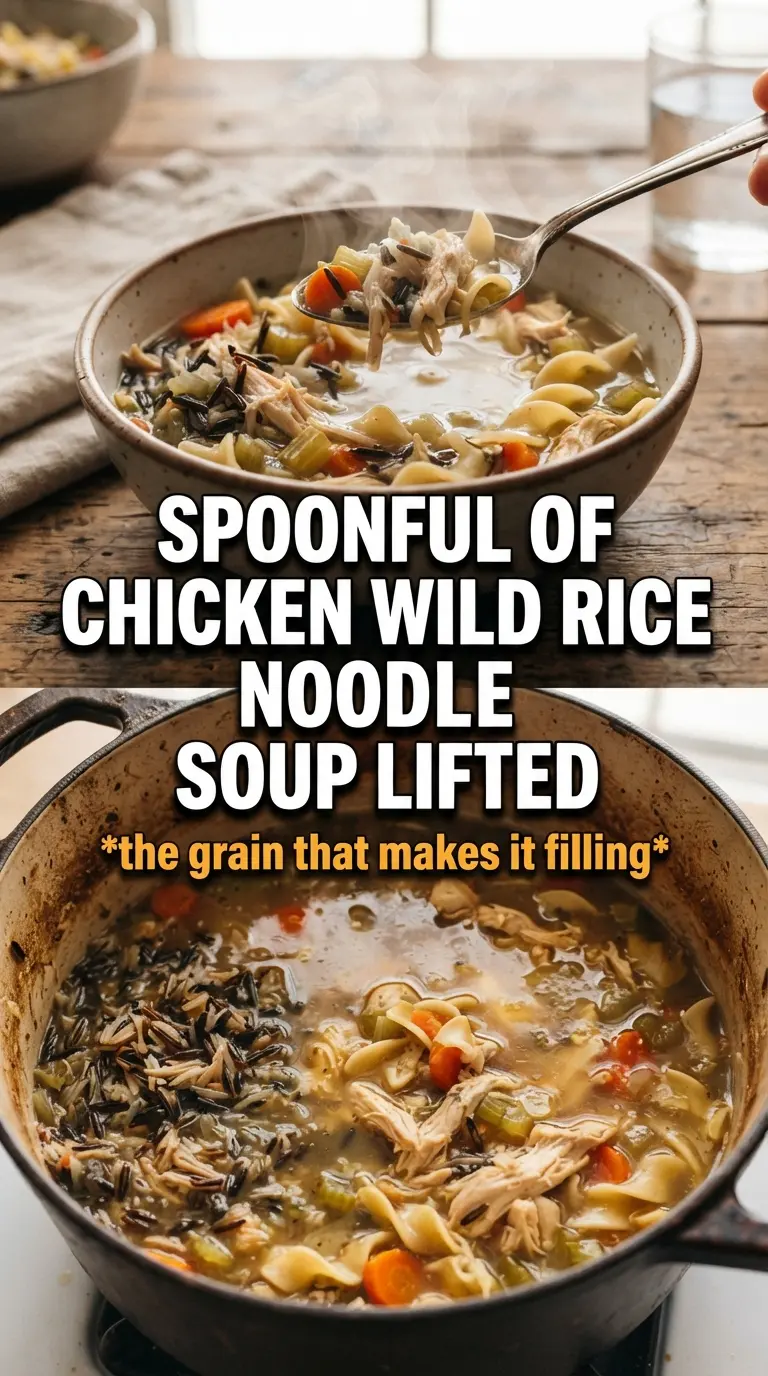
Chicken noodle and wild rice soup has that rare kind of comfort that still feels balanced enough to eat on a regular Tuesday. The broth turns creamy and golden, the wild rice stays pleasantly chewy, and the egg noodles soften just enough to soak up the savory base without disappearing into it. It eats like a full meal, which is exactly why I keep coming back to this combination.
What makes this version work is the order. The chicken and vegetables simmer first so the broth gets layered with flavor before the cream goes in, and the wild rice gets time to open up without turning mushy. The roux is small but important here — it gives the soup a little body so the cream blends in smoothly instead of floating on top. That extra step is what keeps the bowl rich without feeling thin.
Below, you’ll find the exact timing that keeps the noodles tender, not bloated, plus the best way to handle leftovers so the soup still tastes good the next day. If you’ve had cream soups split or noodles turn to paste, this method avoids both.
The broth turned out creamy without being heavy, and the wild rice kept a great chewy texture even after reheating. My husband said it tasted like something from a café.
Save this creamy chicken noodle and wild rice soup for the nights when you want a cozy one-pot dinner with chewy wild rice and tender noodles.
The Reason This Soup Stays Creamy Instead of Thin
The common mistake with chicken noodle soup that also has cream is adding everything at once and letting the noodles sit in the pot too long. That gives you cloudy broth, overcooked pasta, and a texture that feels heavy without actually being satisfying. This version avoids that by building the broth first, then thickening it with a small roux, and only adding the noodles near the end when the chicken is already shredded and back in the pot.
The other thing that matters here is the wild rice. It needs more time than the noodles, so it goes in at the start where it can soften and open up in the broth. If you add it late, it stays stubbornly chewy in the wrong way. If you cook it too long after the noodles go in, the noodles suffer. The timing here keeps both textures where they should be.
- Wild rice blend — The blend adds chew and a nutty edge, and it holds up better than plain rice in a creamy soup. A fully cooked rice substitute works in a pinch, but it won’t give you the same texture or the same hearty feel.
- Chicken breast — It poaches gently in the broth and stays tender as long as you pull it as soon as it cooks through. Thighs work too and bring a little more richness, especially if you like a darker, fuller broth.
- Heavy cream — This is what gives the soup its rounded, velvety finish. Half-and-half can work if that’s what you have, but the soup will be a little lighter and less lush.
- Egg noodles — These cook fast and give the soup that classic chicken noodle character. Use wide or medium egg noodles, and add them only after the cream and shredded chicken are already in the pot so they don’t turn soft and bloated.
- Roux of butter and flour — This is the quiet step that keeps the broth from tasting watery. Cook it long enough to lose the raw flour smell, then whisk in hot broth until smooth before adding it back to the pot.
What Each Ingredient Is Actually Doing in This Recipe
- Primary ingredient (the star) — Quality matters most. Choose the best you can find.
- Cooking medium (oil, butter, or broth) — This carries flavors and prevents dryness.
- Seasonings (salt, pepper, spices, herbs) — Layer flavors so nothing overpowers. Build depth gradually.
- Aromatics (garlic, onion, herbs) — Cook with fat to bloom flavors. Become the foundation.
- Supporting ingredients — Complement the main ingredient without overpowering it.
- Sauce or liquid (if applicable) — Brings flavors together. Balance richness with acid.
- Acid (lemon, vinegar, wine, or other) — Brightens and prevents flat-tasting results.
- Final finish (garnish, glaze, or sauce) — Prevents one-dimensional taste and adds visual appeal.
How to Layer the Soup So Every Ingredient Keeps Its Texture
Start with the Longest-Cooking Ingredients
Put the chicken, wild rice, carrots, celery, onion, garlic, thyme, parsley, and broth in the pot together and bring it to a steady simmer. You want small bubbles, not a hard boil, because boiling can make the chicken stringy and the broth murky. After about 30 minutes, the wild rice should be starting to split open and the chicken should pull apart cleanly in the center.
Shred the Chicken Before the Dairy Goes In
Lift the chicken out as soon as it’s cooked through and shred it while it’s still warm. If it sits in the pot until the noodles are done, it can dry out and lose its tenderness. Return the shredded meat to the soup before thickening so it has time to absorb some of the broth again.
Whisk the Roux Until It Looks Smooth and Glossy
Melt the butter in a small pan, whisk in the flour, and cook it for 1 to 2 minutes. That short cook removes the raw flour taste and gives the soup a cleaner finish. When you whisk in the hot broth, the mixture should look smooth and creamy, not lumpy; if it seizes up, keep whisking and add a little more hot liquid until it loosens.
Add the Cream and Noodles at the End
Stir the roux mixture into the pot, then add the heavy cream and egg noodles. The soup should return to a gentle simmer, not a boil, because cream can separate if the heat is too aggressive. Cook just until the noodles are tender with a little bite left in the center. They’ll keep softening in the hot broth after you turn off the heat.
What to Change When You Need a Different Version
Dairy-Free Version
Swap the heavy cream for unsweetened coconut milk or an unsweetened oat cream designed for cooking, and use olive oil instead of butter for the roux. Coconut milk adds a faint sweetness, while oat cream keeps the flavor closer to the original and gives you a smoother finish.
Gluten-Free Version
Use a gluten-free flour blend for the roux and swap the egg noodles for a gluten-free pasta that holds its shape, or stir in cooked rice at the end. Gluten-free noodles can break down faster, so cook them just until tender and serve right away.
Use Chicken Thighs for a Richer Pot
Boneless skinless thighs make the soup a little richer and more forgiving if you tend to simmer a little long. They don’t dry out as quickly as breast meat, and the broth picks up a deeper chicken flavor.
Make It Thicker for a Spoon-Standing Bowl
Whisk an extra tablespoon of flour into the roux or reduce the broth by 1 cup. That gives you a denser, stew-like texture, but it also makes the noodles absorb more liquid as the soup sits.
Storage and Reheating
- Refrigerator: Store for up to 4 days. The noodles will keep absorbing broth, so the soup thickens as it sits.
- Freezer: It freezes, but the cream and noodles change texture a bit. For the best result, freeze the soup before adding the noodles and cream, then finish those fresh when you reheat it.
- Reheating: Warm it gently over low heat on the stove, stirring often. A hard boil can split the cream and make the noodles go past tender before the center is hot.
Answers to the Questions Worth Asking
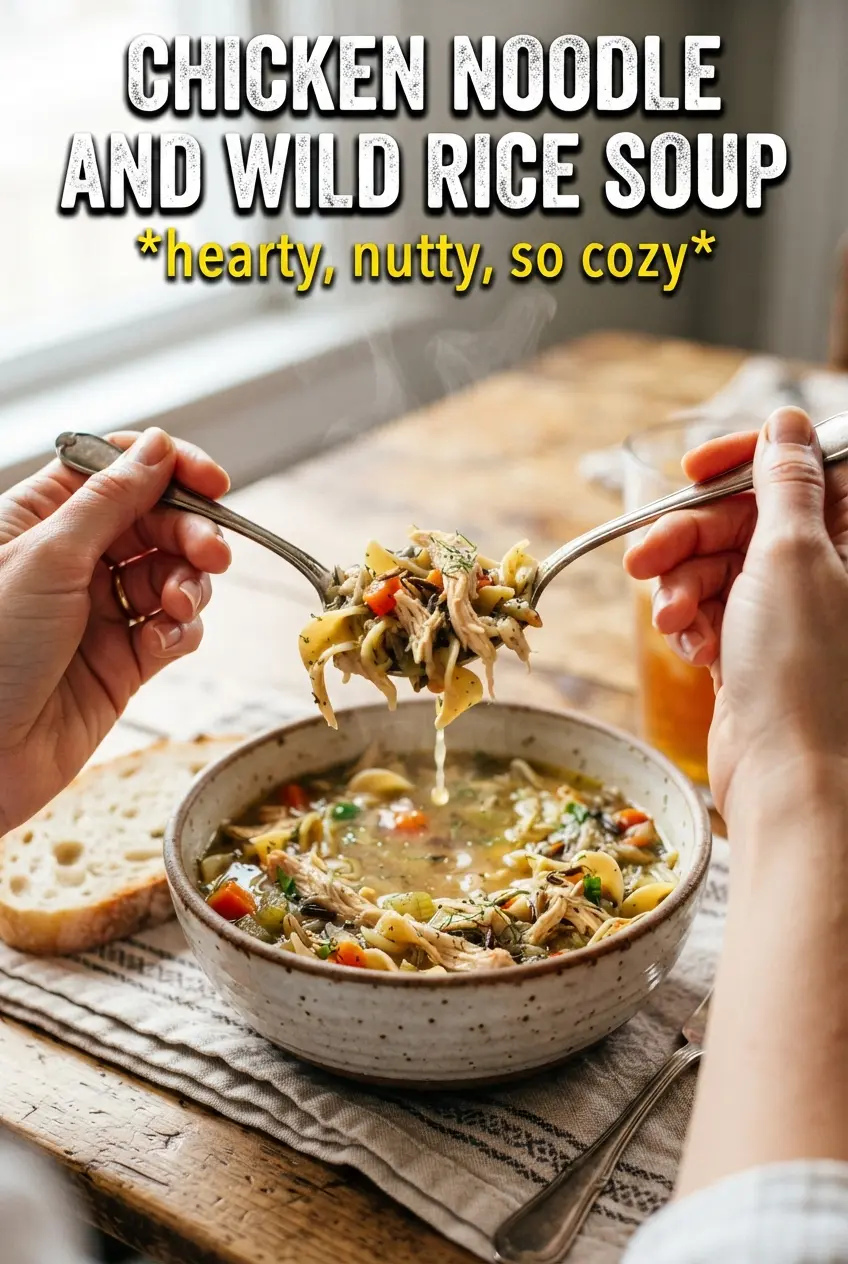
Chicken Noodle and Wild Rice Soup
Ingredients
Equipment
Method
- In a Dutch oven, simmer chicken breast in chicken broth with wild rice blend, carrots, celery, onion, garlic, dried thyme, and dried parsley for 30 minutes, until the wild rice is nearly tender, keeping a steady gentle simmer throughout.
- Remove the chicken from the pot and shred it, then return the shredded chicken to the Dutch oven.
- In a separate small pan, melt butter and whisk in flour, then cook for 1-2 minutes until the mixture looks lightly golden.
- Whisk the roux into 1 cup of the hot broth until smooth, then stir it back into the pot to thicken the soup.
- Stir in heavy cream and bring the soup back to a gentle simmer.
- Add egg noodles and cook for 6-8 minutes, until tender, stirring occasionally so they don’t stick.
- Season to taste with salt and pepper, then serve hot with fresh thyme sprigs if desired.