Clear, fragrant broth and tender chicken are what make Chinese chicken noodle soup worth putting on repeat. The noodles stay silky, the bok choy keeps a little bite, and the ginger-garlic base gives the whole bowl that clean, savory lift that makes you want a second serving before you’ve finished the first.
The trick here is keeping the broth bright instead of muddy. The aromatics simmer long enough to perfume the soup, but the soy sauce, sesame oil, and rice vinegar go in with enough restraint that none of them takes over. Cooking the noodles separately also keeps the broth from going starchy, which matters more than most people think when you want a clear, satisfying soup.
Below, I’ll walk through the part that actually changes the result — when to add the vegetables, how to keep the chicken tender, and what to do if you want a little more heat or a softer noodle.
The broth stayed clear and the ginger came through without overpowering anything. I cooked the noodles separately like you said and they were still perfect after I ladled the soup over them.
The clear broth, tender chicken, and separate noodles make this Chinese chicken noodle soup worth keeping on hand for busy nights.
The Secret to Clear Broth and Noodle Soup That Still Tastes Full
Most noodle soups go cloudy because the noodles sit in the pot and release starch into the broth. That’s fine if you want a heavier soup, but it’s not the clean, light bowl you expect here. Cooking the noodles separately keeps the broth clear and gives you better control over texture, especially if you’re serving leftovers.
The other place this recipe can go flat is at the seasoning stage. Soy sauce gives salt and depth, sesame oil brings aroma, and rice vinegar keeps the broth from tasting dull. White pepper matters too; it adds a warm, subtle bite that fits this style of soup better than black pepper does.
What Each Ingredient Is Actually Doing in This Bowl
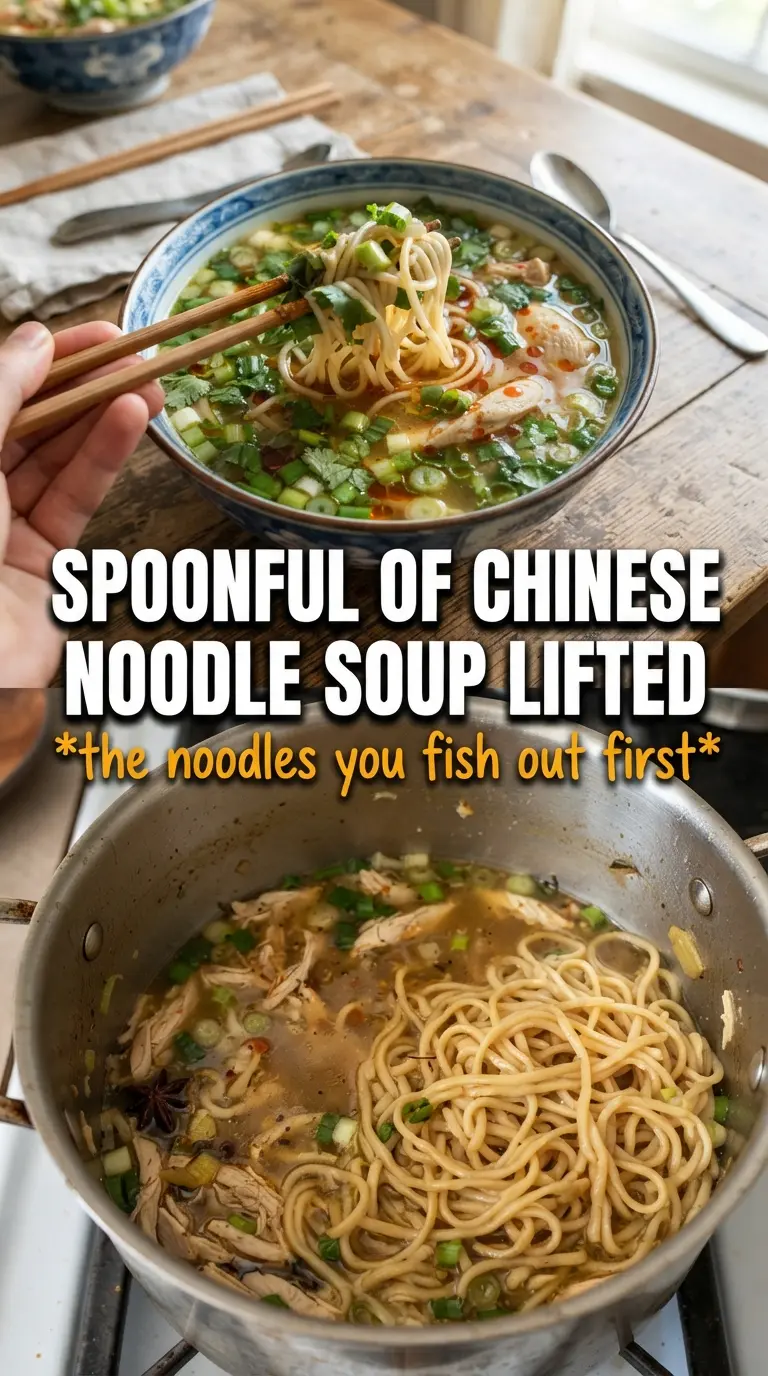
- Chicken breast — Thin slicing is what keeps it tender. If the pieces are thick, they’ll tighten up before the soup even has time to flavor them. Thighs work too and stay juicier, but they’ll give you a slightly richer broth.
- Chicken broth — This is the backbone, so use one you’d drink on its own. If yours tastes thin, add an extra pinch of salt at the end instead of trying to fix it with more soy sauce, which can make the soup taste one-note.
- Shiitake mushrooms — They bring a deeper savory flavor that makes the soup taste like it simmered longer than it did. Cremini mushrooms will work in a pinch, but they won’t bring the same earthy edge.
- Bok choy — Add it at the end so it stays crisp-tender. If it simmers too long, it turns drab and soft, and the soup loses that fresh contrast.
- Rice vinegar and white pepper — These are the finishing touches that keep the broth lively. The vinegar should brighten, not sour, and the white pepper should warm the back of your throat without shouting.
How to Build the Soup Without Overcooking Anything
Start with the Aromatics
Bring the broth to a steady simmer first, then add the garlic and ginger. You want the kitchen to smell sharp and warm, not burnt or bitter, so keep the heat moderate and let them soften for about 5 minutes. If the garlic starts taking on color, the pot is too hot and the broth will pick up a harsh edge.
Season the Broth Before the Chicken Goes In
Stir in the soy sauce, sesame oil, and rice vinegar before adding the chicken. That gives the chicken something to cook in and lets you taste the broth before the other ingredients absorb it. If it tastes a little flat now, fix it now; once the noodles and vegetables are in, seasoning gets harder to judge.
Simmer the Chicken Gently
Add the sliced chicken and mushrooms and keep the broth at a gentle simmer, not a hard boil. A hard boil tightens the chicken and can make the broth look cloudy. You’re looking for chicken that’s opaque through the center and mushrooms that have softened but still hold their shape.
Cook the Greens at the Very End
Drop in the bok choy and let it wilt for just a few minutes. The stems should stay bright and the leaves should soften without collapsing. If you add it too early, it goes olive-colored and loses the fresh crunch that keeps the bowl interesting.
Assemble the Bowls, Not the Pot
Cook the noodles separately, drain them well, and divide them between bowls. Ladle the hot soup over the top, then finish with green onions, cilantro, and chili oil. This keeps the noodles springy instead of swollen, which is the difference between a good soup and a bowl that turns heavy halfway through dinner.
How to Adapt This for Different Needs and Different Kitchens
Make It Gluten-Free
Use rice noodles and swap in a gluten-free soy sauce or tamari. The broth stays just as savory, but the noodles will be a little more delicate, so don’t let them sit in the soup too long before serving.
Use Chicken Thighs for a Richer Bowl
Thighs give you a more forgiving, silkier result and they stay tender even if the soup simmers a little longer than planned. The broth will taste deeper, though slightly less clean than with breast meat.
Make It Dairy-Free and Naturally Light
This soup already fits a dairy-free table without any changes. If you want it lighter, use a low-sodium broth and finish with a bit more rice vinegar instead of extra salt so the flavor stays bright.
Turn It into a Bigger-Batch Lunch Soup
Double the broth, chicken, and mushrooms, but keep the noodles separate until serving. That one change keeps leftovers from turning into soft, overhydrated noodles by day two.
Storage and Reheating
- Refrigerator: Store the broth, chicken, and vegetables for up to 4 days. Keep the noodles separate or they’ll soak up too much liquid.
- Freezer: The broth and chicken freeze well for up to 2 months, but freeze without noodles and add fresh noodles when reheating for the best texture.
- Reheating: Warm the soup gently over medium-low heat until steaming. A hard boil makes the chicken tougher and can make the bok choy mushy, so keep the heat controlled and add the noodles at the end.
Answers to the Questions Worth Asking
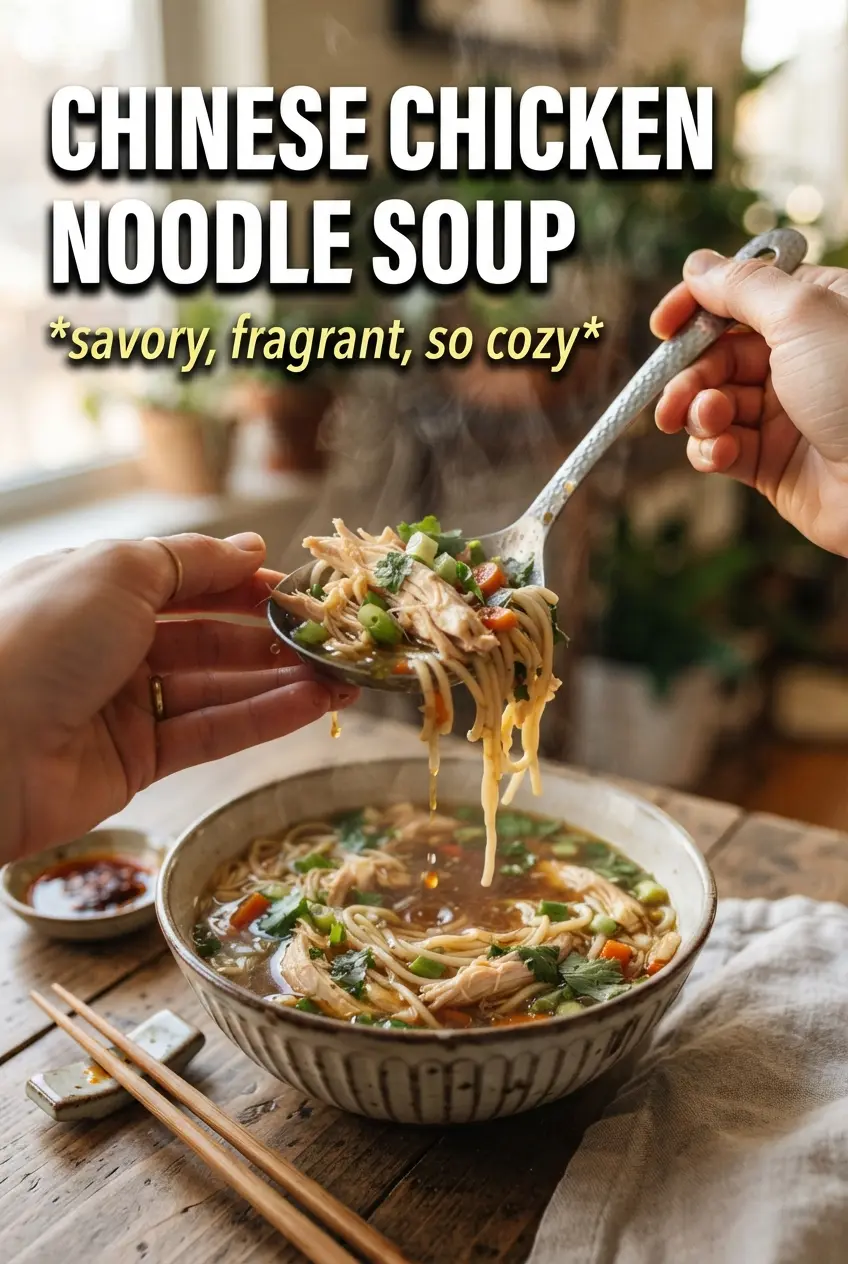
Chinese Chicken Noodle Soup
Ingredients
Equipment
Method
- Bring the chicken broth to a simmer in a large pot over medium-high heat, then add the garlic and ginger and cook for 5 minutes while gently simmering and fragrant.
- Stir in the soy sauce, sesame oil, and rice vinegar, then adjust to taste until the broth is balanced and amber.
- Add the sliced chicken and shiitake mushrooms, then simmer for 10-12 minutes until the chicken is cooked through and the broth looks lightly glossy.
- Add the bok choy and cook for 3 minutes until wilted and bright green.
- Cook the noodles separately according to package directions, then drain and divide them into bowls so they’re springy and not overcooked.
- Ladle the hot soup over the noodles, then season with white pepper and salt to taste.
- Garnish each bowl with green onions, cilantro, and a drizzle of chili oil for a fresh top and a final spicy finish.