Golden broth, tender shreds of chicken, and soft egg noodles make this soup feel like the kind of bowl people ask for when they’re run down. The turmeric gives the broth a warm color and a gentle earthy note, while ginger, garlic, lemon, and a splash of vinegar keep it tasting bright instead of heavy. It’s the kind of soup that still eats like comfort food, but with enough sharpness to cut through a stuffy nose.
What makes this version work is building the broth from bone-in chicken instead of starting with plain cooked meat. That gives you more body and a richer taste in the same pot, and the ginger and garlic perfume the broth as it simmers. The lemon juice and apple cider vinegar go in at the end for a reason: if they cook too long, they lose the fresh lift that makes the whole bowl feel restorative.
Below, I’m walking through the timing that keeps the chicken tender, the point where the noodles should go in, and the small finishing touches that make this soup taste clean and balanced instead of muddy.
The broth had so much more body than my usual chicken noodle soup, and the ginger and lemon kept it from tasting flat. I loved that the noodles stayed tender without getting mushy, even after sitting on the stove for a few minutes.
Save this turmeric-ginger chicken noodle soup for the next time you need a brothy bowl with real depth and bright lemon at the finish.
The Broth Needs Time, Not Just Heat
Bone-in chicken changes the whole soup. As it simmers, the bones and connective tissue give the broth a deeper, rounder body than you’ll get from boneless breasts alone, and that matters here because the soup is meant to taste restorative, not thin. If the broth seems pale or one-note, it usually means the pot was rushed and never got enough time to extract that richness.
The other thing that keeps this soup tasting clean is restraint. Ginger, garlic, turmeric, and thyme all have a place, but none of them should dominate. If the soup tastes muddy, the problem is usually too much simmering after the noodles go in or the acid was added too early, which flattens the brighter notes.
- Bone-in chicken pieces — Thighs and drumsticks give the broth more body than boneless cuts. You can use bone-in breasts, but they dry out a little faster, so watch the simmer and pull them once they’re cooked through.
- Fresh ginger and garlic — These are the backbone of the “cold fighting” feel. Fresh is worth it here because dried ginger won’t give the same warm bite or aromatic lift.
- Turmeric — It gives the broth that deep golden color and a gentle earthy note. Don’t use too much or it starts tasting dusty instead of clean and comforting.
- Egg noodles — They soak up the broth fast, which is great right after cooking and less great the next day. If you want leftovers to hold up better, cook the noodles separately and add them to each bowl.
What Each Ingredient Is Actually Doing in This Recipe

- Primary ingredient (the star) — Quality matters most. Choose the best you can find.
- Cooking medium (oil, butter, or broth) — This carries flavors and prevents dryness.
- Seasonings (salt, pepper, spices, herbs) — Layer flavors so nothing overpowers. Build depth gradually.
- Aromatics (garlic, onion, herbs) — Cook with fat to bloom flavors. Become the foundation.
- Supporting ingredients — Complement the main ingredient without overpowering it.
- Sauce or liquid (if applicable) — Brings flavors together. Balance richness with acid.
- Acid (lemon, vinegar, wine, or other) — Brightens and prevents flat-tasting results.
- Final finish (garnish, glaze, or sauce) — Prevents one-dimensional taste and adds visual appeal.
How to Build the Pot So the Broth Stays Bright
Starting with the Aromatics
Put the chicken, carrots, celery, onion, garlic, ginger, broth, turmeric, and thyme into a large pot and bring it up to a boil, then drop it to a gentle simmer. You want small bubbles moving across the surface, not a hard rolling boil, because aggressive heat can make the chicken stringy and the broth cloudy. The onion should soften and the garlic should smell round, not sharp and raw.
Simmering Until the Chicken Falls Apart
Let the pot go for about 25 minutes, or until the chicken is cooked through and pulling cleanly from the bone. If the broth reduces too fast, lower the heat; if it barely moves, raise it just enough to keep a steady simmer. The vegetables should be tender but not collapsed, and the chicken should shred easily without needing to be hacked apart.
Shredding and Returning the Meat
Lift the chicken out and let it cool just enough to handle, then shred it and discard the skin and bones. Put the meat back into the pot before the noodles go in so it can soak up some of the broth again. If you skip this step and leave the chicken in the pot too long while the noodles cook, it can turn dry and fibrous.
Cooking the Noodles at the End
Add the egg noodles and cook until just tender, usually 6 to 8 minutes. Start checking early, because noodles keep softening in the hot broth even after the burner is off. If you’re planning leftovers, stop at the firm side of tender or the noodles will go mushy by the next day.
Finishing with Lemon and Vinegar
Stir in the lemon juice and apple cider vinegar off the heat or right at the end, then season with salt and pepper. This is the part that wakes everything up. If the soup tastes flat, it almost always needs salt first, then a little more lemon, not more turmeric or garlic.
What to Change When You Want a Different Bowl
Gluten-Free Version
Swap the egg noodles for a gluten-free noodle that can hold up in broth, or leave the noodles out and serve the soup over rice. Gluten-free pasta can soften fast, so check it a minute or two early and don’t let it sit in the hot pot for long before serving.
Dairy-Free and Naturally Light
This soup already happens to be dairy-free, so there’s nothing extra to remove. If you want a richer finish without dairy, let the broth simmer a little longer before adding the noodles so it has more body from the chicken and vegetables.
Make It More Brothy or More Filling
Use the full 8 cups of broth for a lighter, more sippable soup. For a heartier bowl, add an extra handful of noodles or stir in cooked rice at the end, but don’t do both unless you want the pot to turn thick fast.
Storage and Reheating
- Refrigerator: 3 to 4 days. The noodles will keep soaking up broth, so the soup gets thicker as it sits.
- Freezer: Freezes best without the noodles. If you plan to freeze it, leave out the pasta and add freshly cooked noodles when you reheat.
- Reheating: Warm it gently over medium-low heat until steaming, not boiling. Hard boiling breaks up the noodles and can make the chicken stringy.
Answers to the Questions Worth Asking
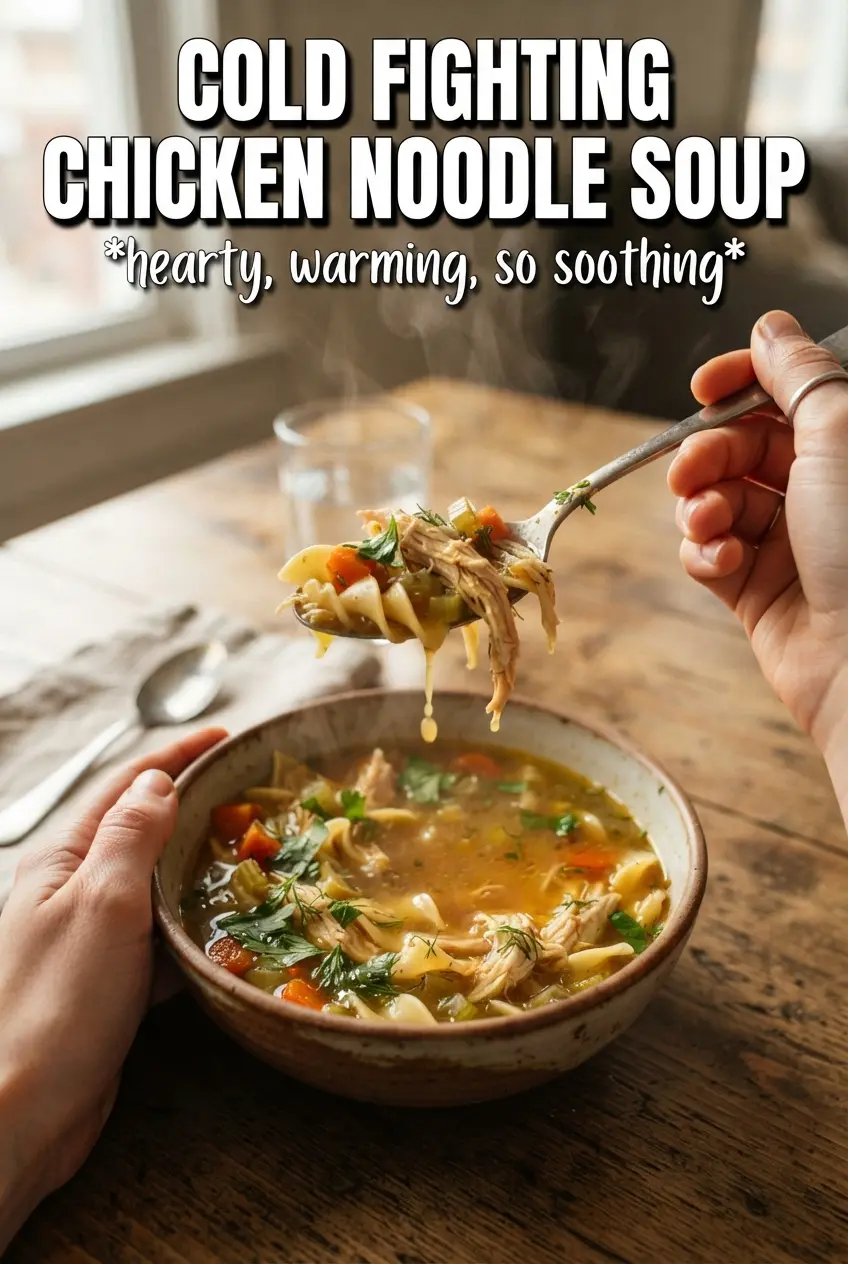
Cold Fighting Chicken Noodle Soup
Ingredients
Equipment
Method
- Add the chicken, carrots, celery, onion, garlic, ginger, chicken broth, turmeric, and dried thyme to a large pot. Bring to a boil over high heat, then reduce to a gentle simmer.
- Simmer for 25 minutes, uncovered, until the chicken is falling off the bone. Skim any foam if it collects on the surface.
- Remove the chicken to a plate and let it cool briefly, then shred it. Discard the skin and bones and return the shredded chicken to the pot.
- Add the egg noodles to the pot and cook for 6–8 minutes until tender. Stir occasionally so the noodles don’t stick.
- Stir in the lemon juice and apple cider vinegar, then season with salt and pepper to taste. Let the soup heat through for 2 minutes on low.
- Ladle the soup into bowls and top with fresh parsley and lemon wedges to serve. Serve hot.