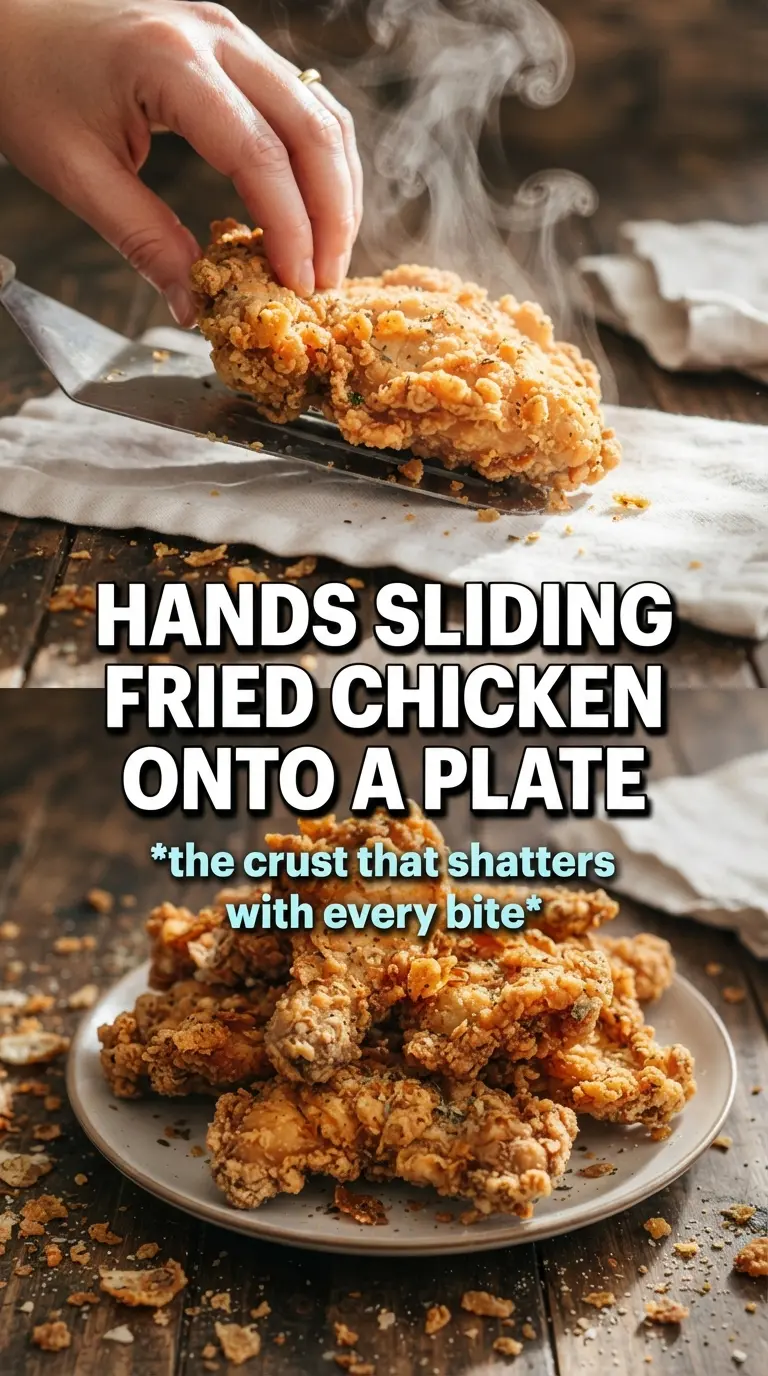
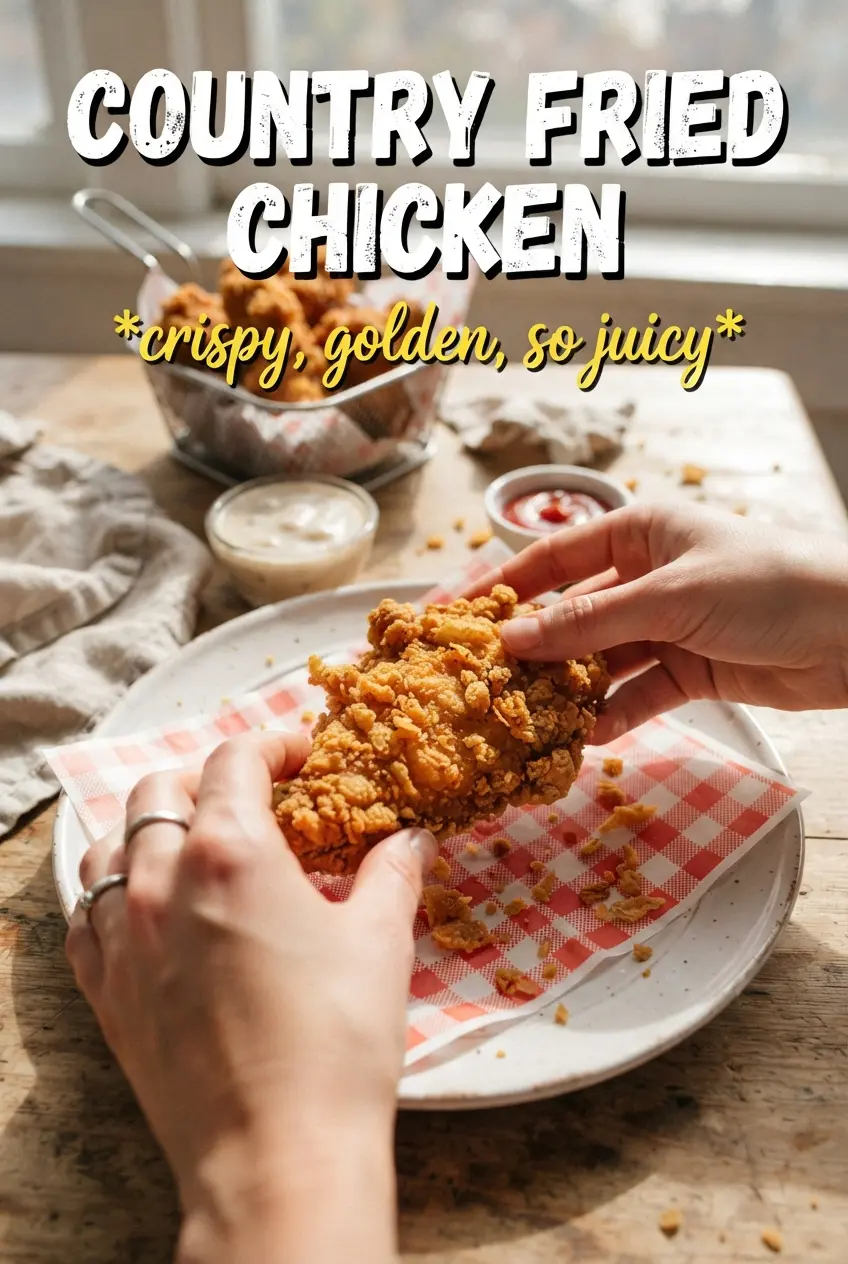
Country fried chicken earns its spot in the rotation because the crust stays craggy and crisp while the meat underneath turns tender and juicy. When it’s done right, every bite gives you that shattering coating first, then the seasoned chicken, then a blanket of peppery gravy that clings instead of sliding off. It’s the kind of dinner that feels steady and familiar, but it still gets people quiet at the table for a minute.
The trick is in the double action of the marinade and dredge. Buttermilk softens the chicken and gives the flour something to grab onto, while cornstarch in the coating helps the crust fry up a little lighter and more brittle than flour alone. I also like keeping the oil at 325°F instead of rushing it hotter; that gives the crust time to set before the outside burns and the inside finishes cooking.
Below, I walk through the part that matters most: how to keep the breading attached, how to tell when the chicken is done, and how to build country gravy from the pan drippings without ending up with a gluey mess.
The crust stayed on the chicken instead of falling off in the pan, and the gravy thickened up smooth with the black pepper coming through just right. My husband asked if I could put this in the regular dinner rotation.
Save this country fried chicken for the night you want shatter-crisp crust and peppery gravy in one skillet.
The Reason the Crust Stays Crisp Instead of Going Soft Under Gravy
Most country fried chicken fails after the fry, not during it. The crust is fine coming out of the skillet, then it softens fast because the coating was too thin, the oil was too cool, or the chicken sat in a puddle before serving. This version avoids all three problems by using cornstarch in the dredge, keeping the oil steady at 325°F, and letting the chicken drain on a rack instead of paper towels.
The other mistake is rushing the gravy over the chicken too early. If you pour it on while the crust is still steaming hard, it gives up its crunch fast. Spoon the gravy over right before serving, or serve it on the side if you want the coating to stay sharp longer.
- Buttermilk — This tenderizes the chicken and helps the flour cling in a rough, uneven layer. Regular milk won’t give the same tang or the same thickness, though you can fake it with milk plus lemon juice or vinegar in a pinch.
- Cornstarch — This is the part that gives the crust that brittle, snappy bite. Flour alone fries up heavier, so don’t skip it unless you want a denser coating.
- Smoked paprika and cayenne — These keep the breading from tasting flat. The paprika adds warmth and color, while the cayenne gives just enough edge to wake up the gravy without making the chicken taste hot.
- Whole milk and chicken broth — The gravy needs both. Milk gives body, broth keeps it from tasting one-note, and the combination keeps the sauce savory instead of pasty.
What Each Ingredient Is Actually Doing in This Recipe
- Primary ingredient (the star) — Quality matters most. Choose the best you can find.
- Cooking medium (oil, butter, or broth) — This carries flavors and prevents dryness.
- Seasonings (salt, pepper, spices, herbs) — Layer flavors so nothing overpowers. Build depth gradually.
- Aromatics (garlic, onion, herbs) — Cook with fat to bloom flavors. Become the foundation.
- Supporting ingredients — Complement the main ingredient without overpowering it.
- Sauce or liquid (if applicable) — Brings flavors together. Balance richness with acid.
- Acid (lemon, vinegar, wine, or other) — Brightens and prevents flat-tasting results.
- Final finish (garnish, glaze, or sauce) — Prevents one-dimensional taste and adds visual appeal.
Building the Chicken, the Crust, and the Gravy in the Right Order
The Buttermilk Rest
Stir the buttermilk, hot sauce, salt, and pepper together, then submerge the chicken and let it sit for at least an hour. That salt does more than season; it starts pulling moisture and flavor into the meat so the inside stays juicy after frying. If you go overnight, keep it refrigerated and covered. Any longer and the texture can turn a little too soft at the surface.
The Dredge That Clumps on Purpose
Whisk the flour, cornstarch, garlic powder, onion powder, paprika, cayenne, salt, and pepper in a shallow bowl. When the chicken comes out of the marinade, let the excess drip off but don’t wipe it dry; that thin wet layer is what helps the coating grab. Press the flour mixture onto the chicken so you get little ridges and shaggy spots, because those are the parts that fry into the best crunch.
Frying at a Steady 325°F
Set the chicken into the oil carefully and keep the heat moderate enough that the surface sizzles without roaring. If the oil is too hot, the crust darkens before the meat cooks through. If it’s too cool, the chicken drinks oil and turns greasy. Fry until deeply golden and the thickest part reaches 165°F, turning once so both sides color evenly.
Gravy in the Same Pan
Pour off most of the frying oil, leaving just a little behind, then melt the butter and whisk in the flour until it smells nutty and looks pale beige. Add the milk and broth gradually, whisking until smooth before the pan has a chance to scorch anything on the bottom. The gravy should thicken enough to coat a spoon and stay pourable; if it gets too thick, loosen it with a splash more broth. Season aggressively with black pepper so it tastes like country gravy, not plain white sauce.
What to Change When You Need a Different Version
Gluten-Free Country Fried Chicken
Use a good gluten-free all-purpose flour blend in both the dredge and the gravy, then add the cornstarch exactly as written. The crust will still fry up crisp, though it may be a touch more delicate when you move the chicken, so let it rest on the rack for a minute before serving.
Dairy-Free Version
Swap the buttermilk for unsweetened plain plant milk mixed with a little vinegar or lemon juice, and use a dairy-free butter and unsweetened oat milk for the gravy. You’ll lose a little of the classic tang, but the chicken still fries well and the gravy stays silky.
Extra-Crispy Coating
For a rougher crust, dip the chicken back into the marinade and dredge it a second time after the first coating sets. That gives you more craggy bits, but it also means a thicker shell, so keep the oil temperature steady and give the pieces a little more time in the pan.
Storage and Reheating
- Refrigerator: Store the chicken and gravy separately for up to 3 days. The crust softens in the fridge, but it still reheats well.
- Freezer: The chicken freezes okay, though the coating won’t stay as crisp. Freeze on a sheet pan first, then wrap tightly once solid; freeze the gravy in a separate container.
- Reheating: Reheat the chicken on a rack in a 375°F oven until hot and crisp again. Warm the gravy on the stove over low heat with a splash of milk or broth. The biggest mistake is microwaving everything together, which turns the crust soggy fast.
Answers to the Questions Worth Asking
Country Fried Chicken
Ingredients
Equipment
Method
- Whisk buttermilk, hot sauce, salt, and black pepper until combined. Submerge the bone-in chicken pieces and refrigerate for 1 hour, up to overnight for deeper flavor.
- Whisk all-purpose flour, cornstarch, garlic powder, onion powder, smoked paprika, cayenne, salt, and black pepper in a shallow bowl. You should see an evenly speckled coating mix with no clumps.
- Remove chicken from the marinade and let excess drip off. Dredge each piece in the flour mixture and press to adhere so the coating forms thick coverage.
- Heat vegetable oil in a large cast-iron skillet to 325F. Keep the oil near this temperature as you fry.
- Fry the chicken for 12-15 minutes per side until deeply golden and the crust looks shatteringly crisp. Cook until the internal temperature reaches 165F.
- Melt butter in the skillet and whisk in flour. Cook for 1-2 minutes until the mixture turns smooth and slightly golden.
- Gradually whisk in whole milk and chicken broth. Cook until thickened, whisking to smooth out lumps.
- Season the gravy with salt and lots of black pepper. Taste and adjust so the pepper flavor stands up against the creamy base.
- Serve the fried chicken smothered in country gravy. Finish with cracked black pepper on top for visible speckling.