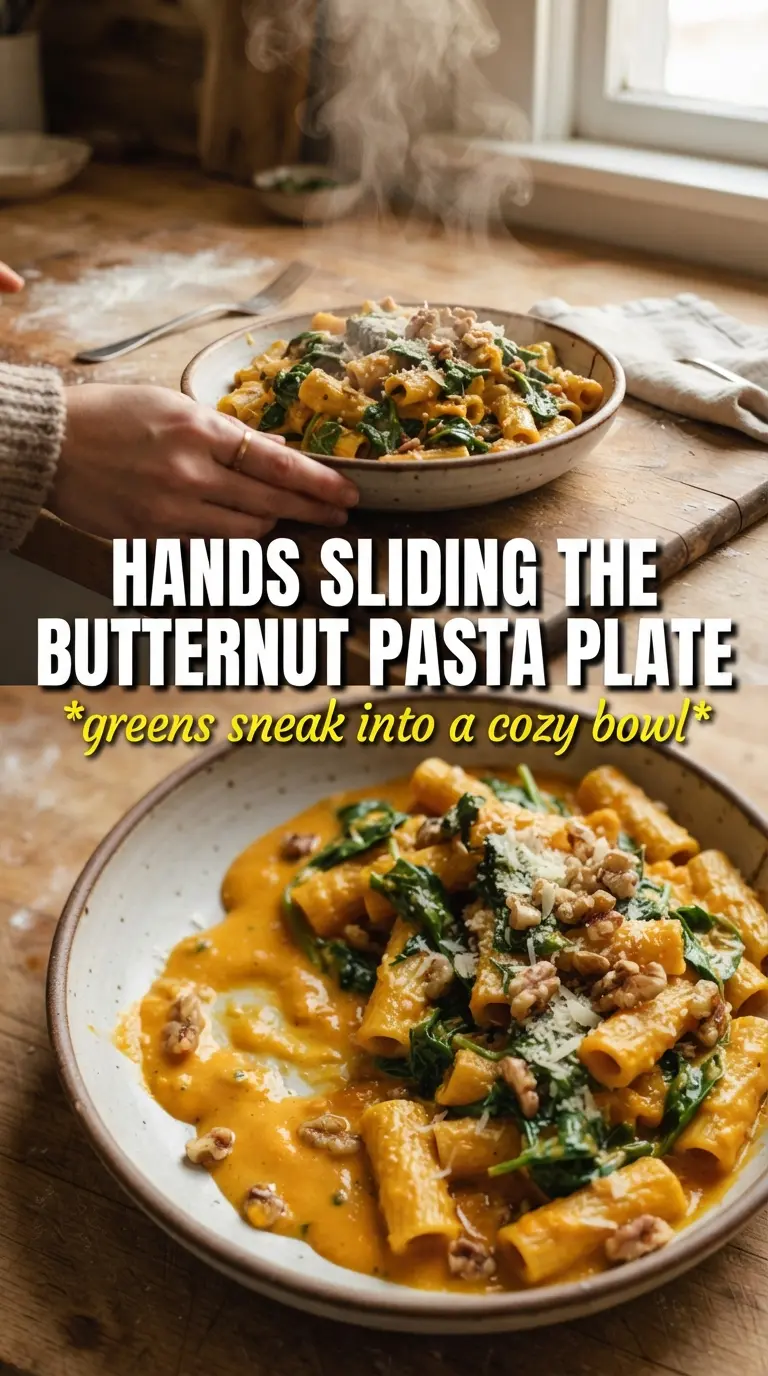
Creamy butternut squash pasta gets a lot more interesting when the sauce isn’t trying to carry the whole dish by itself. Here, the squash turns silky and sweet, the sausage brings salt and richness, and the spinach gives the bowl just enough freshness to keep every bite from feeling heavy. The rigatoni catches the sauce in all those ridges and hollows, so you get that orange cream coating in every forkful.
The trick is treating the squash puree like the base of a real sauce, not a shortcut. It needs a little time in the pan with the cream, parmesan, and pasta water so it loosens, thickens, and turns glossy instead of tasting flat or grainy. Browning the sausage first matters too, because the fond left behind gives the sauce a deeper savory backbone than you’d get from simmering everything together at once.
Below, I’ve laid out the exact order that keeps the sauce smooth, plus the swaps that still work if you need to adjust the pasta shape, cheese, or sausage.
The squash sauce turned out so smooth, and using the pasta water made it cling to every piece of rigatoni. The sausage and spinach kept it from tasting too sweet, and my husband went back for seconds before I even sat down.
Save this creamy butternut squash pasta with sausage and spinach for the nights when you want a cozy sauce that stays silky, not heavy.
The Reason the Sauce Stays Creamy Instead of Thick and Gluey
Butternut squash puree can go from smooth to pasty fast if it’s heated too hard or treated like tomato sauce. The fix is simple: give it cream, pasta water, and a short simmer so the starches and dairy emulsify into something glossy. If the pan boils hard, the sauce can tighten up and taste dull instead of rich.
Parmigiano-Reggiano matters here more than people think. It doesn’t just add salt; it helps the sauce thicken and gives it that savory edge that keeps the squash from reading sweet. And the pasta water isn’t optional. It carries starch, which helps the sauce cling to the noodles and smooths out the texture after the cheese goes in.
- Butternut squash puree — Use a smooth puree, not chunky roasted squash, if you want a sauce that coats the pasta evenly. Homemade puree works well as long as it’s thick and not watery.
- Heavy cream — This keeps the sauce stable and plush. Half-and-half can work, but it won’t give the same body and the sauce will look thinner.
- Pasta water — This is the quiet ingredient that pulls everything together. Reserve it before draining, because once the pasta sits, you lose the starch that helps the sauce emulsify.
- Parmesan — Grate it finely so it melts into the sauce instead of clumping. Pre-grated cheese often has anti-caking agents that make the sauce less smooth.
What Each Ingredient Is Actually Doing in This Recipe
- Primary ingredient (the star) — Quality matters most. Choose the best you can find.
- Cooking medium (oil, butter, or broth) — This carries flavors and prevents dryness.
- Seasonings (salt, pepper, spices, herbs) — Layer flavors so nothing overpowers. Build depth gradually.
- Aromatics (garlic, onion, herbs) — Cook with fat to bloom flavors. Become the foundation.
- Supporting ingredients — Complement the main ingredient without overpowering it.
- Sauce or liquid (if applicable) — Brings flavors together. Balance richness with acid.
- Acid (lemon, vinegar, wine, or other) — Brightens and prevents flat-tasting results.
- Final finish (garnish, glaze, or sauce) — Prevents one-dimensional taste and adds visual appeal.
Building the Sauce Around the Sausage, Not Beside It
Brown the sausage until it actually has color
Cook the sausage in a large skillet until the pieces are deeply browned and no longer look gray. That browned fond on the bottom is part of the flavor base, so don’t rush straight to the onions. If the pan looks dry, the sausage will need a little more time; if it’s steaming, the heat is too low and you won’t get that savory edge.
Sweat the onion before the garlic goes in
Once the sausage is out, cook the onion in the same pan until it turns soft and translucent with a little gold at the edges. The garlic goes in after that for just enough time to smell fragrant. If garlic hits high heat too early, it turns bitter fast, and that bitterness stands out in a creamy sauce.
Let the squash sauce simmer into one smooth layer
Stir in the squash puree, cream, nutmeg, and red pepper flakes, then let the sauce bubble gently for a few minutes. You want it to look cohesive and lightly thickened, not reduced into a paste. Add the parmesan off the fiercest heat if the sauce looks hot and aggressive; that keeps it from turning grainy.
Finish with pasta, spinach, and the sausage
Toss in the drained pasta with a splash of reserved water, then add the spinach and stir until it just wilts. The sausage goes back in at the end so it stays juicy instead of drying out in the simmering sauce. Taste for salt and pepper last, because the parmesan and sausage already bring plenty of seasoning.
Three Ways to Adapt This Bowl for What You Have
Make it dairy-free without losing the creaminess
Use unsweetened coconut cream or a rich oat-based cooking cream in place of the heavy cream, then finish with nutritional yeast instead of parmesan. The sauce will still be silky, but it won’t have quite the same sharp finish, so the sausage and seasoning need to do a little more work.
Swap in turkey sausage for a lighter main dish
Turkey sausage works well here, but it needs a good sear because it won’t give off as much fat or richness as pork sausage. If the pan looks dry after browning, add a small drizzle of olive oil before cooking the onion so the base still tastes full.
Use a gluten-free pasta that can hold the sauce
A sturdy gluten-free rigatoni or penne is the best fit because it keeps its shape and catches the sauce. Cook it just to al dente, since gluten-free pasta turns soft faster after it hits the hot skillet. Save a little extra pasta water if the noodles are thirsty and the sauce tightens up.
Add greens or mushrooms for a bigger pan
Baby kale can stand in for spinach if you want a sturdier green, and sautéed mushrooms fit the same savory lane as the sausage. Add mushrooms before the onion or in a second layer after the sausage browns so they have room to release moisture and pick up color instead of steaming.
Storage and Reheating
- Refrigerator: Keeps well for 3 to 4 days in an airtight container. The sauce will thicken as it chills.
- Freezer: It freezes, but the cream sauce can lose some of its silky texture after thawing. Freeze in portions for up to 2 months if needed, then expect to add a splash of cream or water when reheating.
- Reheating: Warm it gently on the stove or in short microwave bursts with a spoonful of water or milk. High heat can make the sauce look broken and turn the pasta soft before the center is hot.
Answers to the Questions Worth Asking
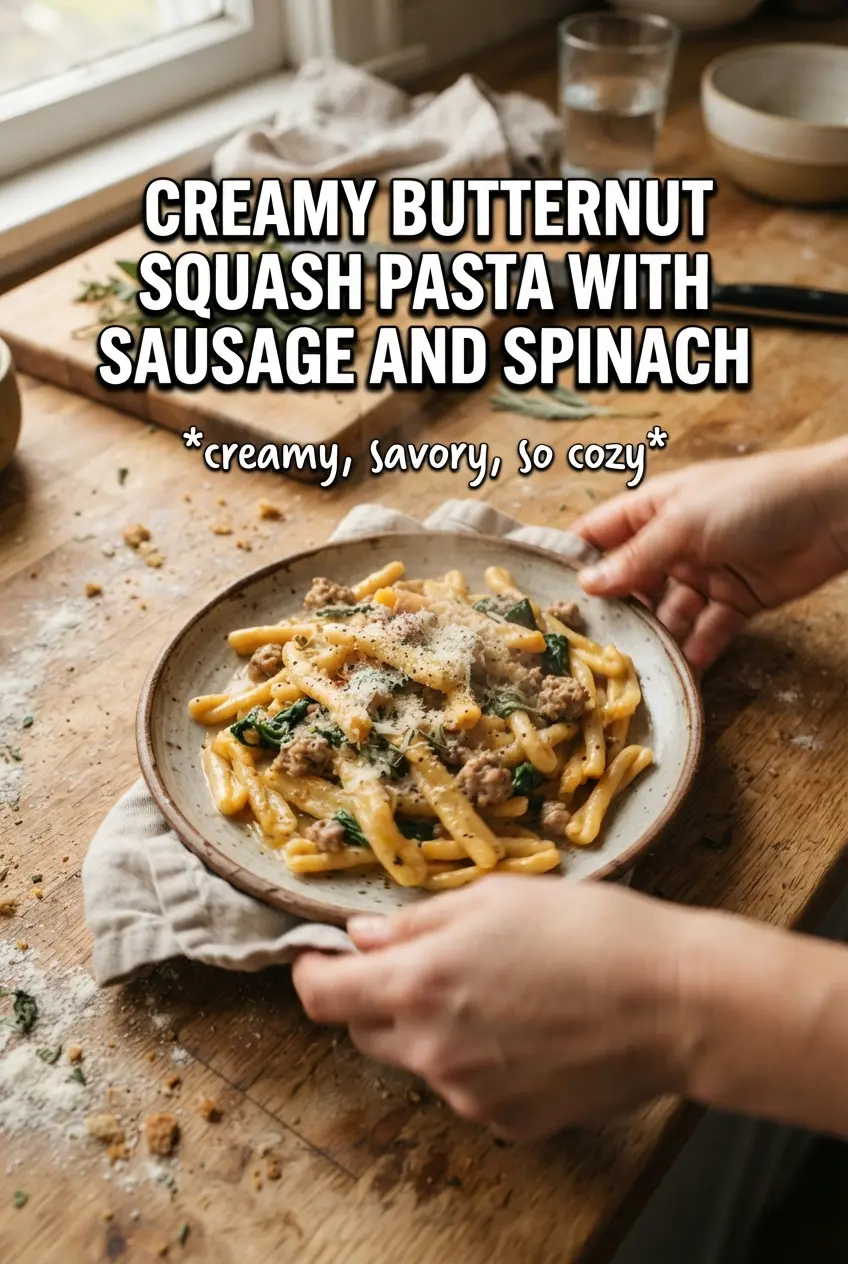
Creamy Butternut Squash Pasta With Sausage And Spinach
Ingredients
Equipment
Method
- Bring a large pot of salted water to a boil, then cook rigatoni or penne until al dente. Before draining, reserve 1/2 cup pasta cooking water.
- Brown the Italian sausage in a large cast iron skillet over medium-high heat until cooked through, then drain excess fat and set the sausage aside.
- Sauté the onion in the same skillet for 4 minutes until softened, stirring as needed.
- Add the garlic, Italian seasoning, and cook for 2 minutes until fragrant.
- Stir in butternut squash puree and heavy cream, then add nutmeg and red pepper flakes.
- Simmer the sauce for 5 minutes, then add parmesan and stir until completely smooth and melted.
- Toss the cooked pasta with the sauce and drizzle in reserved pasta cooking water until glossy and evenly coated.
- Add the baby spinach and toss until wilted, about 1 to 2 minutes.
- Return the sausage to the pan, season with salt and pepper to taste, and toss to heat through.