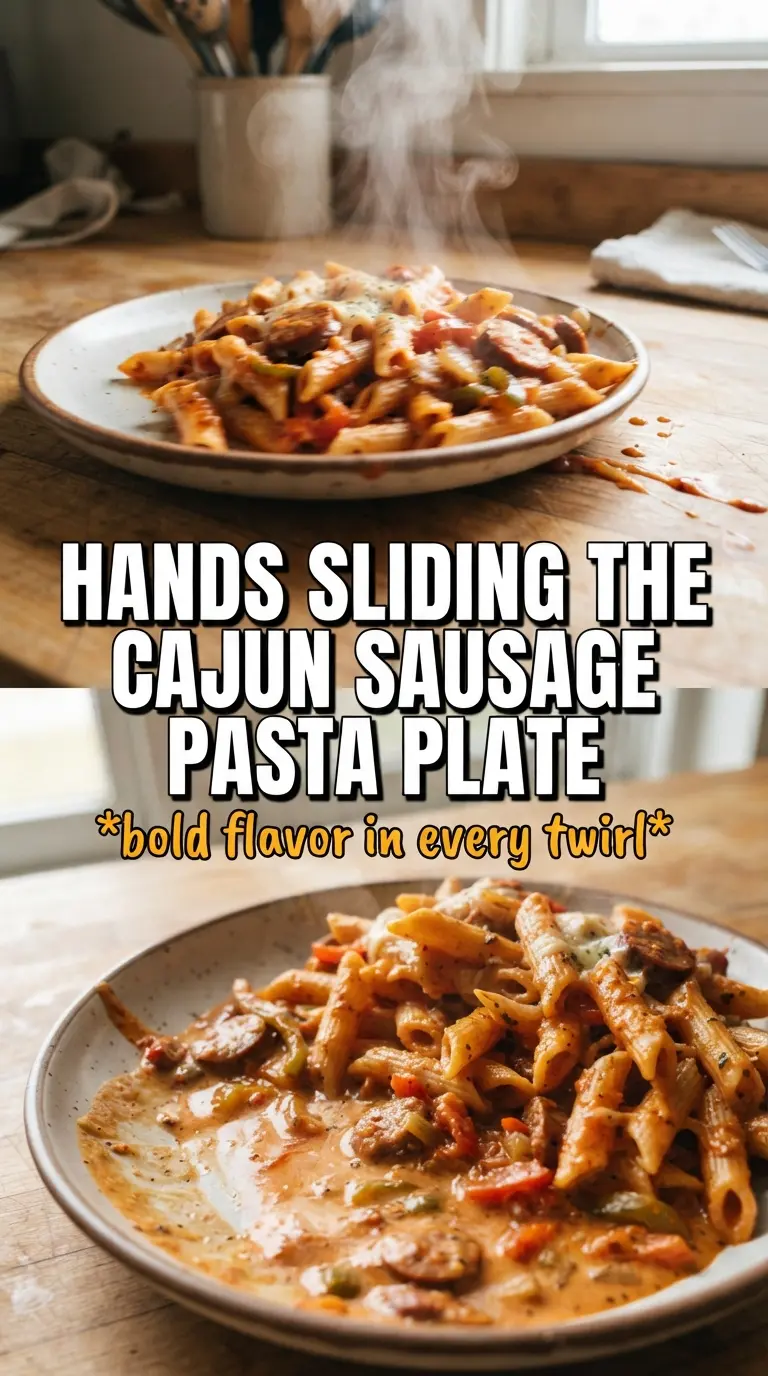
Smoky sausage, sweet peppers, and a Cajun cream sauce turn a pan of pasta into something that tastes bold and finished, not heavy or muddled. The sauce clings to every ridge of the penne, and the sausage brings enough salt and spice that each bite stays interesting all the way through. This is the kind of dinner that disappears fast because it lands right in the sweet spot between comforting and punchy.
What makes this version work is the order. The sausage browns first, which leaves flavor in the pan for the vegetables to pick up. Then the Cajun seasoning gets a brief toast with the garlic before the broth and cream go in, so the spice tastes round instead of raw. A little reserved pasta water helps the sauce turn glossy and grab onto the pasta instead of sitting at the bottom of the bowl.
Below, I walk through the part that matters most: how to keep the cream sauce smooth while still getting a deep Cajun flavor, plus a few swaps that actually work when you need them.
The sauce turned out silky and coated the penne instead of getting watery, and the sausage stayed browned even after I tossed everything together. My husband went back for seconds before I’d even sat down.
Save this Creamy Cajun Sausage Pasta for a smoky, peppery dinner that turns into a glossy, one-pan sauce with almost no cleanup.
The Pan Sauce Fails When You Rush the Browning
The biggest mistake with Cajun sausage pasta is trying to build the sauce in a pale skillet. If the sausage doesn’t get real color first, you miss the smoky base that makes the whole dish taste full instead of flat. Those browned bits left behind after the sausage comes out are part of the sauce, not mess to clean up.
The other trap is cranking the heat once the cream goes in. Cream doesn’t need a hard boil to thicken; it needs a gentle simmer and a little patience. If it boils hard, it can turn greasy or separate, especially after the cheese goes in. Keep the heat moderate and let the sauce tighten slowly.
- Andouille or smoked sausage — This is where most of the flavor comes from, so choose a sausage with real seasoning and enough fat to brown well. If you use a milder smoked sausage, the dish will still work, but it will taste softer and you may want a little extra Cajun seasoning at the end.
- Cajun seasoning — Not all blends are equal. Some are saltier than others, so taste before adding more salt at the end. If your blend is heat-heavy, the cream will smooth it out; if it’s salt-heavy, go lighter until the sauce is finished.
- Heavy cream — This gives the sauce its body and keeps it from splitting during the final toss. Half-and-half can work in a pinch, but the sauce will be thinner and more likely to look loose after it sits.
- Reserved pasta water — This is the insurance policy. The starch helps the sauce emulsify and stick to the penne. If you skip it, the sauce can get thick in the pan but still slide off the pasta in the bowl.
- Parmesan — Grate it yourself if you can. Pre-grated cheese often melts less cleanly and can leave the sauce a little grainy. Add it off the heat or over low heat so it melts into the cream instead of clumping.
What Each Ingredient Is Actually Doing in This Recipe
- Primary ingredient (the star) — Quality matters most. Choose the best you can find.
- Cooking medium (oil, butter, or broth) — This carries flavors and prevents dryness.
- Seasonings (salt, pepper, spices, herbs) — Layer flavors so nothing overpowers. Build depth gradually.
- Aromatics (garlic, onion, herbs) — Cook with fat to bloom flavors. Become the foundation.
- Supporting ingredients — Complement the main ingredient without overpowering it.
- Sauce or liquid (if applicable) — Brings flavors together. Balance richness with acid.
- Acid (lemon, vinegar, wine, or other) — Brightens and prevents flat-tasting results.
- Final finish (garnish, glaze, or sauce) — Prevents one-dimensional taste and adds visual appeal.
Build the Sauce Before the Pasta Has a Chance to Sit
Brown the sausage first
Set a large skillet over medium-high heat and cook the sliced sausage in butter until the edges are deeply browned. You want dark color, not just warmed-through rounds. Once the sausage is out, leave the rendered fat and browned bits in the pan. If the skillet looks dry, the butter should pick up the slack and keep everything moving without burning.
Soften the vegetables and wake up the spice
Add the onion and bell peppers to the same pan and cook until they soften and pick up a little color at the edges. Stir in the garlic and Cajun seasoning and cook for about 2 minutes, just until fragrant. If the garlic starts to brown hard or smell sharp, the heat is too high. Pull it back before the seasoning turns bitter.
Simmer the cream until it coats a spoon
Pour in the broth and cream, then let the sauce simmer gently until it looks slightly thickened and glossy. You’re not trying to reduce it into a paste; you just want it to thicken enough to cling to the pasta. The surface should bubble lazily, not boil hard. That gentler heat is what keeps the sauce smooth.
Toss everything together at the end
Add the cooked penne and a splash of pasta water, then stir in the parmesan until the sauce turns silky and starts hugging the noodles. Return the sausage and toss until every piece is coated. If the sauce looks too tight, add another spoonful of pasta water. If it looks loose, let it sit over low heat for a minute; it will tighten as the cheese melts in.
What to Change When You Need a Different Version
Gluten-Free Pasta That Still Holds Up
Use a sturdy gluten-free penne made from rice or a rice-corn blend. Cook it just to al dente and pull it early, because gluten-free pasta softens faster once it hits the sauce. The dish still tastes rich and complete, but the texture is best the day you make it.
Dairy-Free With a Similar Creamy Finish
Swap the heavy cream for full-fat canned coconut milk and leave out the parmesan, or use a dairy-free parmesan-style cheese if you like one that melts well. The sauce will taste a little different, with a softer richness and a faint coconut note if your Cajun seasoning is mild. It still gives you a creamy skillet pasta without dairy.
Less Heat Without Losing the Cajun Character
Use a mild smoked sausage and cut the Cajun seasoning back to 1 tablespoon, then taste at the end before adding more. You’ll still get the smoky paprika-and-garlic backbone, just with less burn. This is the version I’d hand to anyone who likes bold flavor but not a lot of heat.
Making It Stretch for a Bigger Table
Add another half pound of pasta and an extra splash of broth and cream if you need to feed more people. The sauce should look a little looser than you think before the pasta goes in, because the noodles absorb some of it as it sits. This keeps the pan from drying out before everyone gets seconds.
Storage and Reheating
- Refrigerator: Store leftovers in an airtight container for up to 4 days. The pasta will absorb some of the sauce, so it gets a little thicker as it chills.
- Freezer: It freezes, but the cream sauce can separate slightly after thawing. If you plan to freeze it, stop before adding the parmesan and stir that in after reheating for the best texture.
- Reheating: Warm it gently on the stovetop over low heat with a splash of broth or cream. The most common mistake is blasting it in the microwave until the sauce breaks and the pasta turns rubbery.
Answers to the Questions Worth Asking
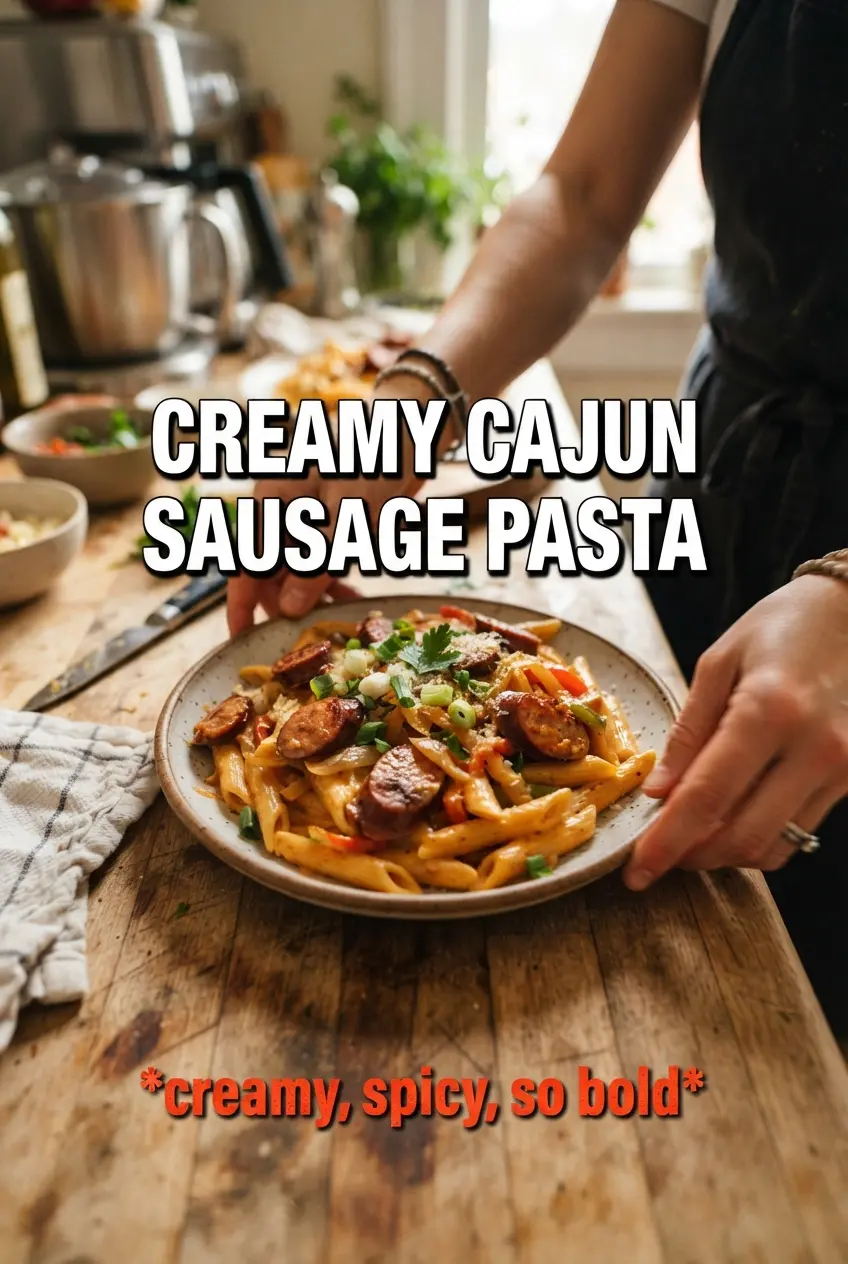
Creamy Cajun Sausage Pasta
Ingredients
Equipment
Method
- Bring a large pot of salted water to a boil and cook penne until al dente, then reserve 1/2 cup pasta water.
- In a large skillet over medium-high heat, melt butter and brown the sliced andouille or smoked sausage until lightly caramelized, then remove and set aside.
- In the same skillet, sauté onion and red and green bell peppers for 4-5 minutes until softened.
- Add minced garlic and Cajun seasoning, then cook for 2 minutes to bloom the spices.
- Pour in chicken broth and heavy cream, then simmer for 5 minutes until slightly thickened, stirring occasionally.
- Toss the cooked penne into the skillet with reserved pasta water, then stir until the pasta is evenly coated.
- Stir in grated parmesan until melted and creamy.
- Return the browned sausage to the skillet, toss to coat, and season with salt to taste.
- Top with green onions and parsley before serving.