Creamy Parmesan Chicken Noodle Soup lands in the bowl with a silky broth that clings to the noodles instead of sliding off them, and that’s what makes it feel like dinner, not just soup. The parmesan gives it a savory depth that tastes rounded and rich without turning heavy, while the chicken stays tender and the vegetables keep enough bite to keep each spoonful interesting.
The trick is building the base the same way you’d start a good cream sauce: butter, onions, carrots, celery, then flour, then broth added gradually so the soup thickens smoothly instead of turning pasty. Freshly grated parmesan matters here because pre-shredded cheese often has starches that can make the broth grainy. Stir the cheese in after the cream has come to a gentle simmer, not at a hard boil, so it melts into the soup instead of breaking or clumping.
Below, I’ve laid out the little timing details that keep the noodles from going mushy and the spinach from disappearing. There’s also a couple of useful swaps if you need to work around what’s in your fridge.
The parmesan melted in completely and the broth turned velvety instead of oily. I also loved that the noodles stayed tender even after sitting for a bit.
Save this Creamy Parmesan Chicken Noodle Soup for the nights when you want a velvety, one-pot bowl with tender noodles and a real parmesan finish.
The Reason This Soup Stays Creamy Instead of Turning Grainy
The mistake that ruins a lot of creamy chicken soups is pushing the heat too hard after the dairy goes in. Once cream is in the pot, the soup only needs a gentle simmer. A boil can make the broth look broken and can tighten the parmesan into tiny specks instead of a smooth finish.
The other thing that matters is how the roux is built. Flour needs a full minute or two in the butter and vegetables so it loses that raw taste and actually thickens the broth. If you dump the broth in too quickly, you get little flour lumps that are hard to chase down later. Pour slowly and whisk as you go.
- Chicken breast — Dicing it before it goes in helps it cook quickly and evenly in the broth. Thighs work too if you want a richer result, but they’ll bring a slightly softer texture.
- Freshly grated parmesan — This is the ingredient that gives the soup its signature body and savory finish. Pre-grated cheese can work in a pinch, but it won’t melt as smoothly.
- Heavy cream — This keeps the soup stable and lush. Half-and-half can be used, but the broth will be thinner and a little less luxurious.
- Egg noodles — They thicken the soup naturally as they cook and hold onto the creamy broth better than most pasta shapes. Don’t overcook them; they keep softening after the heat is off.
What Each Ingredient Is Actually Doing in This Recipe

- Primary ingredient (the star) — Quality matters most. Choose the best you can find.
- Cooking medium (oil, butter, or broth) — This carries flavors and prevents dryness.
- Seasonings (salt, pepper, spices, herbs) — Layer flavors so nothing overpowers. Build depth gradually.
- Aromatics (garlic, onion, herbs) — Cook with fat to bloom flavors. Become the foundation.
- Supporting ingredients — Complement the main ingredient without overpowering it.
- Sauce or liquid (if applicable) — Brings flavors together. Balance richness with acid.
- Acid (lemon, vinegar, wine, or other) — Brightens and prevents flat-tasting results.
- Final finish (garnish, glaze, or sauce) — Prevents one-dimensional taste and adds visual appeal.
Building the Broth, Chicken, and Noodles in the Right Order
Softening the Vegetables First
Melt the butter, then cook the onion, carrots, and celery until the onion looks translucent and the carrots start to lose their raw edge. This step builds the flavor base and gives the broth a little sweetness. If the pot is too hot, the butter will brown before the vegetables soften, so keep the heat at medium and let them sweat gently.
Cooking Out the Flour
Stir in the garlic for just a minute, then add the flour and cook it until it looks pasty and coats the vegetables. That short cooking time takes away the raw flour taste and sets up the broth to thicken smoothly. If the mixture starts looking dry or scorched, lower the heat before adding the broth.
Simmering the Chicken Through
Pour in the broth a little at a time, scraping the bottom of the pot as you whisk. Add the chicken and Italian seasoning, then let the soup simmer until the chicken is cooked through and the vegetables are tender. The broth should move in slow bubbles, not roll hard, or the chicken can turn stringy before the soup has time to develop flavor.
Finishing With Cream, Noodles, and Cheese
Stir in the cream and add the noodles, then cook just until they’re tender with a little chew left in the center. Pull the soup back to low heat before adding the parmesan, and stir until it disappears into the broth. Finish with spinach and nutmeg at the end so the greens stay bright and the nutmeg stays warm instead of dull.
Three Ways to Adjust the Soup Without Losing the Creamy Texture
Dairy-Free Version That Still Eats Like a Cream Soup
Use unsweetened coconut cream or an unsweetened oat-based cooking cream in place of the heavy cream, and skip the parmesan or use a dairy-free parmesan-style substitute. The soup will be a little less sharp and savory, but the texture stays silky if you keep the heat gentle. If you use coconut cream, the coconut note stays subtle under the garlic and broth.
Gluten-Free Swap for the Thickener and Noodles
Replace the flour with a gluten-free all-purpose blend that includes xanthan gum, or thicken the broth with a cornstarch slurry at the end instead of a roux. Use gluten-free egg-style noodles or another sturdy gluten-free pasta, but watch them closely because they soften faster than wheat noodles. The texture will be slightly lighter, but the soup still comes out creamy.
Using Rotisserie Chicken for a Faster Version
Skip the raw chicken step and stir in shredded rotisserie chicken after the broth has thickened and the noodles are nearly done. That cuts the cook time down and keeps the chicken extra tender, since it only needs a few minutes to heat through. The soup will taste a little more layered if you use some of the chicken skin or drippings only if they’re not overly salty.
Storage and Reheating
- Refrigerator: Store for up to 4 days. The noodles will keep absorbing broth, so expect the soup to thicken a bit.
- Freezer: It can be frozen, but the cream and noodles may change texture after thawing. For the best result, freeze the soup before adding the noodles and cream, then finish those when reheating.
- Reheating: Warm it slowly over low heat on the stove, adding a splash of broth if needed. High heat can split the dairy and overcook the noodles, which is the fastest way to ruin the texture.
Answers to the Questions Worth Asking
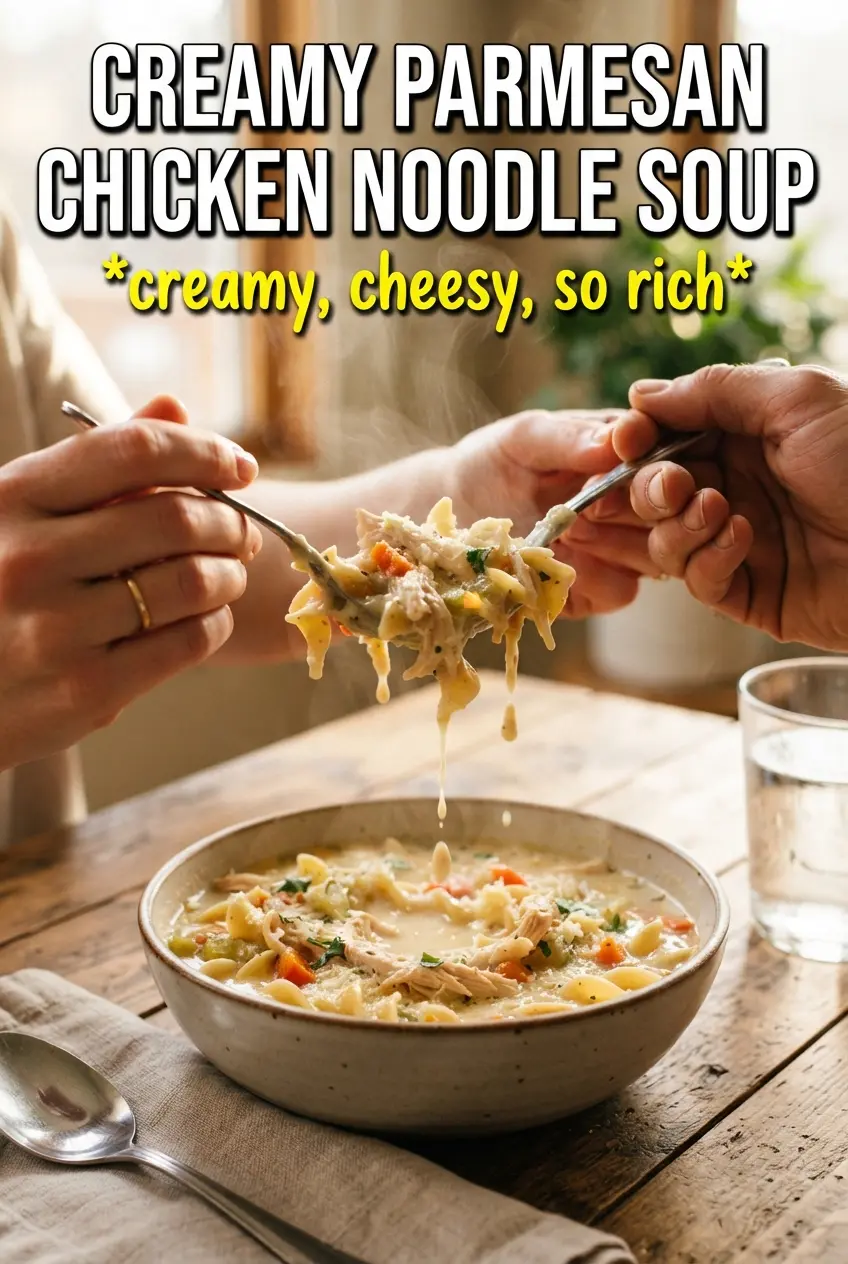
Creamy Parmesan Chicken Noodle Soup
Ingredients
Equipment
Method
- Melt butter in a large pot, then sauté onion, carrots, and celery for 5 minutes over medium heat, stirring until slightly softened and fragrant.
- Add garlic and cook for 1 minute, then whisk in the flour and cook for 1-2 minutes to form a light roux.
- Gradually add the chicken broth while whisking to prevent lumps, then add the diced chicken and Italian seasoning.
- Simmer for 15 minutes until the chicken is cooked through, stirring occasionally so the broth stays smooth.
- Stir in the heavy cream and bring to a gentle simmer, then add egg noodles.
- Cook for 6-8 minutes until the noodles are tender, maintaining a gentle simmer (not a hard boil).
- Reduce heat to low, then stir in 1 cup parmesan until fully melted and the broth turns creamy.
- Add spinach and cook for 2 minutes, stirring until wilted and bright green.
- Stir in nutmeg, then season with salt and pepper to taste and serve with the remaining parmesan sprinkled on top.