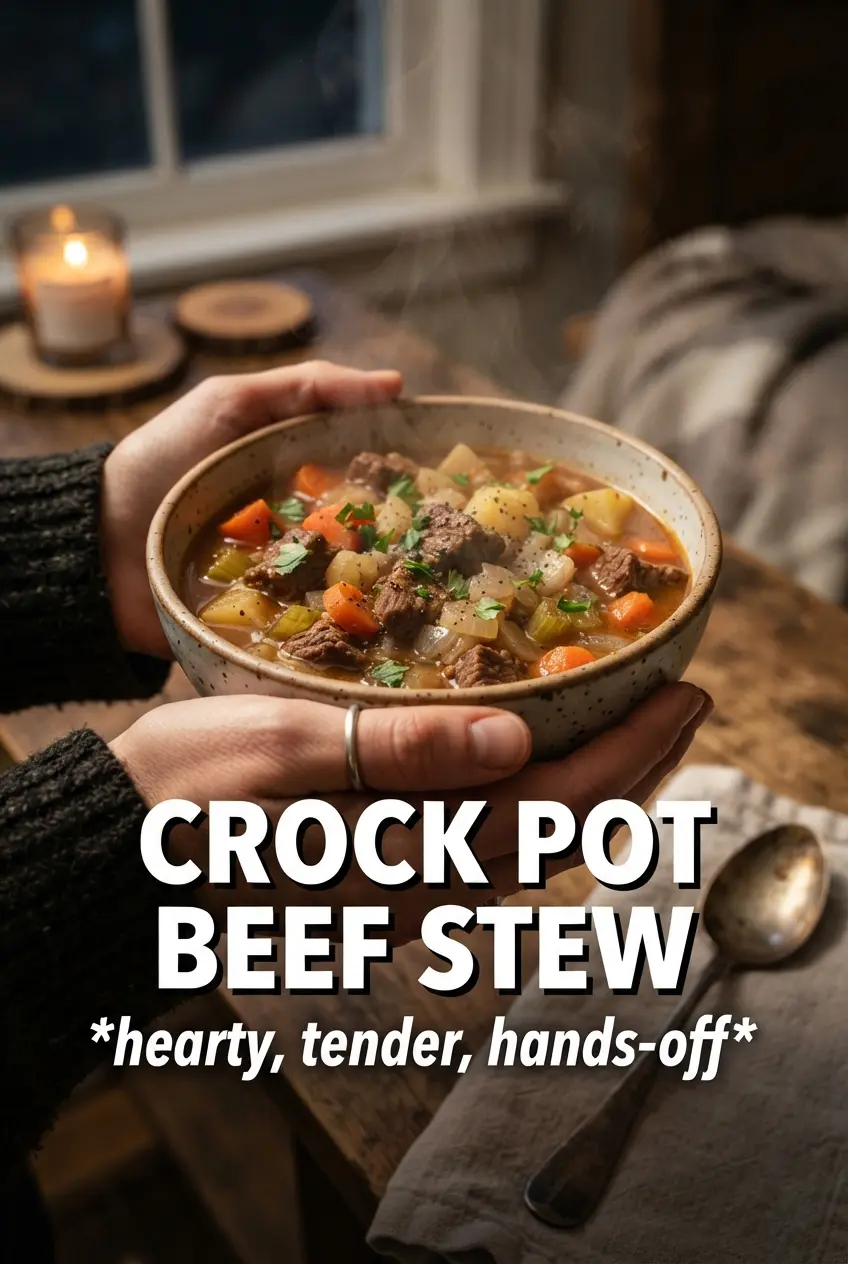
Deep, mahogany beef stew with tender chunks of chuck, soft potatoes, and carrots that hold their shape is exactly what a slow cooker should give you. The broth turns rich and savory without any browning drama on the stovetop, and the beef gets that spoon-tender texture that makes this kind of dinner worth planning ahead for. It’s the sort of meal that tastes even better after the kitchen has been smelling like thyme, garlic, and simmering beef all day.
This version leans on a few small details that matter. The vegetables go in first so they can sit in the heat and flavor the broth from the bottom up, while the beef stays on top long enough to cook gently instead of stewing into shreds too early. Red wine adds depth, but extra broth works if that’s what you have, and the tomato paste plus Worcestershire sauce give the stew a darker, fuller taste than a plain broth-only version.
Below, I’ve included the little timing cue that keeps the potatoes from collapsing and the trick for thickening the broth at the end without making it gluey. If you like a stew with a proper gravy-like finish, that last 20 minutes matters more than most people think.
The beef was fall-apart tender and the broth thickened up beautifully at the end. I loved that the potatoes held their shape instead of turning to mush, and my husband went back for seconds with crusty bread to soak up every bit.
Save this Crock Pot Beef Stew for the night you want tender beef, chunky vegetables, and a rich broth with almost no hands-on work.
The Secret to Keeping the Vegetables Intact in a Long Slow Cook
The most common mistake with crock pot stew is cutting the vegetables too small or cooking them too long before the beef has had time to soften. Baby potatoes and thick carrot rounds stand up better than thin cuts, and they’re sturdy enough to stay in the pot for the full cook without disappearing into the broth. Celery and onion melt in a good way here; they’re there for background flavor, not for a crisp bite at the end.
The other thing that matters is where the ingredients sit. The beef cooks fine on top of the vegetables, but the broth needs to reach everything evenly, so don’t pack the pot too tightly. A crowded slow cooker steams more than it simmers, and that’s how you end up with bland broth and uneven texture.
What Each Ingredient Is Doing in This Stew

- Beef chuck — This is the cut that gives you tender, shreddable beef after hours of low heat. Don’t swap in lean stew meat unless you have to; it can dry out before it gets soft. If you use pre-cut stew meat, trim any large hard pieces of fat before it goes in.
- Baby potatoes — These hold their shape better than russets and give the stew substance. Cutting them in half lets them absorb flavor without dissolving. If yours are much larger than average, quarter them so they cook at the same pace as the beef.
- Carrots and celery — These build the base of the broth and add sweetness and depth. Thick carrot rounds are worth it because thin slices can go soft fast. Celery mainly disappears into the background, which is exactly what it should do.
- Tomato paste, diced tomatoes, and Worcestershire sauce — This trio is what makes the broth taste finished instead of flat. Tomato paste brings body, diced tomatoes add a little acidity, and Worcestershire adds that savory note you can’t really fake with salt alone.
- Red wine — It deepens the broth and gives the stew a darker, rounder flavor. Use a dry red you’d actually drink; it doesn’t need to be expensive. If you’d rather skip it, use more beef broth and a small splash of extra Worcestershire for depth.
Building the Stew So the Beef Goes Tender, Not Tough
Layering the Pot the Right Way
Start by seasoning the beef well before it goes into the slow cooker. That first layer of salt is what gives the meat flavor all the way through, not just on the surface. Put the potatoes, carrots, celery, and onion on the bottom, then nestle the beef over them so the meat cooks gently as the liquid rises around it. If you dump everything in without order, the vegetables are more likely to overcook before the beef finishes softening.
Adding the Liquids and Flavor Base
Pour in the broth, wine, tomatoes, tomato paste, Worcestershire, thyme, rosemary, and bay leaves. Stir lightly only if needed to dissolve the tomato paste; you don’t need to fully mix the pot. The stew will smooth itself out as it cooks. If the tomato paste sits in a clump on top, that’s a sign it needs a little nudge now, not later.
Waiting for the Meat to Give
Cook on Low for 8 to 10 hours, or on High for 4 to 5 hours if you’re short on time. The beef is ready when a fork slides in with almost no resistance and the edges start to pull apart. If it still feels tight, it needs more time, not more heat. Low and slow is what breaks down chuck into the kind of meat that falls apart in the spoon.
Thickening Without Turning It Gummy
Remove the bay leaves before you thicken the stew. Stir cornstarch with cold water until smooth, then add it and cook on High for 20 to 30 minutes. That short finish gives the broth time to turn glossy and full-bodied. If you add dry cornstarch straight to the pot, you’ll get little lumps that never fully disappear.
How to Adapt This Crock Pot Beef Stew for Different Needs
Dairy-Free and Naturally Gluten-Free
This stew already fits both diets as written, as long as your beef broth and Worcestershire sauce are labeled gluten-free. The cornstarch slurry keeps the gravy thick without flour, so you don’t lose the texture that makes stew feel complete.
Skipping the Wine
Use an extra cup of beef broth instead of wine. The stew will still be rich, just a little less complex, so the tomato paste and Worcestershire become even more important for depth.
Making It Thicker Than a Standard Stew
If you want a spoon-coating gravy instead of a lighter broth, add another half batch of cornstarch slurry at the end. Do it after the beef is fully tender, not before, because extra starch can make the liquid feel heavy if it cooks for hours.
Adding Mushrooms or Peas
Sliced mushrooms can go in at the start, but peas should wait until the last 15 minutes so they stay bright and don’t turn mealy. Extra vegetables are fine here as long as you respect the cook time of each one.
Storage and Reheating
- Refrigerator: Keeps for 4 days in a covered container. The broth thickens as it chills, and the potatoes soften a little more by day two.
- Freezer: Freezes well for up to 3 months. Cool it completely first, then portion it into airtight containers. The potatoes may get slightly softer after thawing, but the stew still reheats well.
- Reheating: Warm it gently on the stove over medium-low heat or in the microwave in short bursts, stirring between rounds. Add a splash of broth or water if the gravy has tightened up too much. Don’t boil it hard or the beef can dry out and the potatoes can break apart.
Answers to the Questions Worth Asking
Crock Pot Beef Stew
Ingredients
Equipment
Method
- Season the beef chuck generously with salt and pepper.
- Add the potatoes, carrots, celery, and onion to the bottom of the Crockpot, then nestle the seasoned beef on top.
- Add the garlic, beef broth, red wine (or extra broth), diced tomatoes, tomato paste, Worcestershire sauce, dried thyme, dried rosemary, and bay leaves.
- Cook on Low for 8-10 hours (or High for 4-5 hours) until the beef is fall-apart tender, with a steady simmering look and soft vegetables.
- Remove the bay leaves, then stir in the cornstarch slurry until the broth starts to look slightly cloudy and thicker.
- Cook on High for 20-30 minutes until the broth thickens to a spoon-coating consistency.
- Season with salt and pepper to taste, then stir and serve hot.