Slow-cooked beef short ribs turn deeply tender when the braising liquid gets time to do its work. The meat doesn’t just soften here; it slips off the bone with that rich, spoon-tender texture that makes a plate feel like a proper meal. What sets this version apart is the sear at the start and the balance in the braising liquid, which gives you a sauce that tastes savory, winey, and layered instead of flat.
The vegetables go in first so they can keep the ribs lifted slightly out of the liquid and build flavor from the bottom up. Red wine and beef broth do the heavy lifting, but tomato paste and Worcestershire are what round everything out and give the sauce depth after those long hours in the slow cooker. A quick cornstarch finish at the end turns the liquid into a glossy gravy that clings to mashed potatoes instead of running off the plate.
If you’ve ever had short ribs that tasted one-note or turned stringy in the Crockpot, the details below will help. The sear matters, the layering matters, and the final thickening step makes the difference between good braised ribs and the kind people ask for again.
The ribs were fall-apart tender and the sauce thickened up beautifully at the end. I served it over mashed potatoes and my husband kept going back for more of the gravy.
Save these crockpot beef short ribs for a dinner that gives you silky gravy, tender meat, and barely any hands-on time.
The Secret to Short Ribs That Don’t Taste Bland After 8 Hours
Long, slow cooking can flatten flavor if the braising liquid starts out thin or underseasoned. That’s why this recipe leans on browning first, then builds a base with onion, carrot, celery, tomato paste, and Worcestershire before the liquid goes in. The ribs cook in a bath that already tastes like something, so the final sauce has enough backbone to stand up to mashed potatoes.
The other common mistake is letting the meat boil in the Crockpot instead of braise gently. The low setting keeps the connective tissue breaking down slowly, which is what gives you that soft, silky texture without shredding the meat into strands before dinner is even ready.
- Bone-in beef short ribs — The bones add flavor and help protect the meat during the long cook. Boneless ribs work in a pinch, but they’ll be a little less rich and can dry out faster.
- Red wine — This adds depth and acidity that balance the beef. Use a dry red you’d drink, not cooking wine, since cheap bottled cooking wine can taste harsh after hours of simmering.
- Tomato paste — A small amount gives the sauce body and a deeper, more concentrated savory note. Don’t skip it; there isn’t a substitute that does the same job as well.
- Cornstarch — This is what turns the braising liquid into a spoonable sauce at the end. Mix it with a little cold liquid first so it thickens evenly instead of clumping.
What Each Ingredient Is Actually Doing in This Recipe
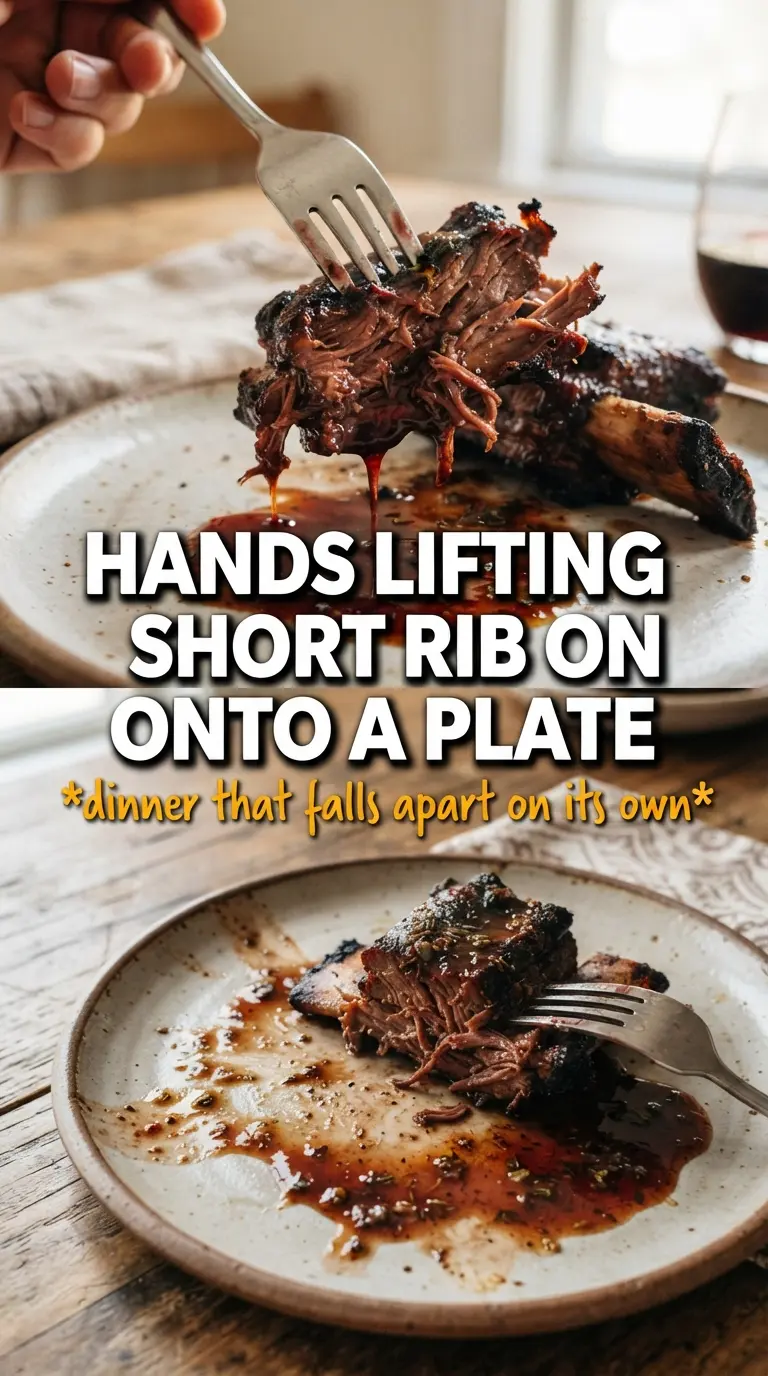
- Primary ingredient (the star) — Quality matters most. Choose the best you can find.
- Cooking medium (oil, butter, or broth) — This carries flavors and prevents dryness.
- Seasonings (salt, pepper, spices, herbs) — Layer flavors so nothing overpowers. Build depth gradually.
- Aromatics (garlic, onion, herbs) — Cook with fat to bloom flavors. Become the foundation.
- Supporting ingredients — Complement the main ingredient without overpowering it.
- Sauce or liquid (if applicable) — Brings flavors together. Balance richness with acid.
- Acid (lemon, vinegar, wine, or other) — Brightens and prevents flat-tasting results.
- Final finish (garnish, glaze, or sauce) — Prevents one-dimensional taste and adds visual appeal.
Building the Braise So the Sauce Has Real Depth
Brown the ribs until the surface is deeply caramelized
Season the short ribs generously, then sear them in hot olive oil until they develop a dark brown crust on all sides. That crust is where a lot of the flavor comes from, and if the pan isn’t hot enough, the ribs will gray out instead of browning. Work in batches so the meat has room; crowded meat steams, and steamed meat makes a weaker braise.
Layer the vegetables and liquid in the right order
Scatter the onion, garlic, carrots, and celery in the bottom of the Crockpot, then set the seared ribs on top. Whisk the broth, wine, tomato paste, and Worcestershire together before pouring them in so the tomato paste dissolves fully. If you dump it in straight from the spoon, it can sit in clumps and never fully blend into the sauce.
Cook low and leave it alone
Cover the Crockpot and cook on Low for 7 to 8 hours, until the meat gives easily when nudged with a fork. Don’t switch to high to speed things up; that usually tightens the meat before the collagen has time to soften properly. By the end, the ribs should be supple and nearly sliding off the bone.
Finish the sauce before serving
Lift the ribs out and remove the bay leaves, then skim off any excess fat from the surface of the braising liquid. Stir in the cornstarch slurry on High for about 15 minutes until the sauce turns glossy and lightly coats a spoon. If the sauce seems thin at first, give it time; cornstarch needs a few minutes of heat to thicken fully.
What to Change When You Need a Different Version
Dairy-Free Serving Swap
The braised ribs are already dairy-free, so the only adjustment is what you serve underneath. Mashed potatoes still work beautifully if you use olive oil or a plant-based butter, and the sauce stays rich enough to carry the whole plate without any cream.
Lower-Carb Version
Skip the mashed potatoes and serve the ribs over cauliflower mash or roasted turnips. The sauce is still the star, and the vegetables in the pot keep enough sweetness and body to make the dish feel complete.
No-Wine Substitute
Replace the red wine with extra beef broth plus 1 tablespoon red wine vinegar or balsamic vinegar. You’ll lose a little of the wine’s roundness, but the acid keeps the sauce from tasting heavy and helps sharpen the beef flavor.
Storage and Reheating
- Refrigerator: Store in an airtight container for up to 4 days. The sauce may thicken as it chills, which is normal.
- Freezer: Freezes well for up to 3 months. Cool completely, portion with sauce, and thaw overnight in the refrigerator before reheating.
- Reheating: Warm gently on the stove or in the microwave with a splash of broth if needed. Reheat just until hot; a hard boil can dry out the meat and make the sauce separate.
Answers to the Questions Worth Asking
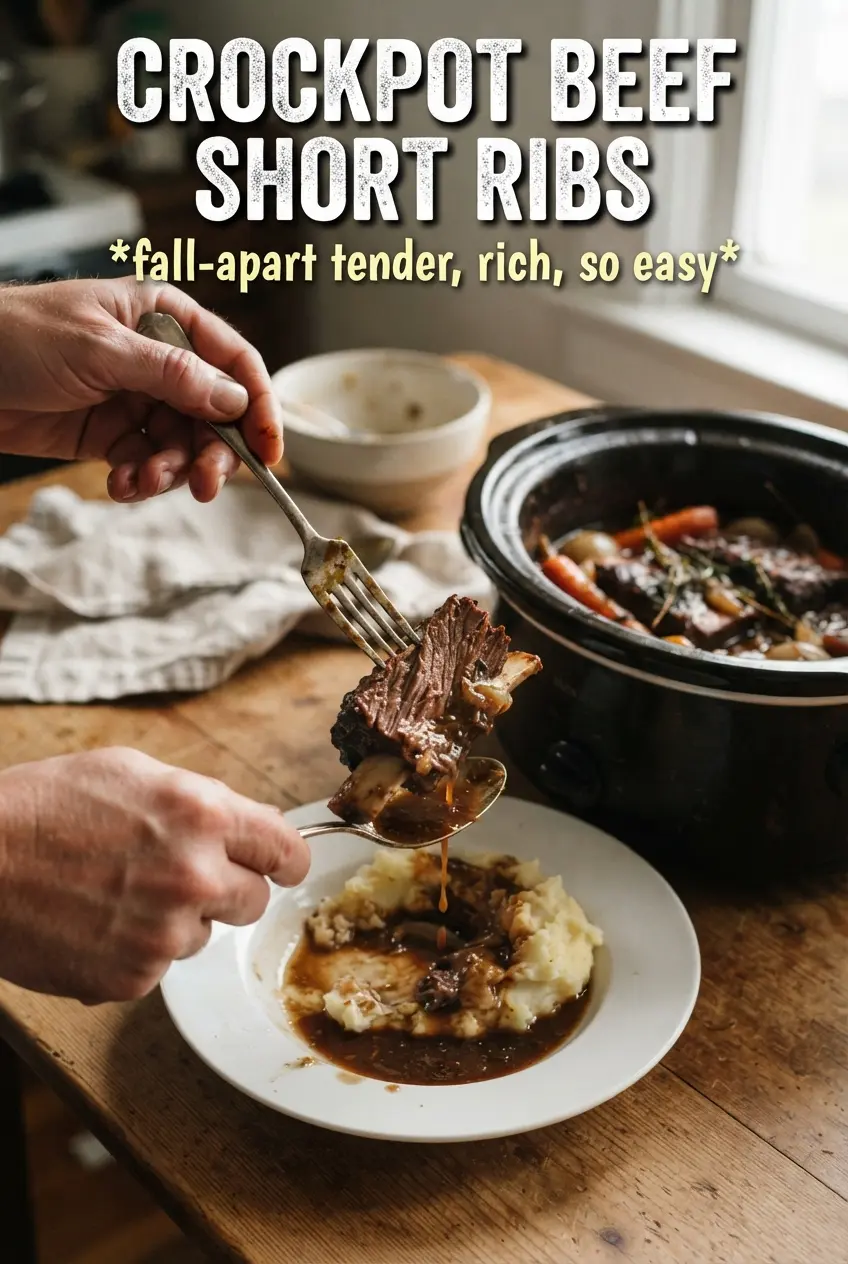
Crockpot Beef Short Ribs
Ingredients
Equipment
Method
- Season bone-in beef short ribs generously with salt and pepper. Sear in olive oil in a hot cast iron skillet until deeply browned on all sides, about 8 to 10 minutes total.
- Add onion, garlic, carrots, and celery to the crockpot, then nestle the seared ribs on top. Keep the ribs evenly spaced for better coverage in the liquid.
- Whisk beef broth, red wine, tomato paste, and Worcestershire sauce until smooth. Pour the braising liquid over the ribs so they are mostly submerged.
- Add dried thyme, dried rosemary, and bay leaves to the pot. Cook on Low for 7 to 8 hours until the meat is falling off the bone, with the surface gently simmering.
- Remove the ribs and bay leaves, then skim fat from the braising liquid. Stir as you skim so you capture the excess sheen.
- Thicken the sauce with a cornstarch slurry, then cook on High for 15 minutes while stirring occasionally. The braising liquid should turn glossy and coat the back of a spoon.
- Serve the short ribs over mashed potatoes and spoon the thickened braising sauce on top. Garnish with fresh thyme if desired for a brighter finish.