Golden chicken thighs, tender apples, and a cider cream sauce make this the kind of skillet dinner that tastes far more composed than the effort it takes. The chicken stays juicy under a crisp, deeply browned skin, and the sauce lands in that sweet-savory middle ground where the cider, Dijon, and thyme keep each bite bright instead of heavy.
What makes this version work is the order. The thighs are seared first so the skin has time to render and crisp before any liquid goes in, then the shallots and apples cook in the same pan until they pick up some color. That gives the sauce a richer base than you get from just simmering everything together. The cider needs a minute or two to cook down before the broth and cream go in, or the sauce can taste thin and the apple flavor can pull too sharp.
Below you’ll find the exact cues I use to know when the chicken is ready to flip, when the sauce has reduced enough, and how to keep the cream from dulling the whole dish at the end.
The chicken skin stayed crisp even after simmering, and the cider sauce reduced into this glossy, light gravy that clung to the apples. I served it with mashed potatoes and there wasn’t a drop left.
Save this French Apple Cider Chicken for the night you want crisp-skinned chicken, apples, and a silky cider sauce in one pan.
The Trick to Keeping the Skin Crisp Under a Cream Sauce
The biggest mistake with braised chicken is adding the liquid before the skin has had time to render. Once that happens, you don’t get crisp chicken anymore — you get pale, soft skin sitting in a sauce. Here, the thighs sear skin-side down first and stay there long enough to build real color, which means the skin has a fighting chance even after the simmer.
The other thing that matters is heat control after the cider goes in. A hard boil will tighten the chicken and can make the sauce separate once the cream is added. A gentle simmer keeps the thighs tender and gives the cider time to reduce into something deeper and rounder.
- Chicken thighs — Bone-in, skin-on thighs are the right cut here because they stay juicy through the simmer and the skin can actually brown well. Boneless thighs work in a pinch, but you’ll lose the best part of the dish: the contrast between crisp skin and silky sauce.
- Hard apple cider or fresh apple cider — Hard cider gives the sauce a drier, more complex finish. Fresh cider makes the dish a little sweeter and softer, which is still good; if you use fresh cider, let it reduce a touch longer before the broth goes in.
- Shallots — They melt into the sauce instead of standing out as sharp onion pieces. A small yellow onion works if that’s what you have, but slice it thinner so it softens at the same pace as the apples.
- Dijon mustard — This keeps the cream sauce from tasting flat. It doesn’t make the dish taste mustardy; it sharpens the cider and helps the sauce feel finished.
- Heavy cream — This is what gives the sauce its body at the end. Half-and-half can work, but the sauce will be looser and a little more prone to splitting if it boils.
- Thyme and rosemary — Thyme gives the dish its French backbone, while rosemary should stay in the background. Use a light hand with the rosemary; too much and it takes over the apples.
What Each Ingredient Is Actually Doing in This Recipe

- Primary ingredient (the star) — Quality matters most. Choose the best you can find.
- Cooking medium (oil, butter, or broth) — This carries flavors and prevents dryness.
- Seasonings (salt, pepper, spices, herbs) — Layer flavors so nothing overpowers. Build depth gradually.
- Aromatics (garlic, onion, herbs) — Cook with fat to bloom flavors. Become the foundation.
- Supporting ingredients — Complement the main ingredient without overpowering it.
- Sauce or liquid (if applicable) — Brings flavors together. Balance richness with acid.
- Acid (lemon, vinegar, wine, or other) — Brightens and prevents flat-tasting results.
- Final finish (garnish, glaze, or sauce) — Prevents one-dimensional taste and adds visual appeal.
Building the Sauce in the Same Pan the Chicken Started In
Getting the Skin Brown Before Anything Else
Season the thighs well and place them skin-side down in the hot olive oil and butter. Don’t move them around while they cook; the skin needs steady contact with the pan to render and turn a deep gold color. If the skin sticks, it’s not ready to turn yet. Once it releases cleanly, flip it and cook the second side briefly before taking it out.
Softening the Apples and Shallots
The apples and shallots go into the same pan after the chicken comes out, and that’s where a lot of the flavor builds. Cook them until the edges look golden and the shallots turn translucent, not browned and bitter. If the pan seems dry, the butter left behind from the sear is enough; if you added too much heat earlier, lower it now so the fruit doesn’t scorch before it softens.
Reducing the Cider
When you add the cider, it should hiss and loosen all those browned bits from the bottom of the pan. Let it bubble for a couple of minutes before the broth and Dijon go in so the sharpest alcohol notes cook off and the liquid gains body. This step is where the sauce starts to taste like itself, not like separate ingredients floating together.
Finishing Without Breaking the Sauce
Return the chicken skin-side up and simmer gently until the thighs are cooked through. The skin will not stay fully crisp, but it should keep some texture if you avoid boiling hard. Stir in the cream at the end over low heat and give it a few minutes to thicken; if the sauce looks grainy, the heat was too high, so pull the pan back and let it settle before serving.
What to Change When You Need a Different Version of This Dish
Dairy-Free Version
Swap the butter for more olive oil and replace the heavy cream with full-fat coconut milk or an unsweetened dairy-free cooking cream. Coconut milk will make the sauce a little richer and slightly sweeter, so keep the Dijon in place to balance it.
Make It Without Alcohol
Use fresh apple cider instead of hard cider and let it reduce a little longer before adding the broth. That extra simmering time matters because you need some of that liquid to cook down or the sauce can taste sweet and thin.
Gluten-Free as Written
This dish is naturally gluten-free as long as your broth and Dijon are certified gluten-free. The texture of the sauce comes from reduction and cream, not flour, so you don’t need a substitute.
What to Serve It Over
Mashed potatoes soak up the sauce best, but buttered egg noodles or rice work too. If you want a lighter plate, serve it with roasted potatoes and a crisp green salad so the sauce still has something substantial to cling to.
Storage and Reheating
- Refrigerator: Store in an airtight container for up to 4 days. The sauce will thicken as it chills.
- Freezer: It freezes, but the cream sauce can separate a bit when thawed. If you plan to freeze it, cool it fully and reheat gently.
- Reheating: Warm it in a covered skillet over low heat with a splash of broth or water. Don’t boil it; high heat is what makes the cream sauce break and the chicken dry out.
Answers to the Questions Worth Asking
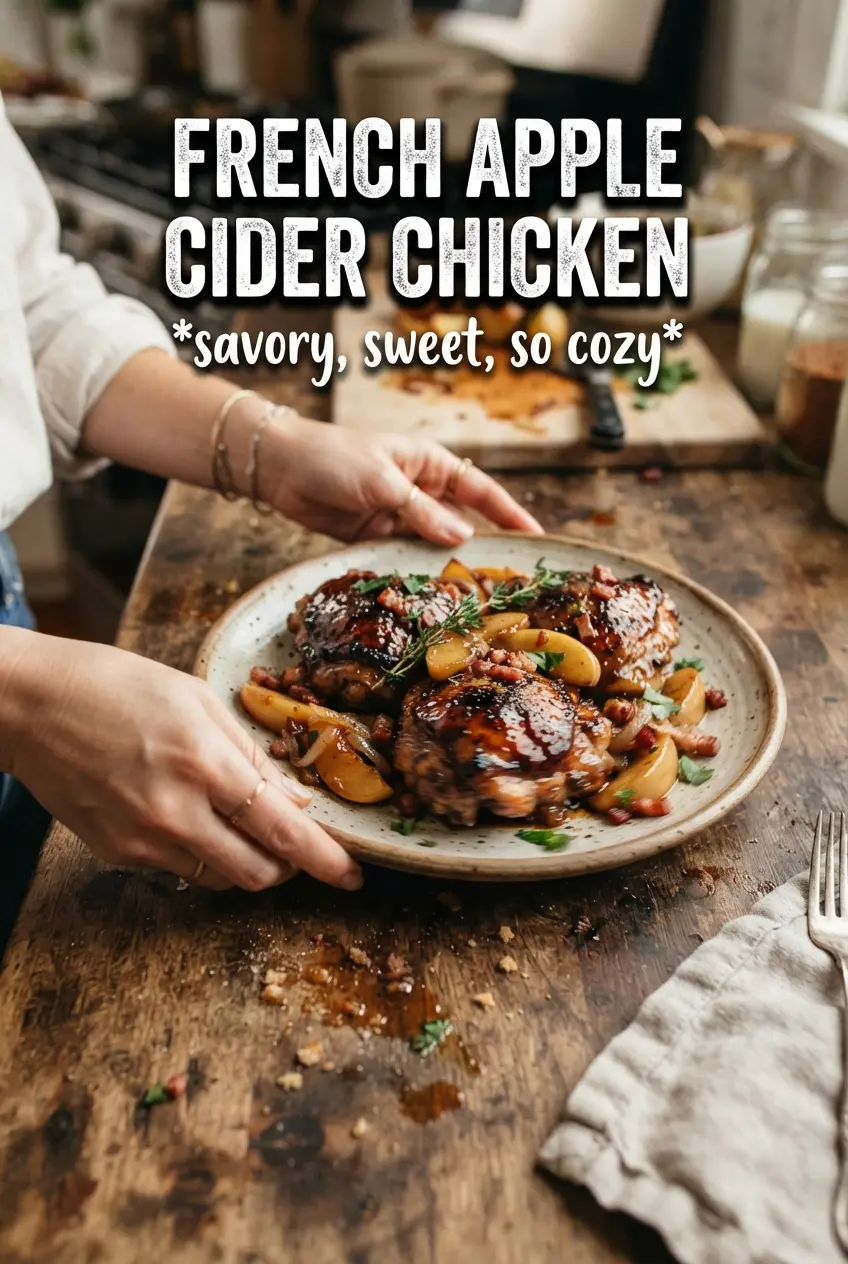
French Apple Cider Chicken
Ingredients
Equipment
Method
- Season chicken thighs well with salt and pepper. Heat olive oil and butter in a Dutch oven over medium-high heat, then sear skin-side down 6-8 minutes until the skin is golden.
- Flip the chicken and cook 3 more minutes, then remove to a plate.
- In the same pot, sauté shallots and apple slices over medium-high heat for 4-5 minutes until golden. Add garlic, fresh thyme, and dried rosemary, then cook 1 minute until fragrant.
- Pour in the cider to deglaze, scraping up the browned bits, and cook 2 minutes. Add chicken broth and Dijon mustard, stirring to combine.
- Return chicken skin-side up to the pot, cover, and simmer 20 minutes until cooked through.
- Stir in heavy cream and simmer 5 minutes, until the sauce turns glossy. Taste and season with salt and pepper, then serve hot.