Deeply caramelized onions, tender chicken, and creamy orzo come together under a Gruyere crust that turns bronzed and savory in the oven. The best part is how the orzo cooks right in the pan, soaking up beef broth, white wine, and all those oniony drippings so every bite tastes built, not assembled.
This version works because it treats the onions like the main event instead of a background note. Thirty to thirty-five minutes sounds long, but that slow cook is what gives the casserole its French onion flavor instead of just “onion soup” vibes. The cream cheese melts into the broth and keeps the sauce plush, while Gruyere gives you that stretchy, nutty top that feels right for this dish.
Below, I’ve included the one part that matters most if you want the onions dark and sweet without burning them, plus a few swaps and storage notes so you can actually use the recipe again next week.
The onions caramelized into a deep jammy layer and the orzo stayed creamy instead of turning mushy. I followed the bake time exactly and the top came out golden with those crispy Gruyere edges my husband kept picking off.
Save this French Onion Chicken Orzo Casserole for the nights when you want a creamy baked dinner with a caramelized onion crust and almost no cleanup.
The Reason the Onions Need the Full 30 Minutes
If the onions are pale, the casserole tastes flat. This dish depends on deep caramelization, not just softened onions, because the sweetness and browned edges are what keep the finished sauce from tasting one-note. That long cook also gives you enough fond in the pan to build the rest of the dish without needing extra seasoning tricks.
The other common mistake is adding the liquid before the onions are ready. Once the broth and wine go in, the onions stop browning and start steaming, so all the color has to happen first. You want them dark gold, soft enough to collapse on the spoon, and just starting to stick before you deglaze.
- Caramelized onions — These carry the whole French onion idea. Don’t rush them over high heat, or they’ll burn on the outside before they turn sweet inside.
- Dry white wine — This lifts the browned bits from the pan and gives the sauce a sharp edge. Use something dry and drinkable; sweet wine will fight the savory notes.
- Gruyere — It melts into that nutty, stretchy top this casserole needs. Swiss is the closest substitute, but the flavor will be milder and less distinctive.
- Cream cheese — This is what gives the sauce body without needing a flour roux. Cut it into cubes so it melts faster and more evenly into the simmering broth.
What Each Ingredient Is Doing in the Pan

- Chicken breast — Dice it into even pieces so it cooks through in the same time the orzo softens. Thighs work too if you want a juicier result, but they’ll make the casserole a little richer.
- Orzo — Uncooked orzo is what turns this from a skillet dinner into a casserole. It absorbs the broth as it bakes and gives the dish a risotto-like texture without constant stirring.
- Beef broth — This is the backbone of the French onion flavor. Chicken broth works in a pinch, but the finished dish tastes deeper and more like classic onion soup with beef broth.
- Worcestershire sauce — A small amount adds savory depth and a hint of tang that keeps the sauce from tasting heavy. There isn’t a direct substitute that does exactly the same thing, though soy sauce can stand in if that’s what you have.
- Fresh thyme — Use it at the end for a brighter finish. Dried thyme belongs in the pan early; fresh thyme is better as garnish because it keeps the top from tasting dusty.
Building the Casserole Without Ending Up With Mushy Orzo
Caramelizing the onions first
Melt the butter in a large oven-safe skillet and give the onions time to soften, then deepen in color. Stir often enough to keep them from scorching, but not so much that they never take on any color. The target is a dark golden-brown onion base with sweet, sticky edges. If the pan starts looking dry before the onions are ready, lower the heat rather than adding more butter.
Deglazing and building the broth
Once the garlic and thyme are fragrant, pour in the wine and scrape the bottom of the pan while it bubbles. That step pulls up the browned bits that make this taste like French onion instead of plain chicken and pasta. Let the wine cook for a couple of minutes so the sharp alcohol edge cooks off, then add the broth and Worcestershire.
Cooking the orzo with the chicken
Stir in the uncooked orzo and the diced chicken, then bring everything to a gentle simmer. You want the liquid hot and moving, not at a hard boil, or the orzo can grab at the bottom before the chicken is cooked through. Stir in the cream cheese until the sauce looks smooth and lightly thickened, even if a few small bits remain at first; they’ll melt fully in the oven.
Finishing under the Gruyere crust
Scatter the cheese evenly over the top and bake until the orzo is tender, the chicken is cooked through, and the top is blistered and golden. If the cheese browns before the center is done, lay a piece of foil loosely over the skillet for the last part of the bake. Let it sit for a few minutes before serving so the sauce settles and doesn’t spill out like soup.
How to Adapt This for Different Kitchens and Different Diets
Gluten-Free Version With the Same Cozy Finish
Swap the orzo for a gluten-free small pasta that can bake in liquid, and check that your Worcestershire sauce is gluten-free. The texture will be close, though some gluten-free pastas need a little less bake time, so start checking a few minutes early.
Dairy-Free Swap That Still Gives You Creaminess
Use a dairy-free cream cheese that melts well and finish with a plant-based shredded cheese that browns in the oven. You’ll lose some of Gruyere’s nutty depth, but the casserole will still hold together and feel rich.
Using Chicken Thighs Instead of Breast
Boneless thighs bring more fat and a slightly more forgiving texture, which is nice if you’re worried about dry chicken breast. They’ll give you a richer, more savory casserole, though the final dish will feel a little heavier.
Make-Ahead for a Busy Night
You can caramelize the onions a day ahead and refrigerate them, which cuts the active cooking time way down. For the full casserole, bake it just before serving so the orzo stays creamy instead of absorbing too much liquid in the fridge.
Storage and Reheating
- Refrigerator: Store covered for up to 4 days. The orzo will thicken as it sits, so expect a creamier, denser texture the next day.
- Freezer: It freezes, but the sauce softens a bit after thawing. Freeze in portions for the best texture, then thaw overnight in the fridge.
- Reheating: Reheat covered in the oven at 325F with a splash of broth to loosen the sauce. Microwaving works for single servings, but stop and stir once or twice so the cheese and pasta warm evenly instead of drying out at the edges.
The Questions That Come Up Before the First Bite
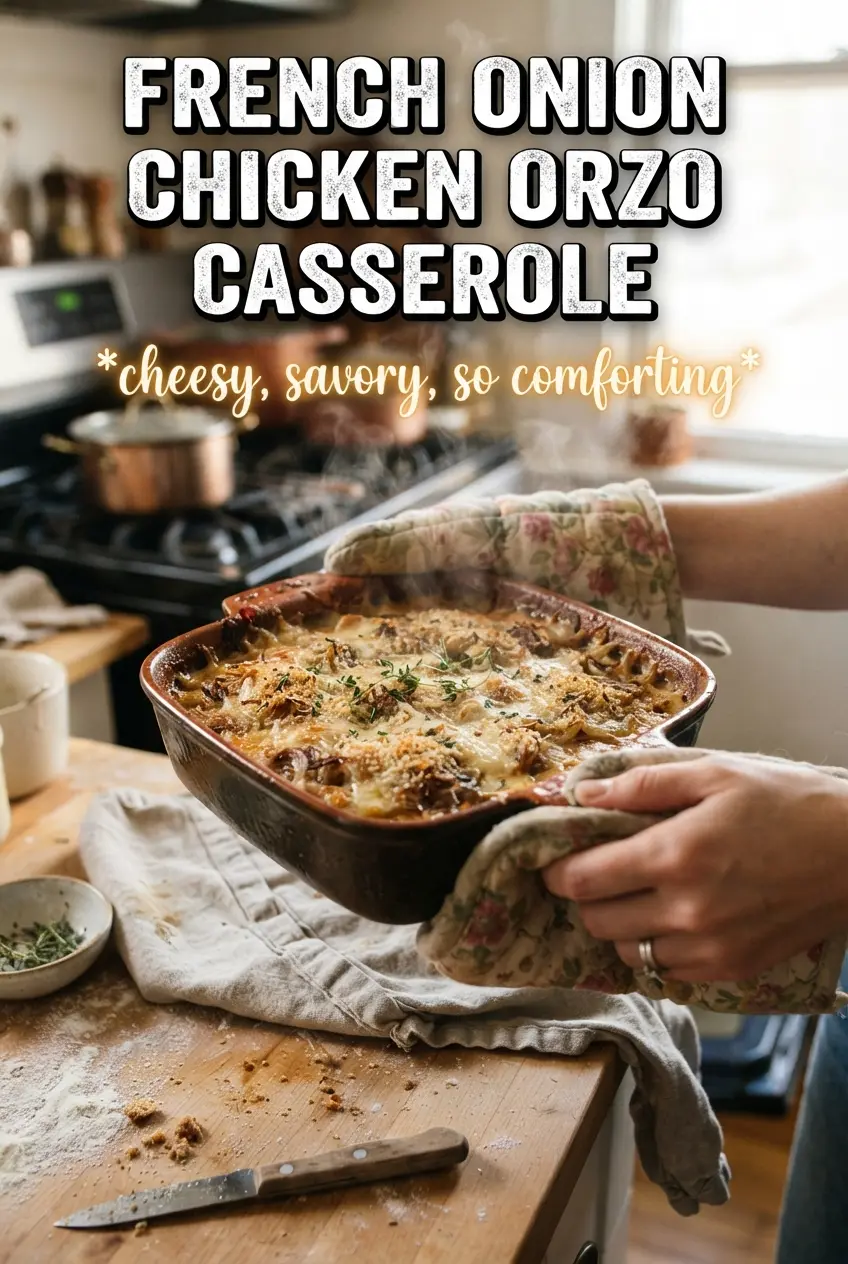
French Onion Chicken Orzo Casserole
Ingredients
Equipment
Method
- Preheat the oven to 375F.
- Melt the butter in a large oven-safe skillet over medium heat, then add the onions and cook 30-35 minutes until deeply caramelized, stirring as needed so they brown evenly.
- Add the garlic and dried thyme and cook 2 minutes, until fragrant.
- Pour in the white wine and cook 2 more minutes to reduce slightly.
- Add the beef broth, Worcestershire sauce, uncooked orzo, and diced chicken, then stir until the orzo is evenly distributed.
- Bring to a simmer, then stir in the cubed cream cheese until fully melted and the mixture looks creamy.
- Season with salt and pepper to taste, then scatter the shredded Gruyère over the top in an even layer.
- Bake 25-30 minutes, until the orzo is cooked through, the chicken is done, and the cheese is golden and bubbling with browned spots along the surface.