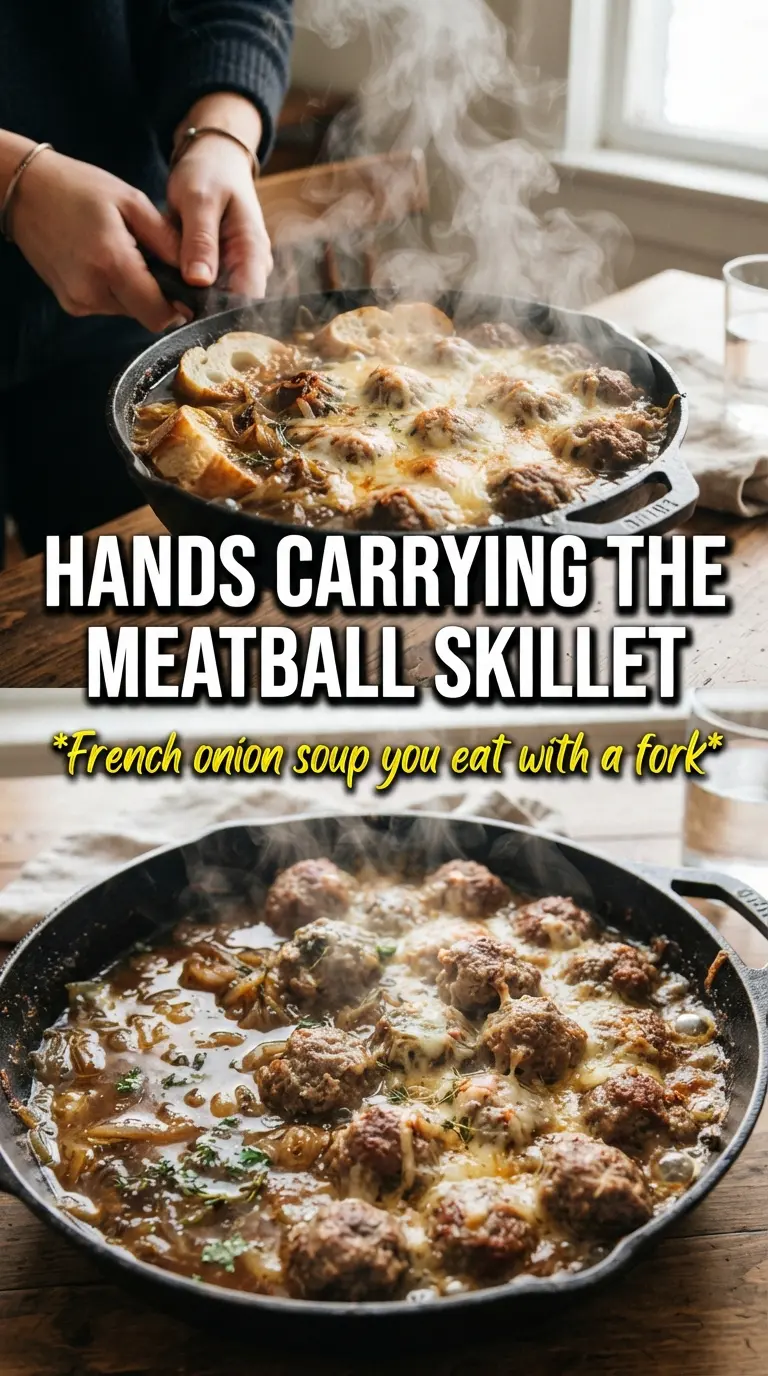
Deeply caramelized onions, browned meatballs, and a blanket of bubbling Gruyère make this skillet dinner hit all the same notes as classic French onion soup, just with enough substance to stand on its own. The onions turn sweet and jammy, the broth gets glossy and savory, and the cheese melts into the crevices instead of sitting on top in one thick sheet. It eats like a cozy one-pan meal, but it still has the kind of layered flavor that makes people go quiet at the table for a minute.
The trick is patience with the onions and restraint with the heat. If you rush them, you get pale, sharp-tasting slices instead of that deep brown base that carries the whole dish. Browning the meatballs first matters too, because those fond bits left in the pan help build the sauce before the broth ever goes in. Once the onions are ready, everything comes together fast and finishes under the broiler, which is where the cheese gets its bronze, bubbly top.
Below, I’ve laid out the parts that matter most: how to get the onions where they need to be, how to keep the meatballs tender, and what to do if you want to adapt the skillet for a different diet or make it ahead.
The onions turned perfectly sweet and jammy, and the Gruyère browned under the broiler without getting greasy. I served it with crusty bread and my husband kept going back for the sauce.
French Onion Meatball Skillet brings that rich onion-and-Gruyère finish into one bubbling pan for an easy dinner with real depth.
The Onion Stage That Decides Whether This Skillet Tastes Flat or Deep
French onion flavor lives or dies with the onions. You need them soft, golden at first, then slowly pushed all the way to a deep brown with the edges almost catching before you add the wine. That’s where the sweetness comes from, and it’s what keeps this from tasting like meatballs in basic onion gravy.
The other place people go wrong is cranking the heat. Medium-low is not optional here. High heat browns the outside of the onions before the water has time to cook off, so you end up with bitter spots and a thin sauce instead of that spoon-coating, savory base.
- Butter — This gives the onions enough fat to soften and take on color without sticking. You can use less, but the onions will cook more harshly and won’t taste as rounded.
- Dry white wine — The wine loosens the browned bits from the pan and adds acidity that keeps the sauce from tasting heavy. If you need a swap, use a splash of extra broth plus a teaspoon of white wine vinegar, added at the same point.
- Gruyère — This is the cheese that gives the skillet its French onion character. It melts smoothly and browns well under the broiler; Swiss cheese works in a pinch, but the flavor will be milder and less nutty.
- Beef broth — Use one with decent flavor, because this is the body of the sauce. If your broth tastes thin, reduce it a few extra minutes before adding the meatballs.
What Each Ingredient Is Actually Doing in This Recipe
- Primary ingredient (the star) — Quality matters most. Choose the best you can find.
- Cooking medium (oil, butter, or broth) — This carries flavors and prevents dryness.
- Seasonings (salt, pepper, spices, herbs) — Layer flavors so nothing overpowers. Build depth gradually.
- Aromatics (garlic, onion, herbs) — Cook with fat to bloom flavors. Become the foundation.
- Supporting ingredients — Complement the main ingredient without overpowering it.
- Sauce or liquid (if applicable) — Brings flavors together. Balance richness with acid.
- Acid (lemon, vinegar, wine, or other) — Brightens and prevents flat-tasting results.
- Final finish (garnish, glaze, or sauce) — Prevents one-dimensional taste and adds visual appeal.
Building the Skillet So the Meatballs Stay Tender
Browning the Meatballs First
Mix the meatball ingredients just until combined, then roll them into even portions. If you work the mixture too hard, the meatballs get dense instead of tender. Brown them in the buttered skillet until they have color on several sides, then move them out of the pan. They do not need to be cooked through yet; the simmer in the sauce finishes them without drying them out.
Slow-Cooking the Onions Down to Jammy
Use the same skillet and let the onions cook slowly in the fat left behind. Stir them often at first, then more casually as they start to collapse and deepen in color. If you see dark spots forming too fast, lower the heat and add a splash of water to stop the pan from scorching. Garlic goes in near the end so it softens without burning, and the thyme should be fragrant the second it hits the hot onions.
Deglazing and Simmering the Sauce
Pour in the wine and scrape the pan hard with a wooden spoon. That browned layer on the bottom is where the best flavor is hiding. Let the wine reduce before adding the broth and Worcestershire, then nestle the meatballs back in and simmer until they’re cooked through and the sauce has a little body. If the liquid still looks too thin, give it a few extra minutes uncovered before the cheese goes on.
The Cheese Finish
Scatter the Gruyère over the meatballs and onions in an even layer, then broil just until the top is melted, bubbling, and spotted with gold. Watch it closely. The jump from perfect to burnt happens fast once the cheese starts to color. Pull the skillet as soon as you see those browned bubbles forming around the edges.
What to Change When You Need a Different Version
Dairy-Free Skillet
Swap the butter for olive oil and leave off the Gruyère, or use a dairy-free melt if you’ve found one that actually browns well. You’ll lose some of the classic French onion richness, but the caramelized onions and beefy broth still carry most of the flavor.
Gluten-Free Meatballs
Use certified gluten-free breadcrumbs in the meatballs and check your Worcestershire label, since some brands contain gluten. The texture stays the same as long as you don’t overmix the meat.
Chicken or Turkey Meatballs
Ground chicken or turkey works if you want a lighter skillet, but the flavor is less rich, so the onion sauce matters even more. Brown them gently and pull them from the heat as soon as they’re cooked through so they stay juicy.
Storage and Reheating
- Refrigerator: Store leftovers in an airtight container for up to 3 days. The onions will thicken and the cheese will firm up, but the flavor gets even deeper overnight.
- Freezer: Freeze the meatballs and onion sauce without the cheese for up to 2 months. Thaw in the refrigerator before reheating, then add fresh Gruyère at the end for the best texture.
- Reheating: Warm gently on the stovetop over low heat with a splash of broth to loosen the sauce. High heat will dry out the meatballs and can make the onions stick.
Answers to the Questions Worth Asking
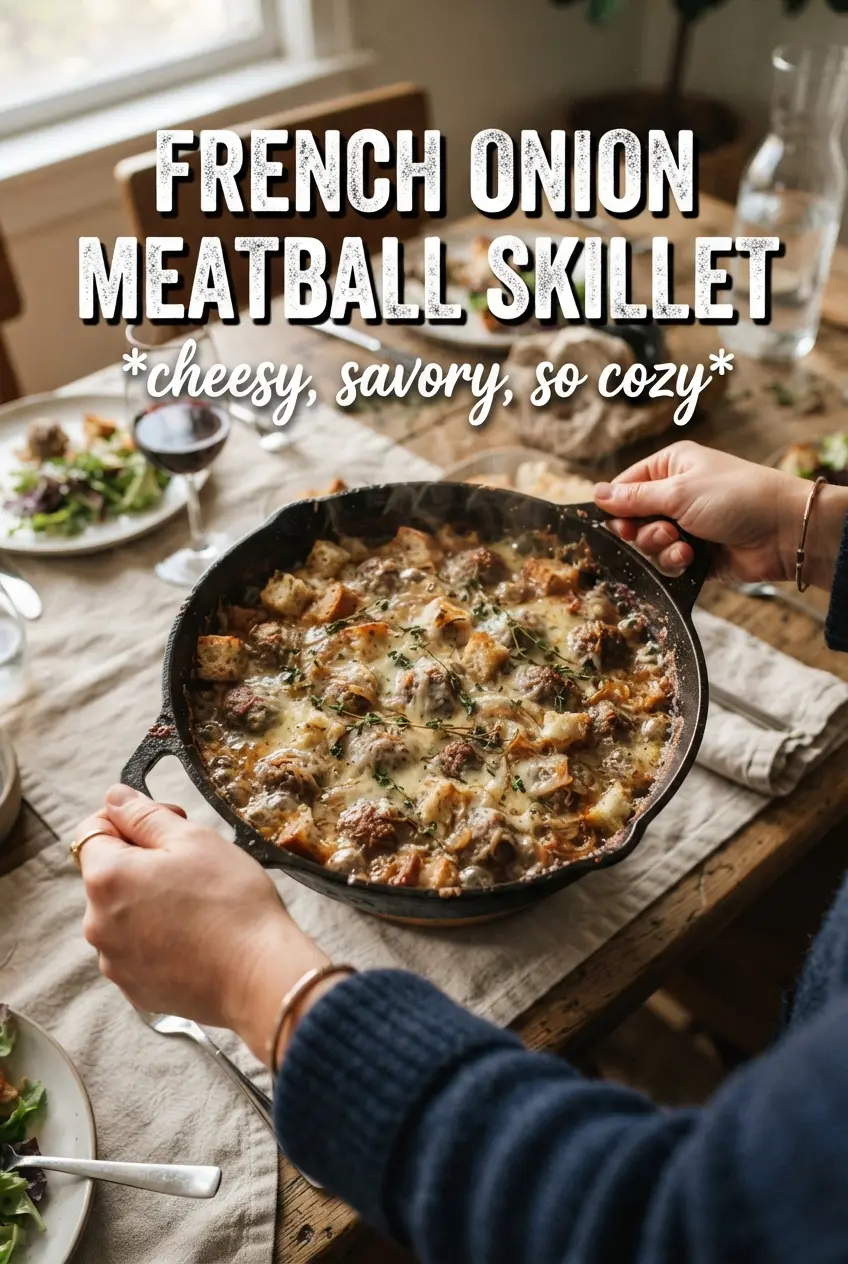
French Onion Meatball Skillet
Ingredients
Equipment
Method
- In a bowl, mix ground beef, breadcrumbs, egg, Worcestershire, garlic powder, salt, and pepper until just combined.
- Roll the mixture into meatballs and keep them ready for browning in the skillet.
- Melt 2 tablespoons of butter in an oven-safe skillet over medium-high heat, then add meatballs and brown on all sides for about 3-5 minutes.
- Remove the meatballs to a plate and keep the skillet drippings in place.
- Lower heat to medium-low and add remaining 2 tablespoons butter, then cook onions, stirring occasionally, for 30-35 minutes until deeply caramelized.
- Add minced garlic and fresh thyme and cook for 1-2 minutes until fragrant.
- Pour in dry white wine and deglaze, scraping up browned bits from the bottom of the skillet, then let it bubble for 2 minutes.
- Stir in beef broth and Worcestershire, then bring the mixture to a gentle simmer.
- Nestle browned meatballs into the caramelized onion sauce, then simmer for 10 minutes, turning once so they absorb sauce.
- Scatter shredded Gruyère over the entire surface so it melts into a browned layer.
- Broil for 3-5 minutes until golden and bubbly, watching closely to prevent burning.