Ginger garlic chicken noodle soup lands in the bowl with a clear, golden broth that tastes clean but still feels full and comforting. The ginger gives it a warm edge, the garlic builds depth, and the shredded chicken turns it into a complete meal instead of just a light soup. The noodles stay tender without taking over, and the finish of sesame oil and rice vinegar keeps each spoonful bright instead of flat.
What makes this version work is the order. The vegetables get a head start so they soften and sweeten before the broth goes in, and the ginger and garlic are cooked just long enough to bloom without turning bitter. Chicken breast or thighs both work here, but thighs give you a little more cushion if you’re worried about overcooking. The noodles go in at the end, which keeps them from soaking up too much broth and turning mushy while the soup sits.
Below, I’ve included the part that matters most if you want a broth that tastes balanced instead of dull, plus a few smart swaps if you need to work with what’s already in your kitchen.
The broth had a clean ginger-garlic flavor and the noodles stayed springy even after dinner. I used thighs and the chicken shredded so easily, and my husband went back for a second bowl before I even sat down.
Save this ginger garlic chicken noodle soup for the nights when you want a clear, soothing broth with tender chicken and noodles that still have a little bite.
The Secret to Clear Broth That Still Tastes Deeply Savory
The biggest mistake in chicken noodle soup is letting the broth get muddy or flat. That usually happens when the aromatics are undercooked, the chicken is boiled too hard, or the noodles sit in the pot long enough to steal too much liquid. This version avoids all three. The onion, carrots, and celery soften first, which gives the broth a sweeter base, and the chicken simmers gently instead of thrashing around in a hard boil.
Ginger and garlic do a lot of the heavy lifting here, but they need a brief cook before the liquid goes in. Raw garlic can taste sharp in broth, and ginger needs heat to release its warmth. The finish of sesame oil and rice vinegar matters too. Add them at the end so the aroma stays fresh and the soup tastes layered instead of one-note.
What Each Ingredient Is Actually Doing in This Soup
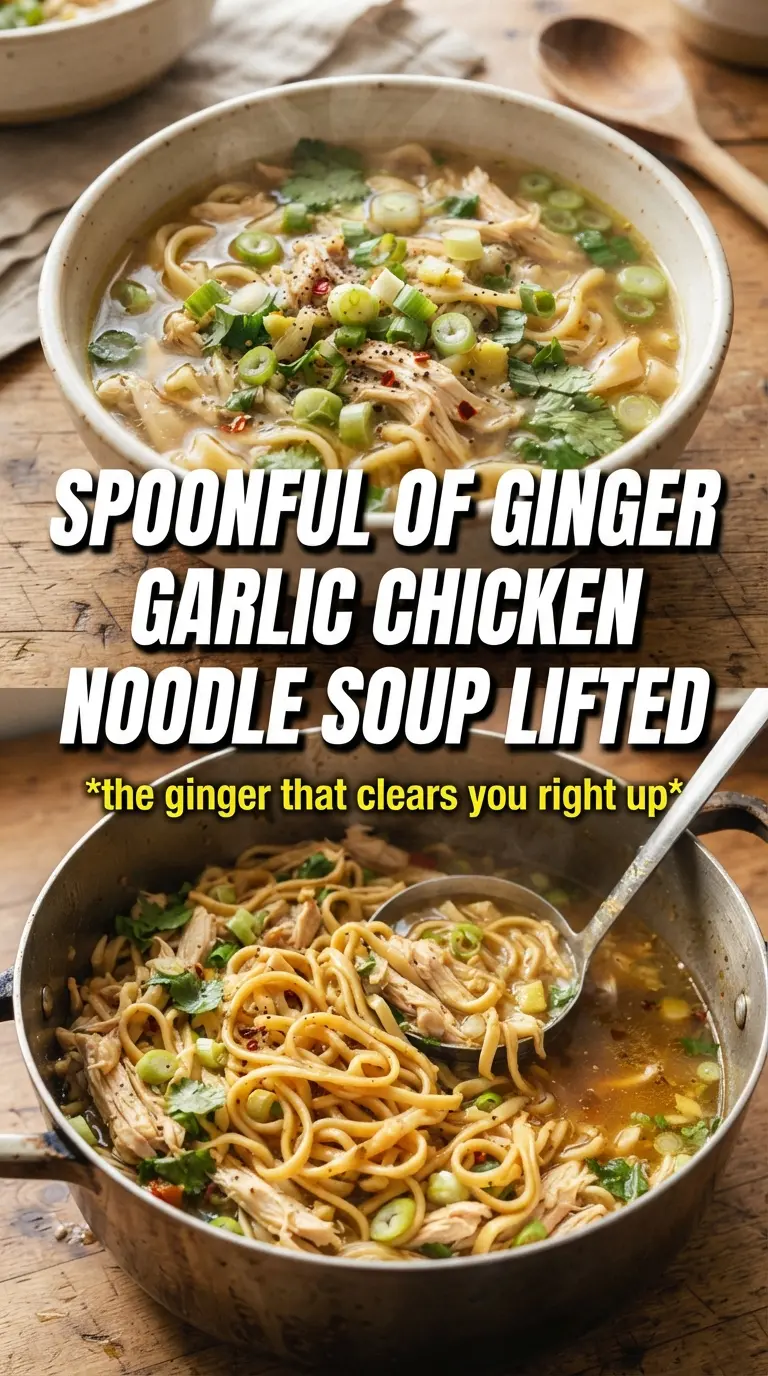
Chicken thighs give you the most forgiving texture and a richer broth, but chicken breast works well if you keep the simmer gentle and pull it as soon as it’s cooked through. If you use thighs, the meat stays juicy even if the pot goes a minute or two long. If you use breast, shred it while it’s still warm so it doesn’t dry out.
- Fresh ginger — Grated ginger gives the broth its warmth. Ground ginger won’t give the same clean, bright bite, so don’t swap that in unless you have no choice.
- Garlic — Six cloves may sound like a lot, but the soup needs them. They mellow in the broth and give the base enough backbone to stand up to the noodles.
- Rice vinegar — This is the small ingredient that wakes everything up at the end. Lemon can work in a pinch, but it changes the character of the soup.
- Sesame oil — Use the toasted kind if you have it. It adds a nutty finish, and because it goes in at the end, you only need a tablespoon to make the broth taste finished.
- Ramen or egg noodles — Either one works, but cook them just until tender. If you’re planning leftovers, undercook them slightly so they don’t turn soft in the fridge.
Building the Soup Without Overcooking the Chicken
Softening the Vegetables First
Start with the onion, carrots, and celery in a little oil and let them cook until the onion turns translucent and the carrots lose their raw crunch. That first 4-minute cook gives the broth a sweeter, rounder base. If the vegetables go in raw, the soup tastes thinner and the carrots stay a little too firm by the time everything else is done.
Blooming the Ginger and Garlic
Add the garlic and ginger after the vegetables have softened, and keep them moving for about 2 minutes. You want the pan to smell fragrant and a little sharp, but not browned. If the garlic starts to color deeply, it can turn bitter and take over the broth.
Simmering the Chicken Gently
Pour in the broth, soy sauce, and chicken, then bring the pot up to a boil only once before dropping it to a steady simmer. A hard boil makes the chicken stringy and can cloud the broth. After about 20 minutes, the chicken should be cooked through and easy to shred with two forks.
Finishing With Noodles and Brightness
Pull the chicken out first, shred it, and return it to the pot before the noodles go in. That keeps the meat from overcooking while the noodles soften. Stir in the sesame oil and rice vinegar at the very end, then taste for salt and pepper. The broth should taste savory, lightly tangy, and just aromatic enough that you notice it before the first spoonful.
What to Change When You Need to Work Around the Pantry
Use thighs for a richer, more forgiving soup
Chicken thighs bring more body to the broth and stay tender even if the simmer runs a little long. Breast is leaner and still works, but it needs a gentler hand and a shorter cooking window.
Make it gluten-free without losing the savory base
Use gluten-free noodles and swap the soy sauce for tamari or coconut aminos. Tamari tastes closest to regular soy sauce and keeps the broth balanced without changing the rest of the recipe.
Turn it into a clearer, lighter bowl
Use chicken breast, stick with ramen noodles, and keep the sesame oil to the tablespoon called for. That gives you a cleaner broth and a lighter finish without losing the ginger-garlic backbone.
Store it with the noodles separate if you want leftovers that hold up
The broth and chicken keep their texture well in the fridge, but noodles keep drinking liquid. If you know you’ll have leftovers, cook the noodles separately and add them to each bowl so the soup stays brothy instead of starchy.
Storage and Reheating
- Refrigerator: Keeps for 3 to 4 days. The noodles will soften as they sit, so expect a thicker bowl on day two.
- Freezer: Freeze the broth and chicken without the noodles for up to 3 months. Add fresh noodles after reheating for the best texture.
- Reheating: Warm it gently on the stove over medium-low heat until steaming. The common mistake is boiling it hard, which makes the chicken stringy and the noodles overly soft.
Answers to the Questions Worth Asking
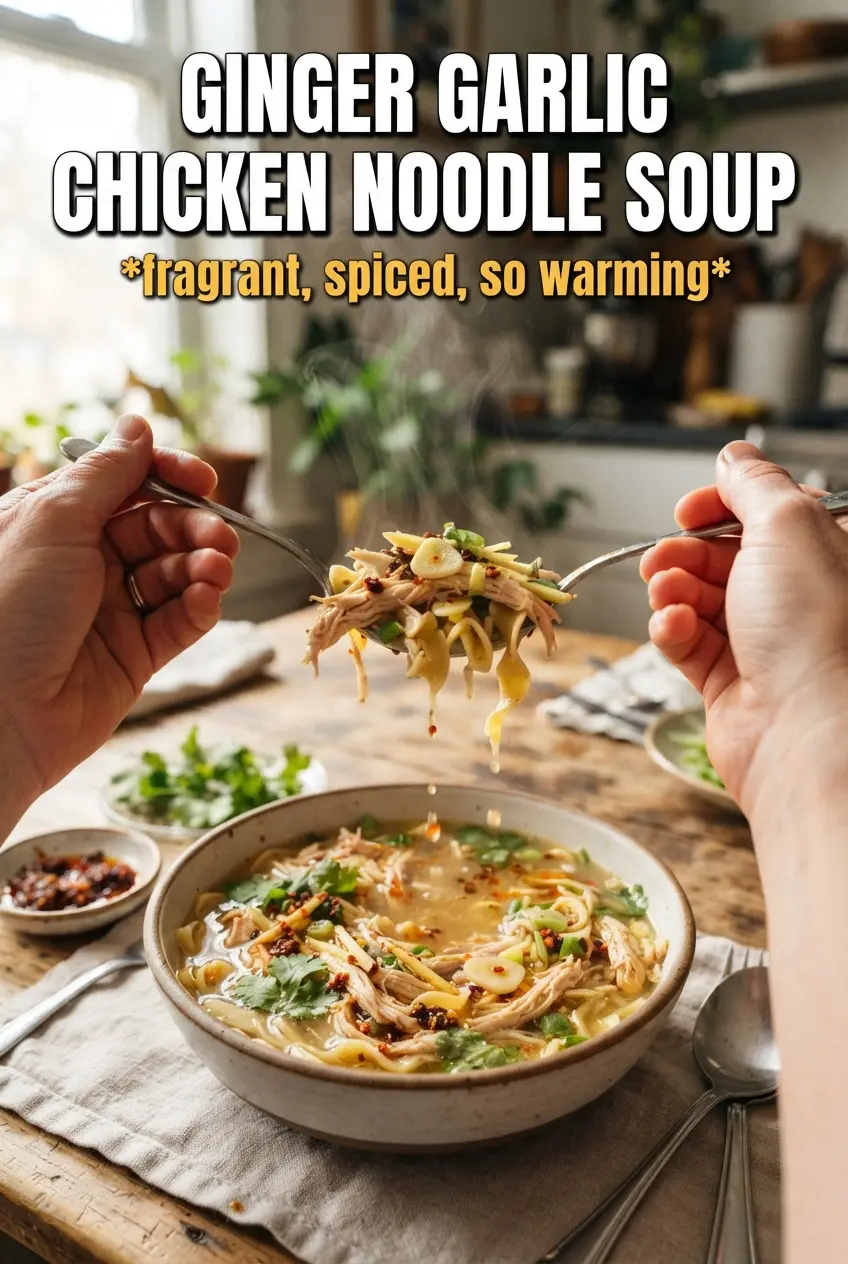
Ginger Garlic Chicken Noodle Soup
Ingredients
Equipment
Method
- Heat 1 tablespoon sesame oil in a large pot over medium heat, then sauté the onion, carrots, and celery for 4 minutes, stirring until slightly softened and glossy.
- Add the garlic and grated ginger and cook for 2 minutes, stirring constantly, until very fragrant.
- Add the chicken broth, soy sauce, and chicken to the pot, bring to a boil, then simmer for 20 minutes until the chicken is cooked through.
- Remove the chicken from the pot and shred it, then return the shredded chicken to the broth.
- Add the ramen noodles or egg noodles and cook for 3-5 minutes until tender.
- Stir in the sesame oil and rice vinegar, then season with salt and black pepper to taste.
- Ladle the soup into bowls and top with green onions, cilantro, and sesame seeds for a fresh, aromatic finish.