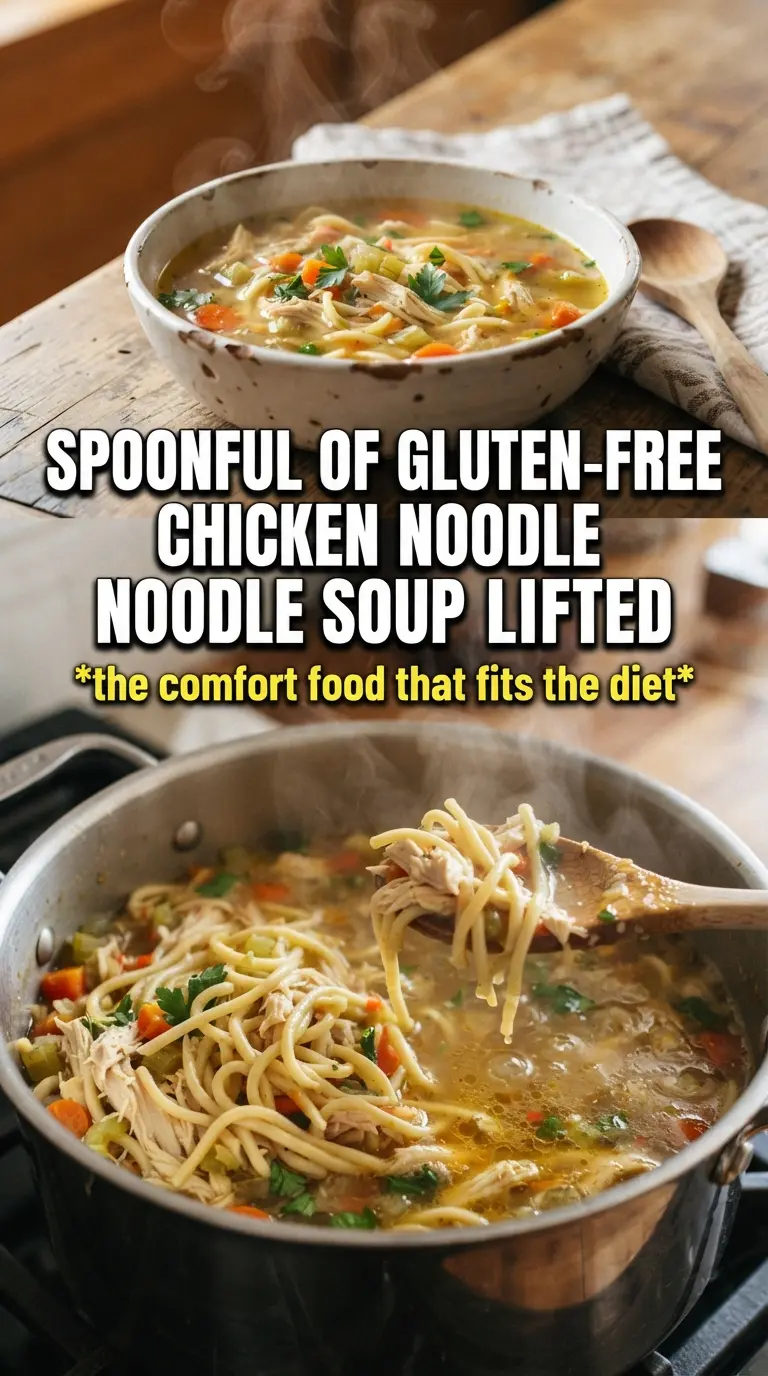
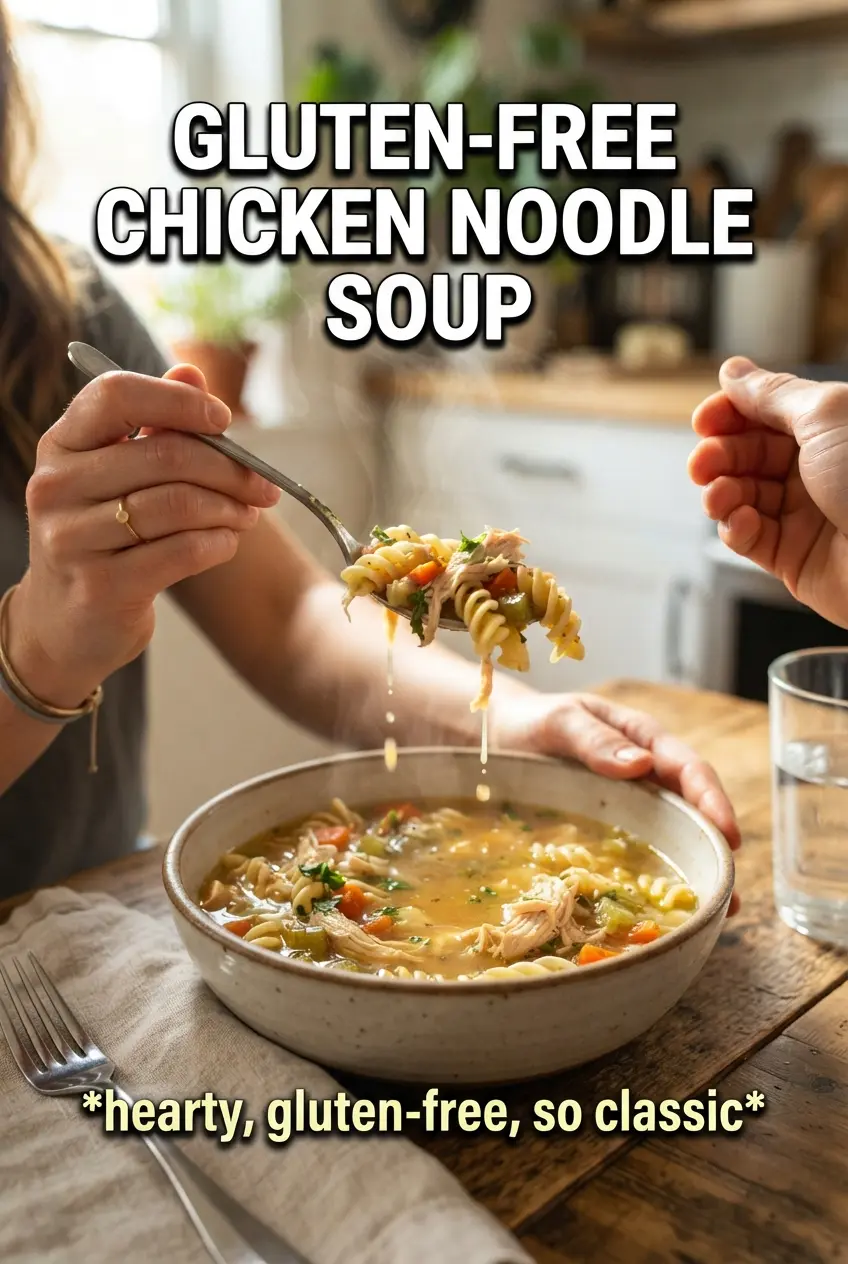
Gluten-free chicken noodle soup should still taste like the bowl you remember: clear golden broth, tender shredded chicken, soft carrots and celery, and noodles that hold together instead of turning the whole pot cloudy. When it’s done right, nobody misses the wheat pasta. The broth stays clean and savory, the vegetables keep just enough bite, and the noodles soak up flavor without going mushy.
The part that matters most here is timing. The chicken cooks gently in the broth so it stays juicy, and the gluten-free pasta goes in only at the end. That keeps it from overcooking and breaking apart, which is the fastest way to ruin a good soup. I also like using a certified gluten-free broth and a pasta shape that can stand up to simmering, whether that’s brown rice rotini or GF egg noodles.
Below, I’ve included the small details that make a difference: how to keep the noodles from getting soft too fast, which gluten-free pastas hold best, and what to do if you want to stretch the soup for leftovers without losing that fresh homemade texture.
The broth stayed clear and the gluten-free noodles held up better than I expected. I added the pasta at the end like you said, and even the leftovers the next day were still great.
Love the clear broth and tender gluten-free noodles in this chicken soup? Save it to Pinterest for the days when you want classic comfort without the wheat.
The Trick to Keeping Gluten-Free Noodles From Turning to Mush
Gluten-free pasta behaves differently than wheat pasta. It keeps cooking after you turn off the heat, and it can go from pleasantly tender to soft and fragile fast. That’s why the soup base needs to be fully finished before the noodles go in, and why you should watch the pot closely during the last few minutes. If you’re using rice noodles, they need even less time than most GF egg noodles or brown rice rotini.
The other thing that helps is keeping the simmer gentle. A hard boil tosses the noodles around and breaks them up, especially once they’ve started to soften. Pull the soup from the heat as soon as the pasta is done and let the residual heat do the last little bit of work.
- Chicken breast — Boneless, skinless chicken breast shreds neatly and stays mild, which keeps the soup tasting clean. Thighs work too if you want a deeper, richer broth, but they’ll give you a slightly different texture and flavor.
- Certified gluten-free broth — This is the backbone of the soup, so the label matters. Regular broth can contain hidden gluten, and this is one place where a careful buy is worth it.
- Gluten-free pasta — Brown rice rotini, GF egg noodles, and rice noodles all work, but they don’t behave the same. Brown rice pasta holds best for leftovers; rice noodles are softer and best eaten the same day.
- Carrots, celery, and onion — This is the base flavor, and it needs a few minutes in the oil before the broth goes in. If they stay raw and crunchy, the soup tastes thin.
- Thyme and parsley — These herbs give the broth that classic chicken soup taste without making it muddy. Dried herbs work fine here because they simmer long enough to open up.
What Each Ingredient Is Actually Doing in This Recipe
- Primary ingredient (the star) — Quality matters most. Choose the best you can find.
- Cooking medium (oil, butter, or broth) — This carries flavors and prevents dryness.
- Seasonings (salt, pepper, spices, herbs) — Layer flavors so nothing overpowers. Build depth gradually.
- Aromatics (garlic, onion, herbs) — Cook with fat to bloom flavors. Become the foundation.
- Supporting ingredients — Complement the main ingredient without overpowering it.
- Sauce or liquid (if applicable) — Brings flavors together. Balance richness with acid.
- Acid (lemon, vinegar, wine, or other) — Brightens and prevents flat-tasting results.
- Final finish (garnish, glaze, or sauce) — Prevents one-dimensional taste and adds visual appeal.
Building the Soup Base Before the Noodles Go In
Softening the Vegetables
Start by heating the olive oil, then cook the onion, carrots, and celery until the onion looks translucent and the vegetables smell sweet, not raw. That early sauté is what gives the broth its depth. If you rush this step, the soup can taste like seasoned broth with vegetables floating in it instead of a real pot of soup.
Cooking the Chicken Gently
Add the garlic for just a minute, then pour in the broth and seasonings before adding the chicken. Bring the pot to a boil only to get things moving, then drop it to a simmer so the chicken cooks through without tightening up. You want the pieces opaque all the way through and pulling apart easily when you test them.
Shredding and Finishing with Pasta
Lift the chicken out once it’s cooked, shred it with two forks, and return it to the pot. Add the gluten-free pasta last and cook it only until it’s tender but still holding its shape. If the noodles start looking swollen or fragile, pull the soup off the heat right away; they’ll keep softening in the hot broth.
What to Change When You Need a Different Bowl of Soup
Dairy-Free and Naturally Gluten-Free as Written
This soup already skips dairy, so there’s nothing extra to swap there. The key is keeping every packaged ingredient certified gluten-free, especially the broth and pasta, because that’s where hidden gluten usually shows up.
Using Chicken Thighs Instead of Breast
Boneless thighs give you a richer soup and stay juicy even if they simmer a little longer. The broth will taste a bit fuller and the shredded chicken will be softer, which some people prefer in a homemade chicken noodle soup.
Making It Noodle-Light
If you want a lighter bowl, cut the pasta in half and add a little extra celery and carrots. You’ll get more broth and vegetables in each spoonful, and the soup will hold longer in the fridge because there’s less pasta to soak up liquid.
Storage and Reheating
- Refrigerator: Store for 3 to 4 days. The noodles will keep absorbing broth, so expect the soup to thicken a bit.
- Freezer: It freezes best without the pasta. Freeze the broth, chicken, and vegetables, then cook fresh noodles when you reheat it.
- Reheating: Warm gently over medium-low heat until steaming, not boiling. Boiling again can break the noodles and make the chicken dry.
Answers to the Questions Worth Asking
Gluten-Free Chicken Noodle Soup
Ingredients
Equipment
Method
- Heat the olive oil in a large pot over medium heat, then sauté the onion, carrots, and celery for 5 minutes until slightly softened and fragrant.
- Add the garlic and cook for 1 minute, stirring often, until aromatic.
- Pour in the certified GF chicken broth and add thyme, dried parsley, garlic powder, and the chicken.
- Bring the soup to a boil, then reduce to a gentle simmer and cook for 18-20 minutes until the chicken is cooked through.
- Remove the chicken from the pot, shred it, and return the shredded chicken to the soup.
- Add the gluten-free pasta and cook according to package instructions, checking frequently because gluten-free pasta can overcook.
- Season generously with salt and pepper, then garnish with fresh parsley before serving.