Chicken noodle soup gets a lot more satisfying when it stops acting like a light starter and starts eating like a real meal. This version has the familiar comfort of a clear, savory broth and tender noodles, but the extra chicken and chickpeas give it the kind of staying power that keeps you full without making it heavy. The lemon at the end keeps the pot bright, not flat, so every bowl tastes clean and fresh even after it sits for a few minutes.
The trick is building flavor in layers instead of trying to force it at the end. Browning the chicken briefly before adding the broth gives the soup a deeper base, and the chickpeas bring a little extra body without turning the broth cloudy. Using high-protein or whole wheat egg noodles also helps the bowl feel more substantial, but they still behave like classic chicken noodle soup instead of turning into a dense stew.
Below, I’ll walk through the one step that keeps the noodles from going mushy, plus a few swaps that still keep the soup hearty. If you’ve ever wanted chicken noodle soup to hold you over longer, this pot does exactly that.
I loved how the broth stayed clear but still tasted rich, and the chickpeas made it feel like a full meal instead of just soup. The noodles were tender at 7 minutes, and the lemon at the end made everything pop.
Save this high protein chicken noodle soup for a weeknight dinner that actually fills you up, thanks to extra chicken, chickpeas, and a bright lemon finish.
The Broth Stays Clear Because the Chicken Doesn’t Overcook First
A lot of chicken noodle soup turns muddy because the chicken goes in too early and boils itself into stringy bits before the vegetables and broth have any chance to build flavor. Here, the vegetables get a quick sauté first, then the chicken gets just enough time to take on a little color before the broth goes in. That gives you a cleaner broth and chicken that still tastes like chicken, not dried-out shreds.
The other thing that matters is when the noodles go in. If they simmer too long, they’ll soak up broth and go soft fast, which is how a good soup turns pasty by dinner. Add them near the end, and pull the pot as soon as they’re tender with a little bite left in the center.
What Each Ingredient Is Actually Doing in This Bowl
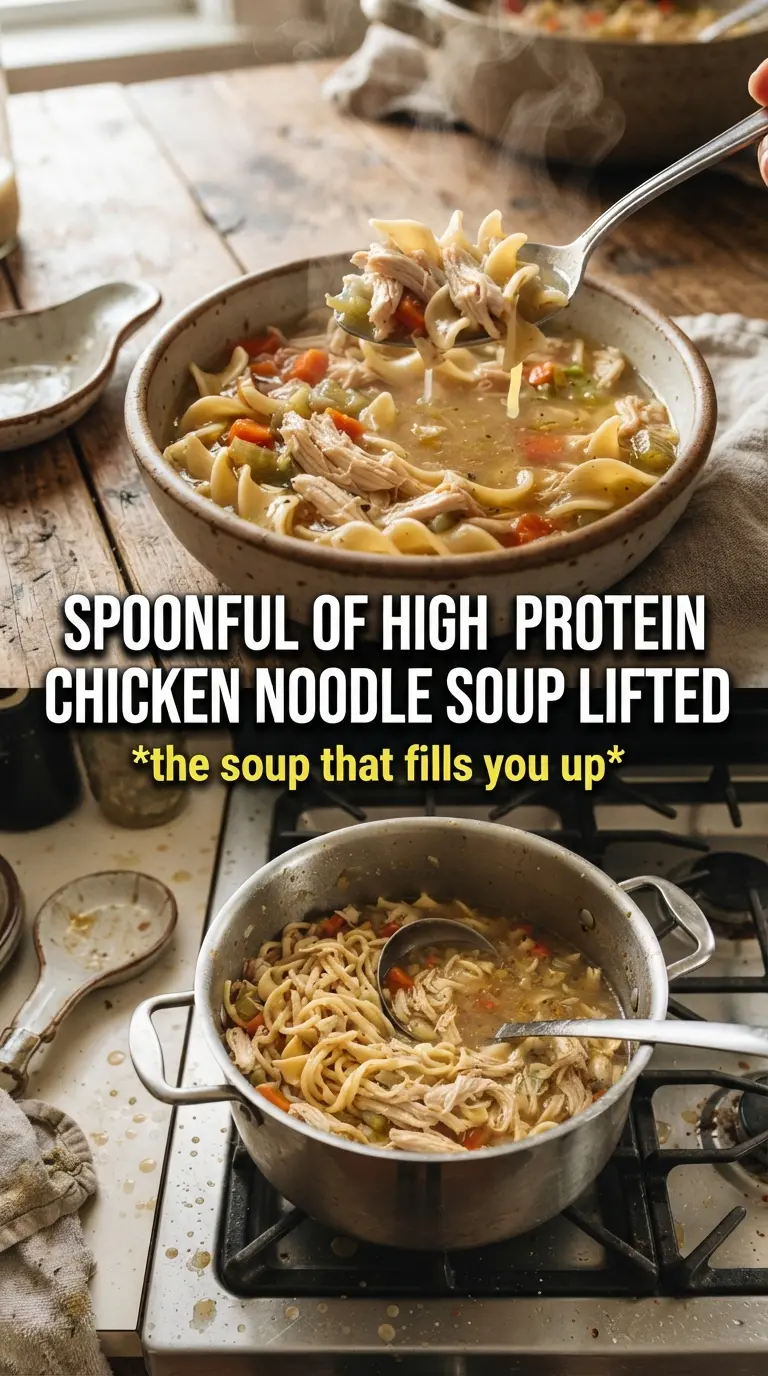
- Chicken breast — Diced breast cooks quickly and keeps the soup lean while still giving you plenty of protein. Thighs work if you want a richer bowl, but they’ll change the texture and make the broth a little more robust.
- Chickpeas — These are the quiet upgrade here. They thicken the soup just enough and add extra substance without needing cream or flour, which is why this soup feels complete even with a simple broth.
- Carrots, celery, and onion — This is the base flavor. Don’t rush the sauté; those first five minutes soften the vegetables and build sweetness so the broth tastes round instead of thin.
- High-protein or whole wheat egg noodles — Standard egg noodles work, but the higher-protein or whole wheat versions hold their shape a little better and make the bowl more filling. If you use regular noodles, just watch the clock closely because they soften faster.
- Lemon juice — This is the last-minute ingredient that wakes everything up. It doesn’t make the soup sour; it sharpens the broth and keeps the chicken from tasting bland.
The 20 Minutes That Actually Matter
Softening the Vegetables First
Heat the olive oil in a large pot and cook the onion, carrots, and celery until the onion looks translucent and the carrots start to lose their raw crunch. You’re not browning them hard here. You’re giving the soup a sweet, savory base that will carry through every spoonful. If the pot looks dry or the vegetables start sticking, lower the heat and stir more often so the onion doesn’t burn before it softens.
Cooking the Chicken Without Drying It Out
Add the garlic for just a minute, then stir in the diced chicken and cook until the outside loses its pink color and picks up a little pale gold. The chicken doesn’t need to be cooked through yet; the broth will finish it gently. If you leave it in too long at this stage, the pieces will turn tough before the soup is even assembled.
Building the Broth and Finishing the Noodles
Pour in the broth, thyme, and parsley, then bring the pot to a boil before lowering it to a steady simmer. That simmer gives the chicken enough time to finish cooking while the broth takes on the flavor of the vegetables and herbs. Stir in the chickpeas and noodles only once the chicken is cooked through, then cook just until the noodles are tender. Add the lemon juice off the heat or at the very end so the flavor stays bright instead of cooked flat.
Three Ways to Make This Soup Fit Your Kitchen
Make It Dairy-Free and Still Filling
This soup is naturally dairy-free as written, and that’s part of why it stays so clean and brothy. The chickpeas and chicken do the heavy lifting, so you don’t need cream to make it feel substantial. If you want it richer without dairy, let it simmer an extra few minutes so the broth concentrates slightly before you add the noodles.
Swap in Thighs for a Deeper, Richer Bowl
Chicken thighs bring more fat and a richer texture than breast meat, which makes the broth taste a little fuller. They also stay tender if you accidentally simmer the soup a bit longer. The tradeoff is a slightly heavier soup, so this is the right swap when you want comfort over lean protein.
Use Gluten-Free Noodles Without Losing the Comfort
Gluten-free egg-style noodles or rice noodles work well, but they need closer attention because they can soften faster than wheat noodles. Cook them separately if you’re planning leftovers, then add them to each bowl before ladling in the soup. That keeps the texture from falling apart in the fridge.
Make It Ahead for Busy Weeknights
The broth, chicken, and vegetables can be cooked ahead, but the noodles are best added just before serving. If the noodles sit in the soup overnight, they’ll drink up broth and go swollen. Keep them separate if you want the leftovers to taste like fresh soup instead of stew.
Storage and Reheating
- Refrigerator: Store in an airtight container for up to 4 days. The noodles will keep soaking up broth, so expect the soup to thicken a little.
- Freezer: Freeze the soup without the noodles for the best texture. Add fresh cooked noodles after thawing and reheating for a bowl that still tastes clean.
- Reheating: Rewarm gently over medium-low heat until steaming. A hard boil can make the chicken dry and the noodles mushy, which is the fastest way to lose the texture you worked for.
Answers to the Questions Worth Asking
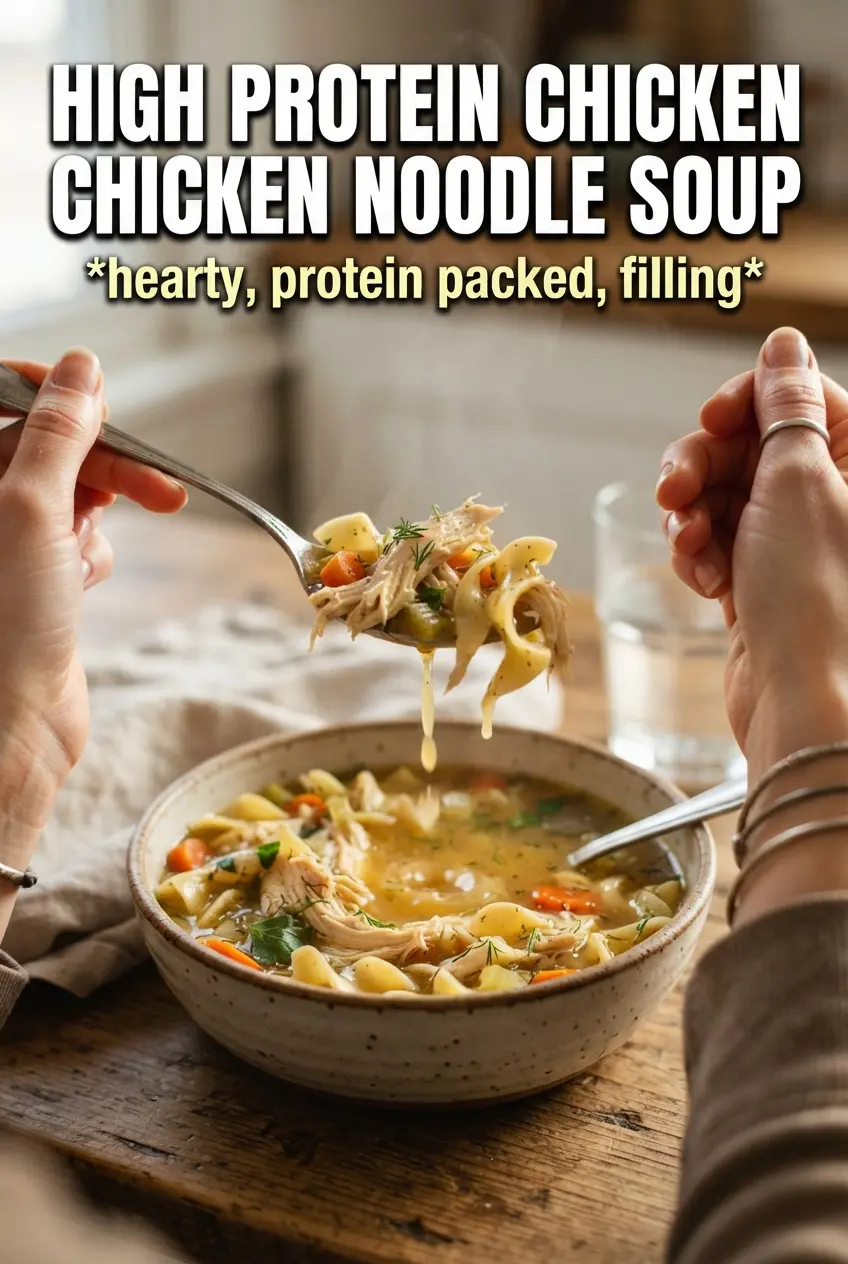
High Protein Chicken Noodle Soup
Ingredients
Equipment
Method
- Heat the olive oil in a large pot over medium heat, then sauté the onion, carrots, and celery for 5 minutes until slightly softened.
- Add the garlic and cook for 1 minute until fragrant.
- Add the diced chicken and cook for 4 minutes until lightly browned, stirring to coat.
- Add the chicken broth, dried thyme, and dried parsley, then bring the mixture to a boil.
- Reduce to a simmer and cook for 15 minutes to build flavor.
- Add the chickpeas and egg noodles, then simmer for 6–8 minutes until the noodles are tender.
- Stir in the lemon juice, then season with salt and pepper to taste.
- Garnish the soup with fresh parsley and serve hot.