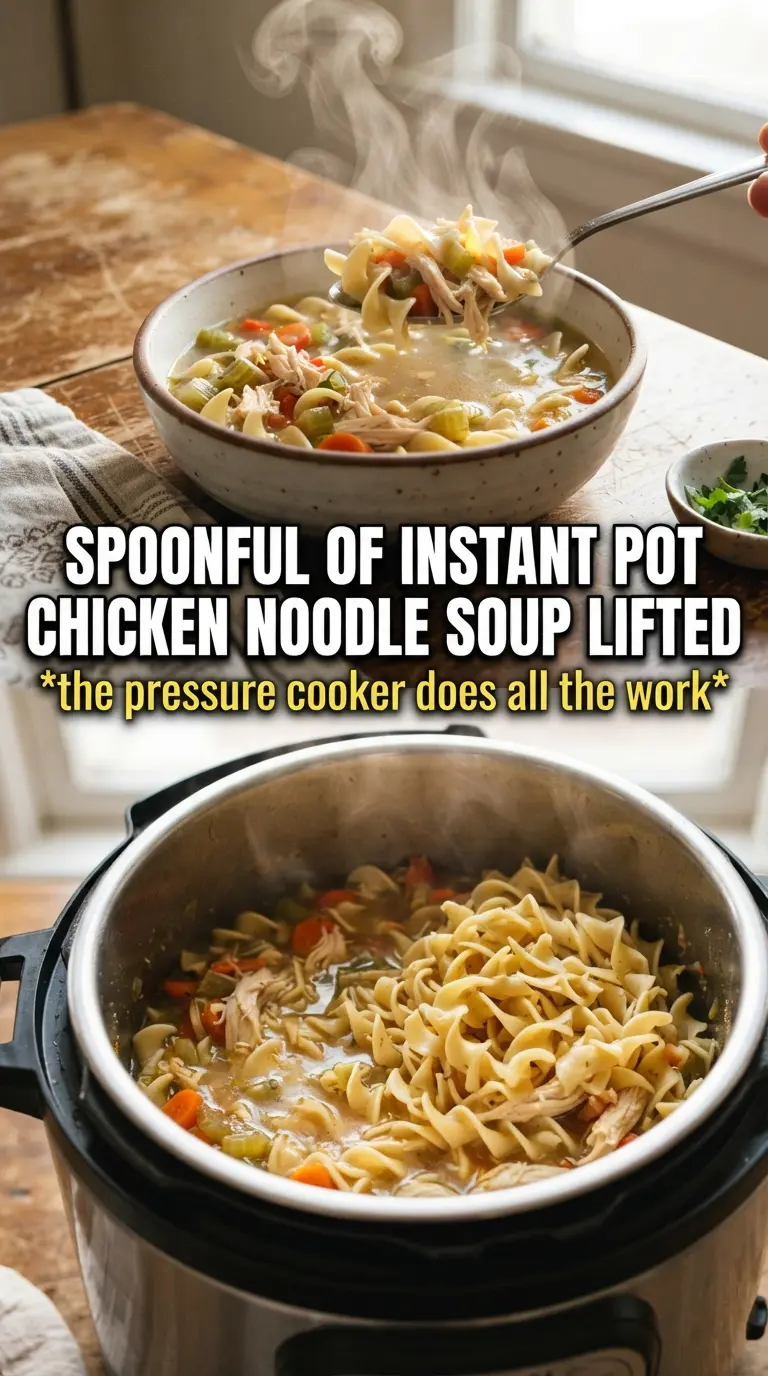
Deeply savory broth, tender shredded chicken, and noodles that soak up all that flavor make Instant Pot chicken noodle soup the kind of dinner that disappears fast. The pressure cooker does the heavy lifting here, pulling real flavor out of the chicken, carrots, celery, onion, and herbs in less time than it takes to build the same depth on the stove.
The trick is keeping the noodles out of the pressure phase. Egg noodles cook fast and they turn soft in a hurry, so they go in after the chicken is shredded and the pot is switched to sauté. That keeps them springy instead of bloated. A short natural release also matters because it keeps the broth calmer and gives the chicken time to finish gently.
Below, I’ll walk you through the timing that keeps the broth clear enough, the noodles tender, and the chicken easy to shred. There’s also a storage note that helps if you want to make it ahead without ending up with mushy noodles later.
The broth had that homemade, cooked-all-day taste, and the noodles stayed perfectly tender because I added them at the end. My kids asked for seconds, which never happens with soup.
Love how the broth turns rich and the noodles stay tender? Save this Instant Pot chicken noodle soup for the next night you want a fast bowl of comfort without babysitting the stove.
The Trick to Keeping the Noodles Tender After Pressure Cooking
The biggest mistake with Instant Pot chicken noodle soup is letting the noodles ride through the pressure cycle. Egg noodles are thin and thirsty. If they cook under pressure, they swell past the point of comfort and turn soft around the edges before the broth even gets to the table. Adding them after the chicken comes out keeps the texture right where it should be: tender, but with a little bite.
The other detail that matters is the short natural release. Five minutes is enough to calm the pot so the broth doesn’t spurt all over the lid opening, and it gives the chicken a moment to finish cooking without tightening up. Pull the chicken, shred it, then bring the pot back to sauté for the noodles. That sequence is what keeps the soup tasting fresh instead of tired.
What Each Ingredient Is Actually Doing in This Soup
- Chicken breast — Using raw, whole chicken breasts lets the meat cook right in the broth, so it absorbs flavor instead of tasting separately cooked. Breasts stay easy to shred here because the pressure cooker cooks them gently in a closed environment. If you swap in thighs, the soup gets a richer, silkier result and the meat stays even more forgiving.
- Chicken broth — This is the backbone of the soup, so a broth you’d actually drink matters more than anything else in the pot. Store-bought broth is fine, but if it tastes thin straight from the carton, the soup will taste thin too. If you want a stronger base, use low-sodium broth and season at the end.
- Carrots, celery, and onion — These build the classic soup flavor and hold up well under pressure. Slice the carrots and celery evenly so they soften at the same rate and don’t leave you with a mix of mush and crunch. A larger dice on the onion is fine because it melts into the broth.
- Dried thyme, parsley, and bay leaves — These herbs give the broth that old-fashioned chicken soup taste without needing a long simmer. Bay leaves matter here because they add a quiet depth you notice most when they’re missing. Pull them out before serving so nobody gets an unpleasant bite.
- Egg noodles — These are added at the end because they cook fast and keep the soup from becoming gluey. Standard egg noodles work best, but any similar short noodle can stand in if you watch the texture closely. If you use a sturdier pasta, you’ll need a few extra minutes on sauté.
Building the Soup in the Right Order
Start With Everything Except the Noodles
Add the raw chicken, vegetables, broth, seasonings, and bay leaves to the Instant Pot all at once. The liquid should cover the chicken well enough that the pot comes up to pressure without trouble. If the vegetables are piled too high above the broth, they’ll steam unevenly instead of softening into the soup base.
Pressure Cook, Then Let the Pot Settle
Cook on high pressure for 15 minutes, then let it sit for 5 minutes before doing the quick release. That short pause keeps the broth from erupting when you vent the pressure and gives the chicken time to finish gently. If you skip the natural release, the broth can spit starchy foam into the lid and make a mess.
Shred the Chicken Before the Noodles Go In
Take the chicken out and shred it with two forks while the broth stays hot in the pot. This is the point where you remove the bay leaves too. If the chicken seems a little firm in the center, it needs another minute or two in the hot broth before shredding; don’t fight it, because over-shredding dry chicken only makes it stringy.
Finish on Sauté for the Best Noodle Texture
Return the shredded chicken to the pot, switch to sauté, and add the egg noodles. Stir often so the noodles don’t clump or stick to the bottom. They’re done when they’re tender all the way through but still hold their shape. The second they go soft and swollen, turn the heat off and serve.
Three Ways to Make This Soup Fit the Night You’re Having
Use chicken thighs for a richer bowl
Swap the chicken breasts for boneless skinless thighs if you want deeper flavor and a more forgiving texture. Thighs stay juicy even if they cook a little longer, and the broth comes out fuller. The soup will taste a little more rustic and less lean.
Make it gluten-free without losing the comfort factor
Use certified gluten-free egg-style noodles or another sturdy gluten-free pasta and add them at the end just like the original version. Gluten-free pasta can get soft faster, so start checking it a minute early. The broth and chicken stay the same, so the change is all about texture.
Hold the noodles if you’re making it ahead
Cook the soup base completely, then store the noodles separately and add them to each bowl when reheating. This keeps leftovers from turning soft and swollen in the fridge. It’s the best move if you want the second-day soup to taste like the first.
Use rotisserie chicken for a faster version
If you already have cooked chicken, skip the pressure step and build the soup base with the vegetables and broth, then stir in shredded chicken at the end. The flavor won’t be quite as deep as starting with raw chicken, but it’s still a solid weeknight shortcut. Add the noodles only after the broth is hot and seasoned.
Storage and Reheating
- Refrigerator: Store for up to 4 days. The noodles will keep absorbing broth, so expect the soup to thicken as it sits.
- Freezer: Freeze the broth, chicken, and vegetables without the noodles for the best texture. Cook fresh noodles after thawing, or the noodles will break down when reheated.
- Reheating: Warm gently on the stove or in the microwave until steaming hot. Add a splash of broth or water if it has thickened, and don’t boil hard or the noodles will go mushy.
Answers to the Questions Worth Asking
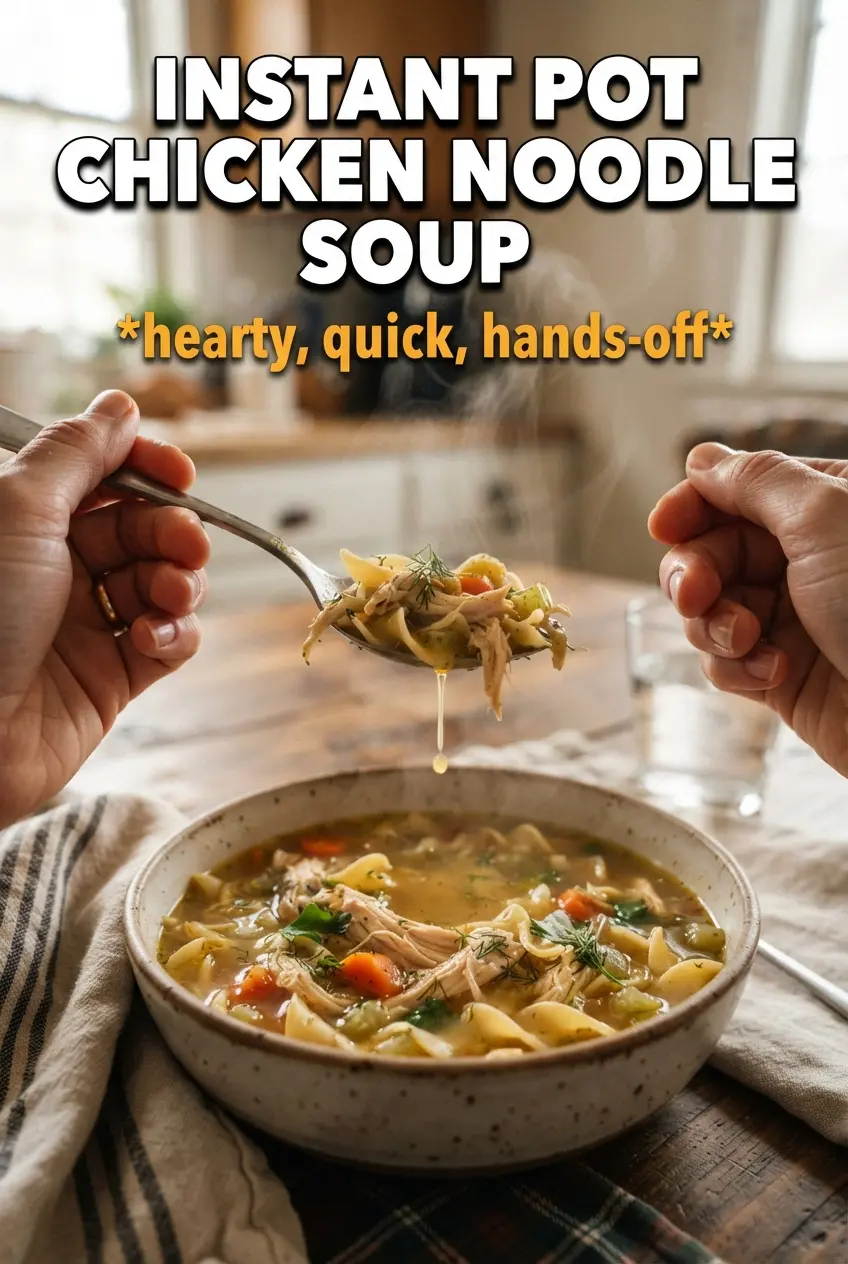
Instant Pot Chicken Noodle Soup
Ingredients
Equipment
Method
- Add raw chicken, carrots, celery, onion, garlic, chicken broth, dried thyme, dried parsley, garlic powder, and bay leaves to the Instant Pot. Spread ingredients evenly so everything steams in the same rhythm.
- Seal the Instant Pot and pressure cook on High for 15 minutes. Pressurized heat builds a deeply golden broth.
- Let the pot naturally release for 5 minutes, then quick release any remaining pressure. Keep the lid locked until pressure fully drops.
- Remove the chicken and shred it, then discard the bay leaves. Return the shredded chicken to the pot right away while the broth stays hot.
- Set the Instant Pot to Sauté and bring the soup back to a steady simmer. This keeps the noodles from sticking while they cook.
- Add egg noodles and cook for 6-8 minutes on Sauté until tender, stirring often. The broth will thicken slightly as starch releases.
- Season with salt and pepper to taste. Taste after the noodles soften so the flavor matches the final texture.
- Garnish with fresh parsley and serve. The bright green topping adds freshness over the warm soup.