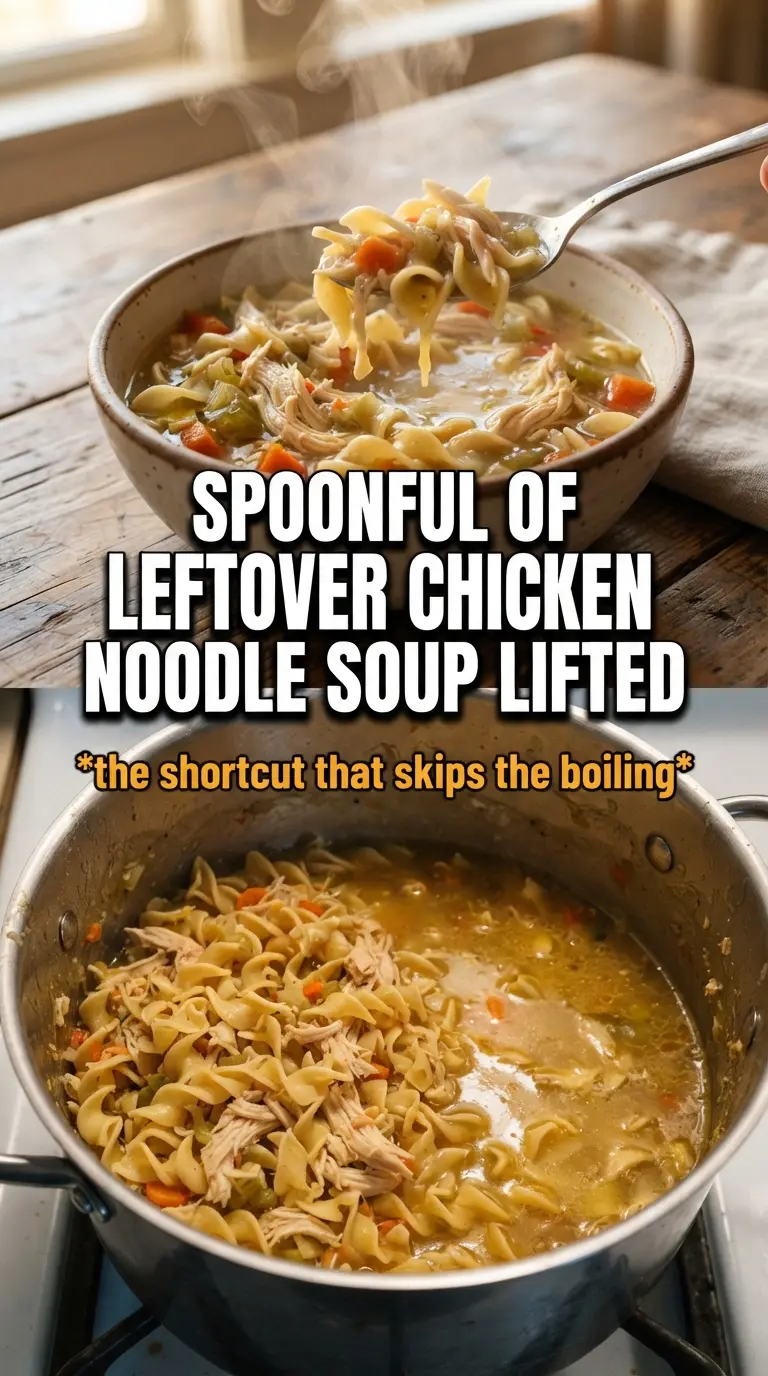
Rotisserie chicken noodle soup turns leftover chicken into a bowl that tastes like it simmered all afternoon, even though it comes together in about half an hour. The broth stays light but full, the vegetables soften without going mushy, and the noodles soak up just enough flavor to make every spoonful feel settled and complete. It’s the kind of dinner that rescues a weeknight without tasting like a shortcut.
What makes this version work is the order. The onions, carrots, and celery get a head start so the broth has a real savory base before the liquid goes in. The chicken is added near the end, which keeps it from drying out, and the lemon at the finish wakes everything up without making the soup taste sharp. If you’ve ever had leftover chicken soup that tasted flat or the noodles swallowed all the broth, this method fixes both problems.
Below, I’ll walk through the small choices that matter most, from keeping the noodles tender to the best way to adjust the soup if your chicken is already heavily seasoned. There’s also a storage note that helps with leftovers, because this soup keeps well if you handle the noodles the right way.
The broth tasted homemade, and the lemon at the end kept it from being heavy. My noodles stayed tender instead of turning to mush, and my kids asked for seconds.
Save this leftover rotisserie chicken noodle soup for the nights when you need a fast bowl with real broth, tender noodles, and zero wasted chicken.
The Trick to Soup That Tastes Slow-Simmered When the Chicken Was Already Cooked
Leftover rotisserie chicken can make soup taste flat if it goes in too early. The meat has already done its cooking, so it only needs time to warm through and absorb some broth at the end. Add it too soon and it dries out, turns stringy, and starts tasting like the chicken has been boiled into submission.
The other thing that changes everything here is building flavor in the pot before the broth goes in. Sautéing the onion, carrots, and celery first gives the soup a savory base that water alone can’t provide. Once the broth hits the pan, those browned, softened vegetables carry the whole pot.
- Rotisserie chicken — Use the white meat, dark meat, or a mix. The dark meat stays a little juicier, but any leftover chicken works as long as you shred it into bite-size pieces instead of leaving big chunks.
- Chicken broth — This is the backbone of the soup, so use one you’d actually drink. If your rotisserie chicken is heavily seasoned, a lower-sodium broth gives you room to adjust at the end.
- Egg noodles — These cook quickly and give the soup that classic comfort-food feel. If you use a different pasta, watch the pot closely; small shapes can go from tender to bloated fast.
- Lemon juice — Don’t skip it. A small squeeze at the end lifts the broth and keeps the soup from tasting tired. It won’t make the soup lemony; it just makes the chicken flavor taste brighter.
- Butter or olive oil — Either one works for sautéing the vegetables. Butter gives the broth a softer, rounder taste, while olive oil keeps the soup a little lighter.
What Each Ingredient Is Actually Doing in This Recipe
- Primary ingredient (the star) — Quality matters most. Choose the best you can find.
- Cooking medium (oil, butter, or broth) — This carries flavors and prevents dryness.
- Seasonings (salt, pepper, spices, herbs) — Layer flavors so nothing overpowers. Build depth gradually.
- Aromatics (garlic, onion, herbs) — Cook with fat to bloom flavors. Become the foundation.
- Supporting ingredients — Complement the main ingredient without overpowering it.
- Sauce or liquid (if applicable) — Brings flavors together. Balance richness with acid.
- Acid (lemon, vinegar, wine, or other) — Brightens and prevents flat-tasting results.
- Final finish (garnish, glaze, or sauce) — Prevents one-dimensional taste and adds visual appeal.
Building the Pot in the Right Order So the Noodles Stay Tender
Softening the Vegetables First
Melt the butter or warm the olive oil in a large pot, then add the onion, carrots, and celery. Cook them until the onion turns translucent and the carrots start to lose their raw edge, about 4 to 5 minutes. If you rush this part, the broth tastes thin because the vegetables never had a chance to start releasing flavor.
Turning the Broth Into Soup
Stir in the garlic and let it cook for about a minute, just until fragrant. Add the broth, thyme, parsley, and garlic powder, then bring everything up to a boil. If the garlic sits too long in the hot pan before the liquid goes in, it can turn bitter, so keep it moving and add the broth promptly.
Cooking the Noodles Without Overcooking Them
Add the egg noodles once the broth is boiling and cook them until they’re almost tender, usually 5 to 6 minutes. They should still have a little firmness because they’ll finish in the hot soup after the chicken goes in. If you let them go all the way soft here, they’ll keep absorbing broth and the soup will turn thick and heavy.
Warming the Chicken at the End
Stir in the shredded rotisserie chicken and simmer just long enough to heat it through, about 3 to 4 minutes. This is the point where a lot of chicken soup goes wrong, because people keep it on the stove too long and end up with dry, shredded meat. Finish with lemon juice, then taste and adjust the salt and pepper before serving.
How to Adapt It When You Need a Different Broth, Pasta, or Diet
Gluten-Free Version With the Same Comforting Finish
Swap the egg noodles for your favorite gluten-free pasta or rice noodles. Gluten-free pasta can soften faster than wheat noodles, so cook it until just barely tender and serve the soup right away if you want the best texture. The broth and chicken stay the same, so the soup still tastes like the original version.
Dairy-Free Without Losing the Roundness
Use olive oil instead of butter. You’ll lose a little of the buttery richness, but the vegetables still build a solid base and the lemon helps keep the broth lively. If the soup tastes a little lean at the end, an extra pinch of salt usually brings it back into balance.
Using Turkey or Another Leftover Roast
Cooked turkey works the same way, especially after holidays when the refrigerator is full of leftovers. Shred it and add it at the end just like the chicken. If the meat is extra lean, lean on the lemon and a little more broth so the soup doesn’t taste dry.
Storage and Reheating
- Refrigerator: Store for up to 4 days. The noodles will keep soaking up broth, so the soup thickens a bit as it sits.
- Freezer: It freezes best without the noodles. If you want to freeze it, make the soup base and chicken, then add fresh noodles after reheating.
- Reheating: Warm it gently on the stovetop over medium-low heat until steaming. High heat can overcook the noodles and dry out the chicken, which is the fastest way to ruin the texture.
Answers to the Questions Worth Asking
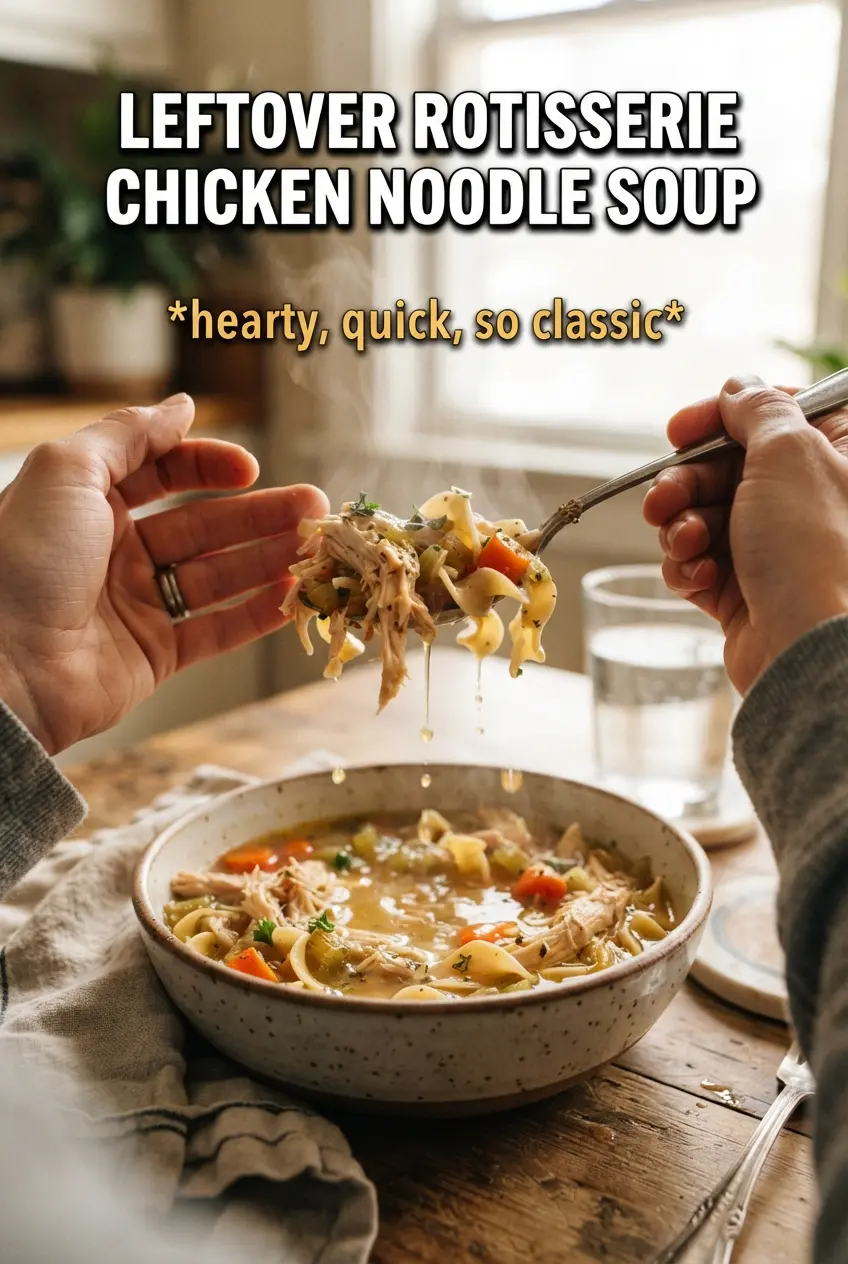
Leftover Rotisserie Chicken Noodle Soup
Ingredients
Equipment
Method
- Melt the butter or olive oil in a large pot over medium heat, then add the onion, carrots, and celery. Sauté for 4-5 minutes until the vegetables begin to soften and smell fragrant.
- Add the garlic and cook for 1 minute, stirring constantly so it turns fragrant without browning. You should see small bubbles around the garlic.
- Pour in the chicken broth and add the thyme, dried parsley, and garlic powder. Stir to combine and scrape up any browned bits from the bottom.
- Bring the soup to a boil over medium-high heat. Keep an eye out for steady bubbling across the surface.
- Add the egg noodles and cook for 5-6 minutes until almost tender. Stir occasionally so the noodles don’t stick.
- Add the leftover rotisserie chicken and simmer for 3-4 minutes until heated through. The broth should show gentle simmering bubbles around the chicken.
- Squeeze in the lemon juice, then season with salt and pepper to taste. Stir until the broth tastes balanced and the lemon brightens the flavor.
- Garnish with fresh parsley and serve immediately. The parsley should look bright green on top of the hot soup.