Juicy meatballs tucked into a deep brown onion gravy is the kind of dinner that disappears fast, especially when it’s spooned over mashed potatoes while the gravy is still glossy and hot. The meatballs stay tender instead of dense, and the gravy picks up every bit of flavor left in the skillet, which is what gives this dish that old-fashioned, stick-to-your-ribs comfort without tasting heavy.
The trick is keeping the meatball mix loose and stopping short of overworking it. A little breadcrumb, Parmesan, and egg hold everything together, but the real flavor comes from the browned bits in the pan and the onions cooked until they’re soft and golden. That’s what gives the gravy depth instead of a flat, floury taste.
Below, you’ll find the exact point where the onions should go from sliced to sweet, how to keep the gravy smooth, and a few smart swaps if you want to change up the meat or make the dish gluten-free.
The meatballs stayed so tender, and the gravy thickened up beautifully without getting lumpy. I served it over mashed potatoes and my husband went back for seconds before I even sat down.
Love these tender meatballs and rich onion gravy? Save this for the nights when you want a hearty skillet dinner over mashed potatoes with almost no fuss.
The Small Mistake That Makes Meatballs Dense Instead of Tender
Most meatballs get tough because the mixture is handled like bread dough. Once the beef, breadcrumbs, Parmesan, and egg come together, stop. The goal is a mixture that looks a little rough, not perfectly smooth. That loose texture gives you a softer bite after the meatballs simmer in gravy.
Brown them in the skillet before they ever meet the sauce. That step does two jobs: it builds flavor on the meatball itself, and it leaves browned bits in the pan for the gravy. If the pan is crowded, the meatballs steam instead of sear, and you lose both the color and the depth.
What Each Ingredient Is Actually Doing in This Dish

- Ground beef — An 80/20 blend gives you enough fat to stay juicy through the simmer. Leaner beef can work, but the meatballs will be a little firmer and the gravy won’t have as much richness from the pan.
- Breadcrumbs and egg — These are the binders that keep the meatballs together without making them rubbery. If you need a gluten-free version, use fine gluten-free breadcrumbs in the same amount.
- Parmesan — It adds salt and a little savory depth that plain breadcrumbs can’t match. Pre-grated works here, though freshly grated melts in more smoothly.
- Worcestershire sauce — There’s a little in the meatballs and more in the gravy, and that double hit gives the dish a deeper, meatier taste. Don’t skip it unless you have to; soy sauce can cover in a pinch, but the flavor will be sharper and less rounded.
- Onion and beef broth — The onion needs time to soften and caramelize, not just turn translucent. That slow cooking is what makes the gravy taste like it simmered longer than it did.
Building the Gravy in the Same Pan Without Losing the Texture
Mix the Meatballs Lightly
Combine the beef, breadcrumbs, Parmesan, egg, garlic, onion powder, Worcestershire, salt, and pepper just until the mixture holds together. Roll into 1.5-inch balls without packing them tight. If the mixture feels sticky, wet your hands lightly rather than adding more breadcrumbs, which can make the meatballs dry after they simmer.
Brown Before You Simmer
Set the meatballs in a hot skillet with enough space around each one to get color. You’re not cooking them through here; you’re building a browned crust that will hold up in the gravy. Pull them out once the outside is deeply golden and the center is still raw in spots.
Cook the Onions Until They Sweeten
Use the same skillet and melt the butter into the browned drippings. Add the sliced onion and cook until soft, golden, and fragrant, about 10 minutes. If the onions start to stick hard or scorch, lower the heat and add a splash of broth; burned onions will make the gravy bitter.
Whisk the Gravy Until It Turns Glossy
Stir in the flour and cook for about a minute to take away the raw taste, then whisk in the broth slowly so the sauce stays smooth. Add the Worcestershire and Dijon, then let it simmer until it coats the back of a spoon. When it looks slightly thinner than you want, that’s the moment to add the meatballs back in, because they’ll thicken the gravy a little as they finish cooking.
Finish with a Gentle Simmer
Return the meatballs to the skillet and simmer until cooked through, about 15 minutes. Keep the heat low enough that the gravy barely bubbles. A hard boil can break the sauce or make the meatballs tight, while a gentle simmer keeps everything tender and cohesive.
How to Adapt This for Different Pans, Diets, and Leftovers
Gluten-Free Meatballs and Gravy
Swap the breadcrumbs for gluten-free breadcrumbs and use a gluten-free flour blend for the gravy. The texture stays close to the original, though the gravy may need an extra minute or two to thicken. Keep the heat moderate so the flour cooks without turning pasty.
Use Ground Turkey for a Lighter Version
Ground turkey works, but it needs the extra fat from the gravy to keep the dish from tasting dry. Choose dark meat turkey if you can, and don’t overcook the meatballs before they go into the sauce. The flavor is milder, so the Worcestershire and onions matter even more.
Make-Ahead Meatballs
You can roll the meatballs a day ahead and keep them covered in the refrigerator until you’re ready to brown them. That saves time, and the flavor actually settles in nicely. If they’ve been chilled, give them a minute or two longer in the skillet so the centers warm through evenly.
Storage and Reheating
- Refrigerator: Store the meatballs and gravy together in an airtight container for up to 4 days. The gravy will thicken as it chills.
- Freezer: This freezes well for up to 2 months. Cool it fully, then freeze in portions so the gravy reheats more evenly.
- Reheating: Warm gently on the stove over low heat with a splash of broth or water. Don’t blast it in the microwave on high, or the meatballs can toughen before the gravy loosens back up.
Answers to the Questions Worth Asking
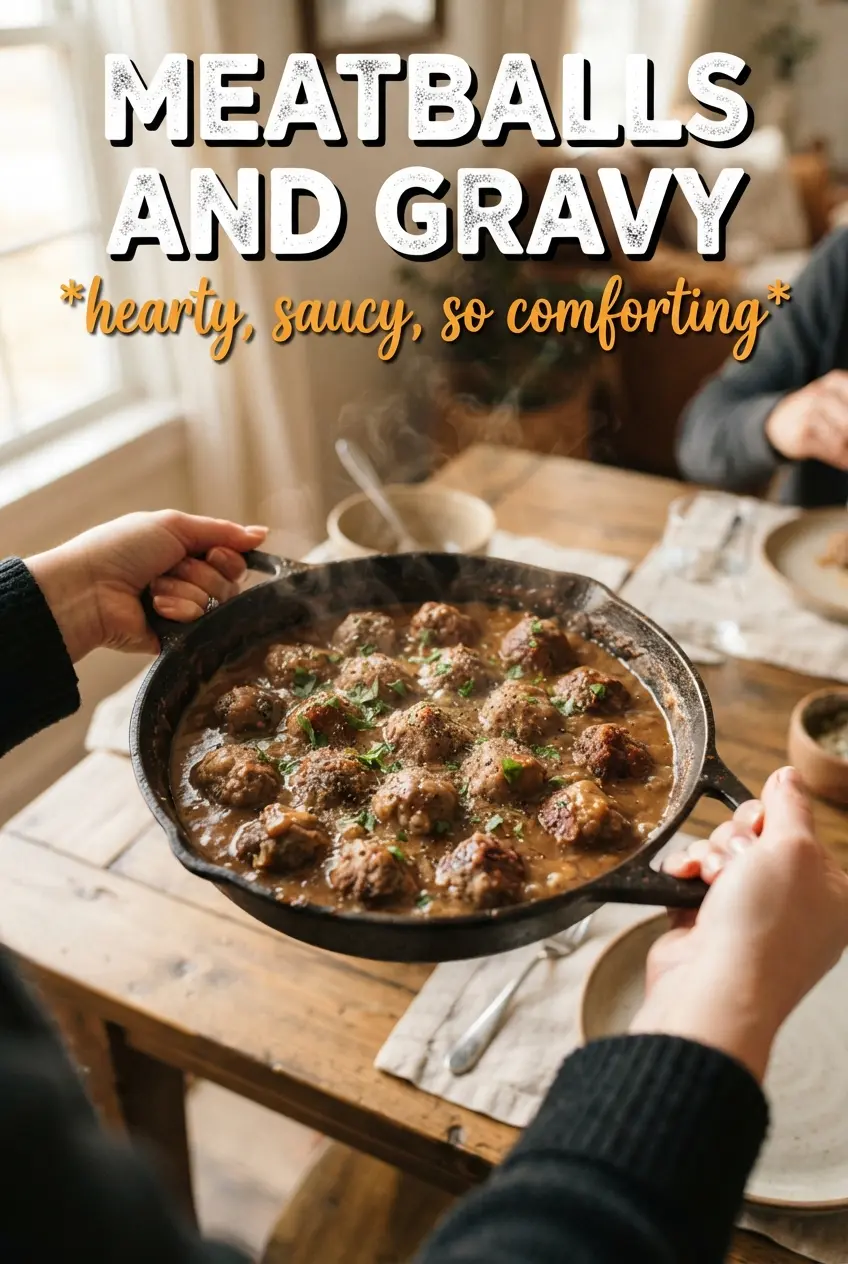
Meatballs and Gravy
Ingredients
Equipment
Method
- In a large bowl, mix ground beef, breadcrumbs, parmesan, egg, garlic, onion powder, Worcestershire sauce, salt, and pepper until just combined, then stop mixing as soon as you see no dry pockets.
- Roll the mixture into 1.5-inch balls and set them on a plate while you brown them.
- Heat a large skillet over medium-high heat, then add the meatballs in a single layer and brown on multiple sides until deep golden brown, about 6–8 minutes total.
- Remove the browned meatballs and set aside on a plate.
- Melt the butter in the same skillet, add the thinly sliced onion, and caramelize over medium heat for 10 minutes, stirring occasionally until the onion is softened and golden brown.
- Whisk in the flour and cook for 1 minute to remove the raw flour taste.
- Gradually whisk in the beef broth, Worcestershire, and Dijon mustard, then simmer until thickened, stirring often, about 8–10 minutes.
- Return the meatballs to the gravy and simmer for 15 minutes until cooked through and the sauce coats the meatballs.
- Serve the meatballs and gravy over mashed potatoes and scatter fresh parsley on top.