Flaky white fish tucked into a bright, briny pan of tomatoes, olives, capers, and roasted red peppers is one of those dinners that tastes like you worked harder than you did. The vegetables soften and concentrate in the oven, the olive oil pulls everything into a glossy sauce, and the fish steams gently on top so it stays tender instead of drying out. What you get is clean, bold Mediterranean flavor with almost no fuss.
The trick here is roasting the vegetable base before the fish goes in. That head start softens the tomatoes, wakes up the garlic, and gives the olives and capers time to perfume the oil. By the time the fillets hit the pan, the sauce is already building around them. A dry white wine adds a little sharpness, but broth works just as well if that’s what you have.
Below, I’ll walk through the small details that keep the fish from overcooking, the substitutions that still taste right, and the storage notes that make leftovers worth saving.
The tomatoes softened into a proper sauce and the fish stayed flaky, not dry. I used broth instead of wine and still got that briny, bright pan sauce my husband kept spooning over rice.
Love the briny tomato-and-olive sauce? Save this Mediterranean baked fish for the nights when you want a fast oven dinner that still feels special.
The Secret to Keeping the Fish Tender in a Tomato Pan Sauce
Fish dries out when it sits in the oven too long, but this dish avoids that by giving the vegetables a head start. The tomatoes, peppers, olives, capers, and garlic soften first, which means the fish only needs enough time to turn opaque and flake at the thickest point. That shorter second bake is the difference between tender fillets and chalky ones.
The other thing that matters is the baking dish. Use one that holds the vegetables in a fairly even layer so the fish can nestle into the juices instead of getting buried. If the pan is overcrowded, the tomatoes release more liquid than they can evaporate, and you end up with soup instead of a glossy sauce.
- Cherry tomatoes — Halving them gives you enough exposed surface to collapse into sauce without turning mushy before the fish goes in. Grape tomatoes work too, but they’re usually a little sweeter and less juicy.
- Kalamata olives and capers — These are the salt and backbone of the dish. Don’t swap in mild green olives unless you want a sharper, less rounded brine.
- Dry white wine or broth — Wine gives the pan sauce a little lift, but broth keeps the dish weeknight-friendly. If you use broth, choose one with decent flavor because the liquid never cooks down far enough to hide a bland base.
- White fish fillets — Cod, halibut, and sea bass all work because they hold together just enough to move from the pan to the plate. Keep the fillets similar in thickness so they finish at the same time.
What Happens in the Pan, from First Roast to Final Flake
Building the Roasted Base
Start by combining the tomatoes, olives, capers, roasted red peppers, garlic, wine or broth, olive oil, oregano, and red pepper flakes in the baking dish. The first 10 minutes in the oven are doing the heavy lifting here: the tomatoes should begin to burst, the garlic should soften, and the liquid should look glossy around the edges. If your dish is too shallow and the ingredients spread out in a thin layer, they can dry before they soften, so use a proper 9×13 dish.
Nesting the Fish
Season the fillets with salt and pepper, then tuck them into the hot vegetable mixture. They should sit partly in the juices, not buried under the tomatoes. If you hide the fish completely, it takes on a more steamed texture and the top won’t get the same gentle heat. The fish is ready for the oven when it looks snug but still exposed at the top.
Finishing the Bake
Bake just until the fish flakes easily with a fork and turns opaque through the center, usually 12 to 15 minutes depending on thickness. Pull the pan as soon as the thickest part gives up in clean flakes; waiting for the whole fillet to look dry is how people overcook it. Finish with parsley and lemon wedges so the sauce tastes brighter and less heavy.
How to Adapt This for Different Fish, Dietary Needs, or a Bigger Dinner
Use cod for the most forgiving version
Cod stays tender and flakes in broad pieces, which makes it a good choice if you’re nervous about overbaking. It’s a little leaner than halibut, so don’t push it past the point where it just turns opaque.
Make it dairy-free without changing a thing
This dish is naturally dairy-free as written, and that’s part of why it tastes so clean. The olive oil carries the flavor, so you don’t need butter or cream to give the sauce body.
Swap in broth for a no-wine version
Broth keeps the pan from drying out and still gives enough liquid for the vegetables to roast into a sauce. If you use broth, add an extra squeeze of lemon at the end to replace the brightness wine would normally bring.
Stretch it for six with extra vegetables
Add sliced fennel, zucchini, or thin onion wedges to the base if you need more volume. Just keep the layer loose enough that the vegetables roast instead of steaming, or the sauce will lose its concentrated flavor.
Storage and Reheating
- Refrigerator: Store leftovers in an airtight container for up to 2 days. The fish will firm up a little, but the sauce stays flavorful.
- Freezer: I don’t recommend freezing the baked fish after it’s cooked, since the texture turns dry and crumbly. Freeze the roasted vegetable base separately if you want to get ahead.
- Reheating: Reheat gently in a 300F oven, covered, just until warmed through. High heat will tighten the fish and make it taste overdone, so stop as soon as the center loses its chill.
Answers to the Questions Worth Asking
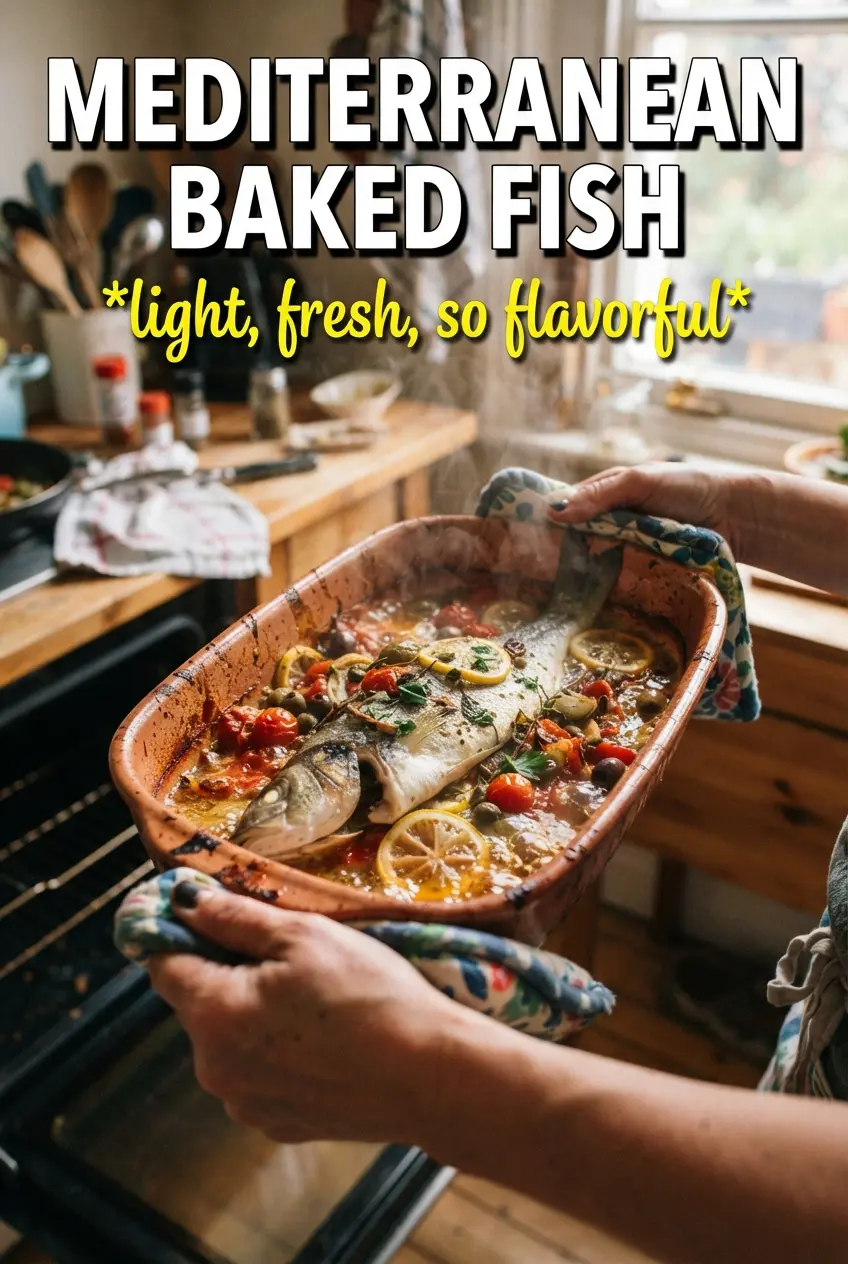
Mediterranean Baked Fish
Ingredients
Equipment
Method
- Preheat the oven to 400F and grease a 9x13 baking dish, so it’s ready when you assemble the fish.
- Combine cherry tomatoes, Kalamata olives, capers, roasted red peppers, garlic, dry white wine or broth, olive oil, dried oregano, and red pepper flakes in the baking dish, then stir to coat evenly with oil.
- Roast the vegetable mixture for 10 minutes at 400F, until the garlic is fragrant and the tomatoes start to soften, visibly bubbling at the edges.
- Season the white fish fillets with salt and pepper, then nestle them into the hot vegetable mixture so the fillets sit snugly on top.
- Bake for 12 to 15 minutes more at 400F, until the fish flakes easily with a fork and the surface turns opaque in thicker areas.
- Garnish with fresh parsley and serve with lemon wedges for brightness right before eating.
Notes
The Difference Between Gently Roasted Fish and Dry Fish
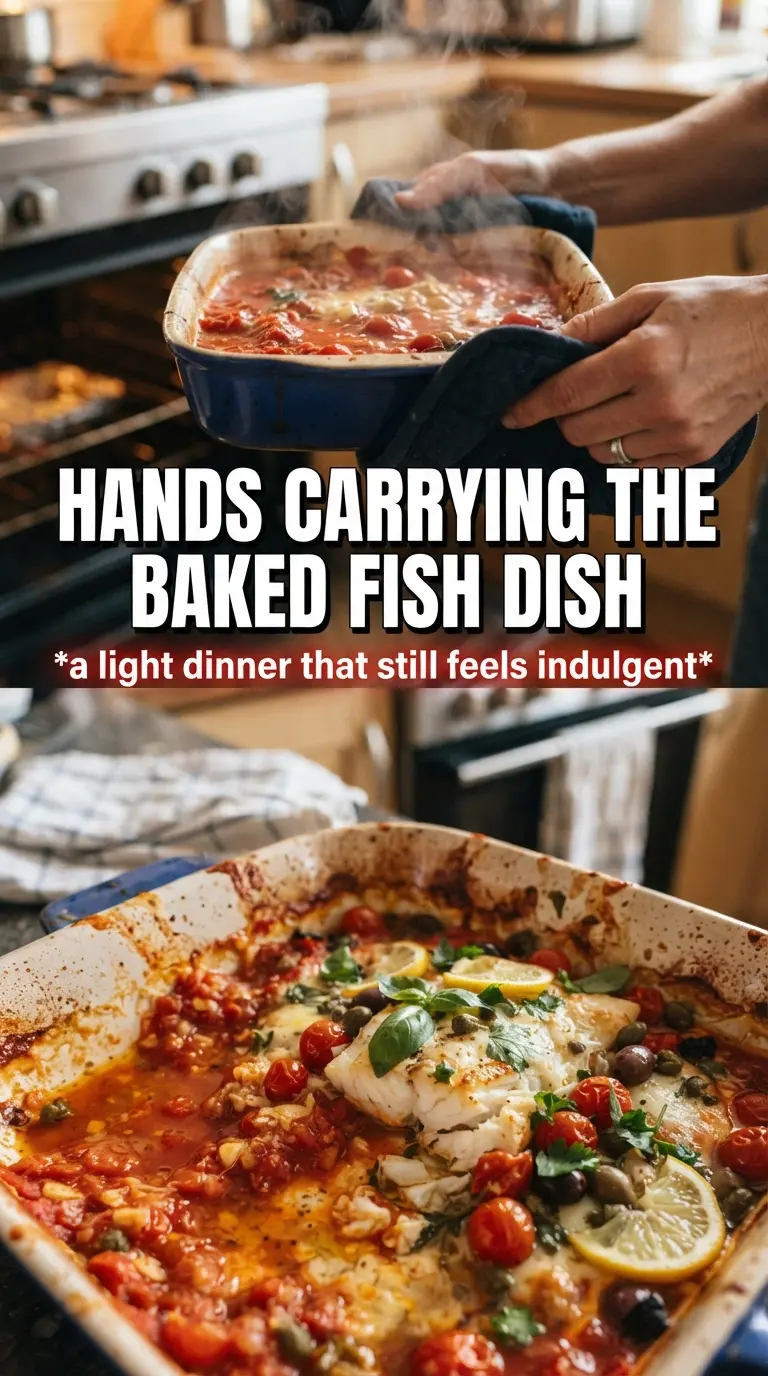
Ingredient notes
- White fish fillets — Cod gives you the mildest, most forgiving result, while halibut and sea bass bring a firmer, richer bite. Keep them about the same thickness so the bake time stays even.
- Cherry tomatoes — They burst into the sauce and bring the acidity that keeps the dish lively. If yours are very large, cut them into quarters so they soften at the same pace.
- Kalamata olives and capers — These add the briny edge that defines the dish. If you rinse the capers, do it briefly so they don’t lose all their punch.
- Roasted red peppers — Jarred peppers are perfect here because they add sweetness and softness without any extra prep. Drain them well so they don’t thin the sauce.
- Dry white wine or broth — Use wine for a brighter, slightly sharper finish or broth for a milder base. Either one should be dry, not sweet.
- Olive oil — It helps the vegetables roast instead of dry out and gives the sauce its silky finish. This is one place where a good olive oil is worth using.
- Oregano and red pepper flakes — Oregano gives the dish its Mediterranean backbone, and the pepper flakes add just enough heat to keep the briny sauce from tasting flat. Adjust the flakes to your taste, but don’t skip the oregano.