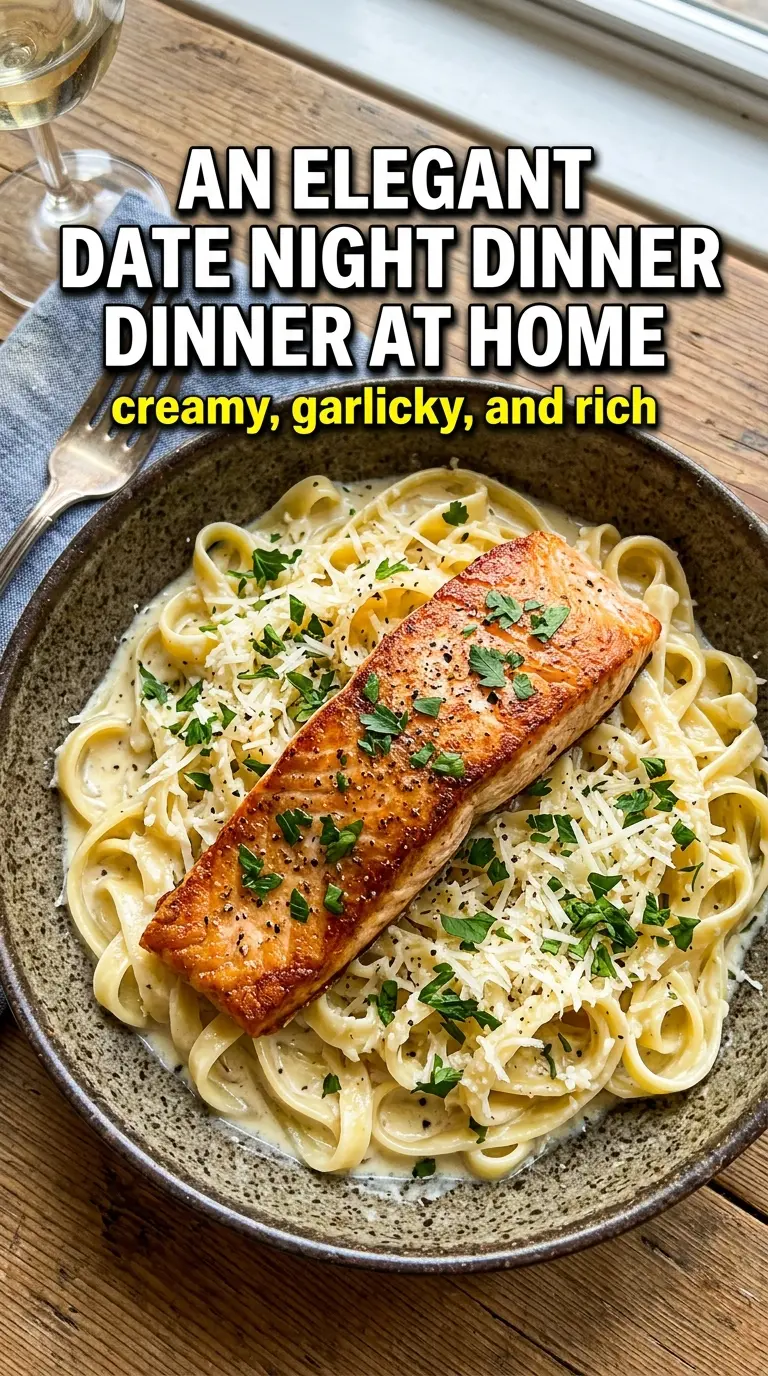
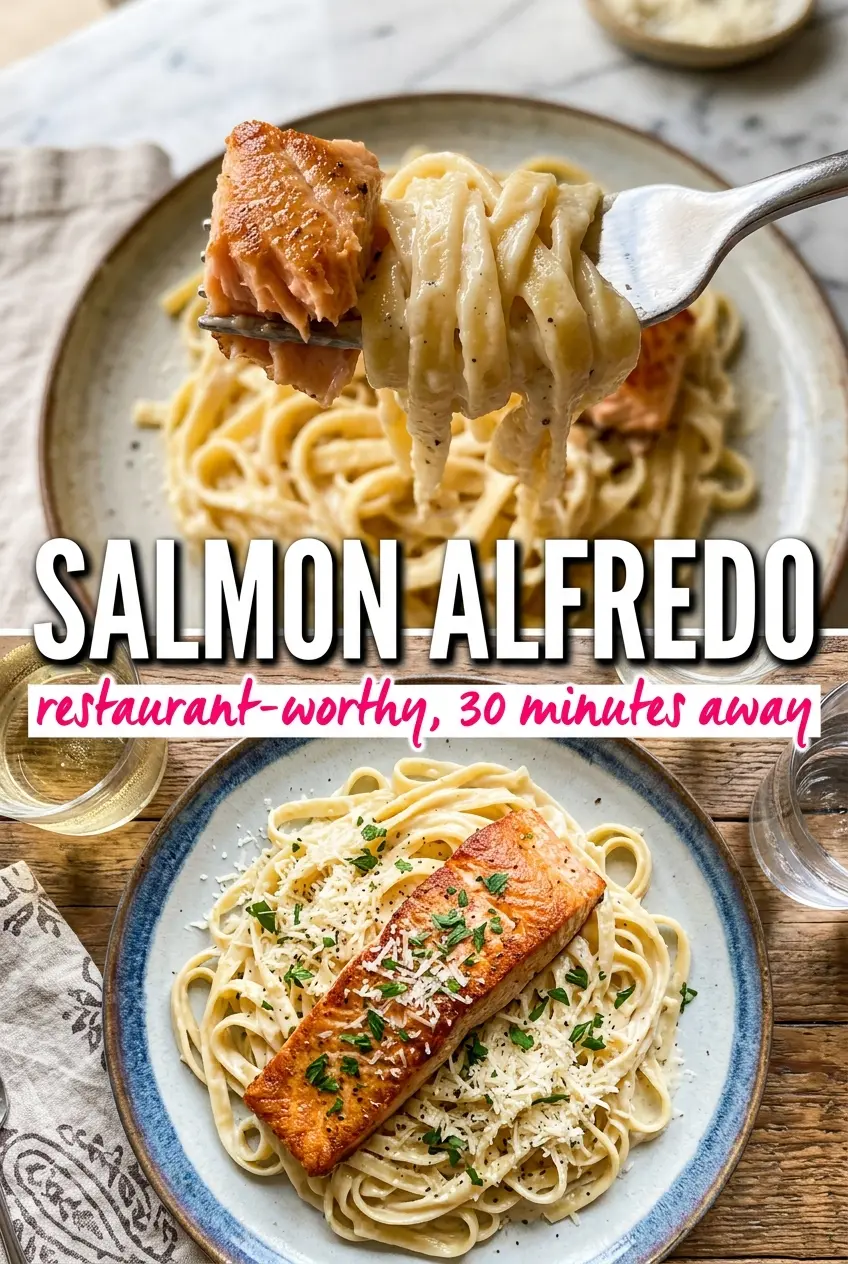
Flaky seared salmon over creamy Alfredo pasta hits the table looking like something from a restaurant, but the method is plain enough to pull off on a weeknight. The salmon stays crisp at the edges, the sauce clings to every strand of fettuccine, and the whole dish lands with that rich, garlicky comfort that makes people go quiet for a minute at the table.
What makes this version work is balance. The salmon gets its own hard sear first, so it brings color and texture instead of going soft in the sauce. Then the same skillet builds the Alfredo, which picks up the browned bits left behind from the fish. That little detail adds depth without making the sauce taste fishy or heavy. The reserved pasta water matters too; it loosens the sauce just enough to turn glossy instead of gluey.
Below, I’ll walk through the part that matters most: keeping the cream sauce smooth while the Parmesan melts in, plus the small timing trick that keeps the salmon tender instead of dry.
The salmon came out with a great crust and the Alfredo stayed silky instead of getting grainy. I used a splash of pasta water and it coated the fettuccine perfectly.
Save this Salmon Alfredo for the night you want a creamy pasta dinner with a proper sear on the fish and almost no cleanup.
The Salmon Needs a Real Sear Before It Meets the Sauce
With a dish like this, the biggest mistake is rushing the salmon into the cream. If the fish goes in pale or underseared, it softens in the sauce and the whole plate loses contrast. You want a deep golden crust on the outside and salmon that flakes cleanly at the thickest point, with the center still juicy.
Cooking the salmon first also keeps the Alfredo from turning muddy. The fish comes out of the pan, and the same skillet becomes the base for the sauce. That means the butter and garlic pick up the browned drippings instead of starting from scratch, which gives the Alfredo more character without any extra ingredients.
What Each Ingredient Is Actually Doing in This Dish
- Salmon fillets — Use fillets that are similar in thickness so they finish at the same time. Skin-on or skinless both work, but skin-on gives you a little more protection from overcooking. If your salmon is very thick, give it an extra minute on the first side and let the second side finish quickly.
- Fettuccine — This pasta earns its place because the wide ribbons catch the sauce instead of letting it slide off. You can swap in linguine or tagliatelle if that’s what you have. I wouldn’t use a delicate pasta here; it gets lost under the sauce and fish.
- Heavy cream — This is what keeps the Alfredo stable. Half-and-half can work in a pinch, but the sauce will be thinner and needs more attention so it doesn’t break. Don’t boil the cream hard; a gentle simmer is enough to thicken it and keep it smooth.
- Parmesan — Freshly grated Parmesan melts into a silky sauce. Pre-grated cheese often has anti-caking agents that make the sauce grainy. If you want the smoothest result, grate it yourself and add it off the highest heat once the cream is warm.
- Reserved pasta water — This is the quiet helper that makes the sauce cling. The starch in the water helps loosen the sauce without thinning its body. Add it a splash at a time after the pasta goes in, not before.
Build the Alfredo First, Then Finish With the Fish
Season and Sear the Salmon
Pat the salmon dry before seasoning it. Wet fish steams before it browns, and that’s how you lose the crust. Heat the olive oil until it shimmers, then lay the fillets in and leave them alone until they release cleanly from the pan. If they stick when you try to move them, they need another minute; forcing them tears the surface.
Cook the Pasta to the Right Stage
Boil the fettuccine in well-salted water until just tender, not soft. You want a little bite left because the pasta finishes in the sauce and will keep absorbing liquid. Pull out a half cup of the pasta water before you drain. Forgetting that step leaves you without the easiest way to adjust the sauce later.
Make the Sauce Gentle, Not Boiling
Melt the butter and cook the garlic just until fragrant, about 30 seconds. If the garlic browns, it turns bitter and that bitterness carries through the whole pan. Add the cream and keep the heat low enough that it barely simmers. Once the Parmesan goes in, whisk steadily until the sauce looks smooth and glossy instead of speckled or grainy.
Toss, Loosen, and Plate
Add the pasta to the sauce and toss until every strand is coated. If the sauce tightens up, add pasta water a spoonful at a time until it slides and clings at the same time. Season at the end, then plate the pasta and set the salmon on top. That keeps the fish from breaking apart in the pan while you’re stirring.
Three Ways to Make This Salmon Alfredo Work for Different Tables
Dairy-Free Version With a Different Kind of Richness
Use a full-fat unsweetened oat or cashew cream and a dairy-free Parmesan-style cheese. The sauce won’t taste exactly like classic Alfredo, but it still turns lush and clingy. Keep the heat low, because plant-based creams can separate if they boil hard.
Gluten-Free Without Changing the Method
Swap in your favorite gluten-free fettuccine and cook it just shy of the package timing if it tends to go soft. Some gluten-free pastas shed more starch, so the sauce may tighten faster. Keep a little extra pasta water nearby and add it gradually.
Lighter Salmon Alfredo With Less Cream
Replace half the cream with whole milk only if you’re willing to keep the sauce very gentle and serve it right away. You’ll get a thinner sauce and a less luxurious finish, but the salmon still carries the plate. This version works best when you don’t want the full richness of the classic dish.
Making It for Four Hungry People
Double the pasta and sauce, but sear the salmon in batches so the fillets brown instead of crowding into a steam bath. Crowding the pan drops the temperature fast and gives you gray fish instead of a crisp edge. Use the same skillet for the sauce after each batch, or wipe out only excess oil if there’s too much in the pan.
Storage and Reheating
- Refrigerator: Store leftovers in an airtight container for up to 2 days. The sauce will thicken as it chills and the salmon will lose a little of its crispness.
- Freezer: I don’t recommend freezing this dish. Cream sauces separate after thawing, and the salmon texture gets dry and chalky.
- Reheating: Warm gently in a skillet over low heat with a splash of milk or cream. Microwaving on high is the fastest way to split the sauce and overcook the salmon, so keep the heat low and stop as soon as everything is hot.
Answers to the Questions Worth Asking
Salmon Alfredo
Ingredients
Equipment
Method
- Cook the fettuccine in salted boiling water according to package directions. Reserve 1/2 cup pasta water before draining and set both aside.
- Season the salmon with half the kosher salt and black pepper. Heat 2 tbsp olive oil in a large skillet over medium-high heat, then sear for 4 minutes per side until golden and flaky, and set aside.
- In the same skillet, melt the butter over medium heat. Sauté the minced garlic for 30 seconds until fragrant.
- Pour in the heavy cream and bring to a gentle simmer. Whisk in the grated Parmesan until the sauce is smooth.
- Add the cooked pasta to the sauce and toss to coat. Thin with the reserved pasta water if needed, then season with the remaining kosher salt and black pepper.
- Plate the pasta and top each portion with the seared salmon. Garnish with fresh parsley and extra Parmesan before serving.