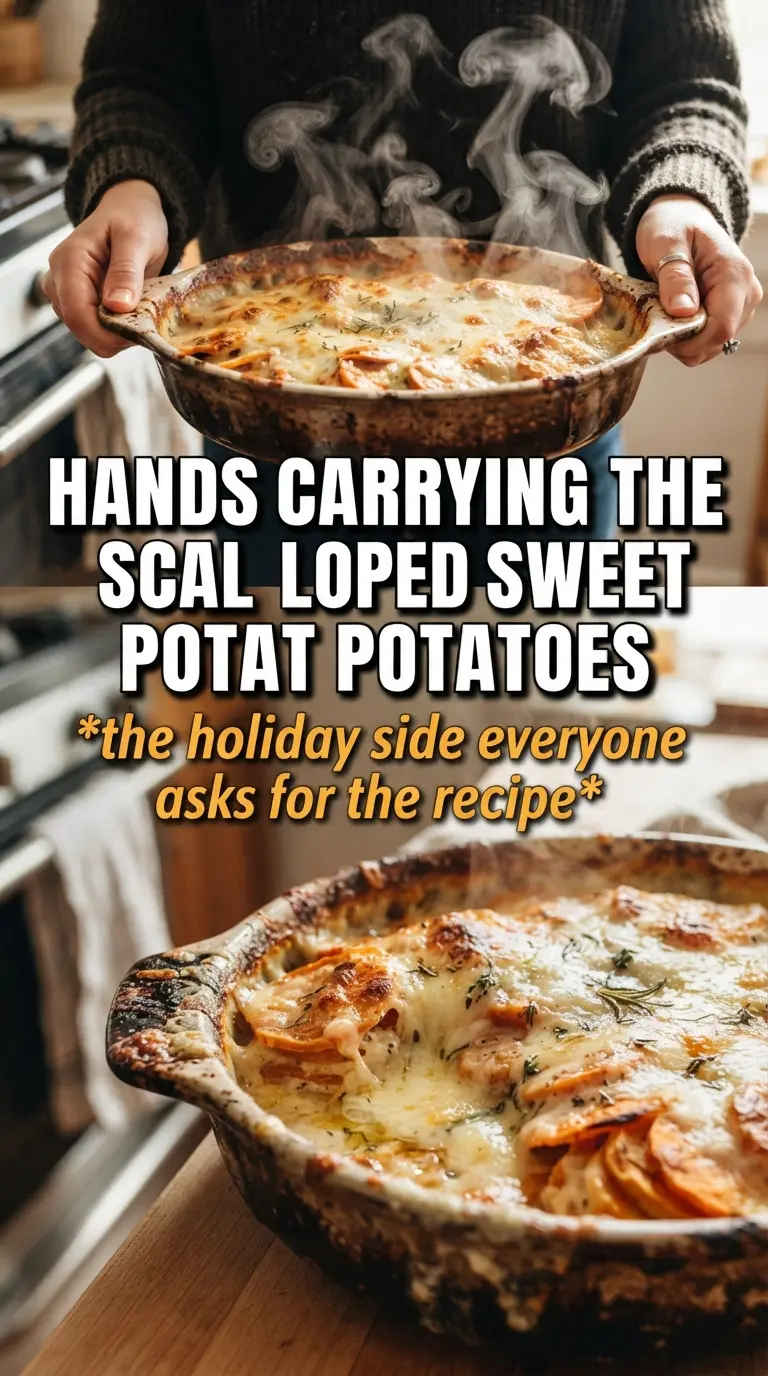
Soft, layered sweet potatoes and a bubbling Gruyere-parmesan top turn this casserole into the kind of side dish people keep going back to for one more spoonful. The slices cook in cream until they’re tender all the way through, while the maple, thyme, cinnamon, and nutmeg tuck warmth into every bite without pushing the dish into dessert territory. The finished edges caramelize just enough to give you that sweet-salty contrast that makes scalloped potatoes so hard to stop eating.
What makes this version work is the balance. Sweet potatoes need enough fat and liquid to soften without drying out, but not so much that the pan turns soupy. Thin, even slices matter here, and so does resting time after baking; that ten-minute pause lets the cream settle and thicken so the layers slice instead of slide.
Below, you’ll find the little details that keep the dish creamy, not watery, plus a few smart swaps if you need to work with what’s in your kitchen.
The sweet potatoes softened perfectly in the cream, and the Gruyere crust came out browned and bubbly without getting greasy. The maple and thyme gave it just enough depth that even the people who usually skip casserole had seconds.
Save these scalloped sweet potatoes for the next holiday table or Sunday roast — that golden Gruyere crust and maple-kissed edge make the whole dish worth repeating.
The Secret to Tender Layers Without a Watery Pan
The biggest mistake with scalloped sweet potatoes is crowding in thick slices and then drowning them in cream. Sweet potatoes are denser than Yukon Golds, so they need both a thin cut and enough bake time under foil to soften from the inside out. If the slices are too thick, the top browns before the center gives up that raw bite. If the cream mixture is too thin, the whole dish can split into liquid at the bottom and dry layers on top.
The fix is simple: slice the potatoes evenly and keep the cream mixture rich enough to coat, not flood. The maple syrup adds subtle sweetness, but it also helps the top brown, while the cheese goes on only after the potatoes are mostly tender. That keeps the crust from overcooking while the interior finishes.
- Evenly sliced sweet potatoes — Thin, uniform slices cook at the same rate, which keeps the casserole from having firm pockets in the middle. A mandoline helps, but a sharp knife works if you keep the slices consistent.
- Heavy cream and whole milk — The cream gives body, while the milk keeps the dish from feeling too heavy. Don’t swap in low-fat milk here; it can turn the sauce thin and less stable.
- Gruyere — This cheese melts smoothly and brings a nutty edge that suits sweet potatoes better than plain cheddar. If you need a substitute, use Swiss or fontina for a similar melt.
- Parmesan — Parmesan sharpens the top and helps the crust turn crisp instead of just soft and stringy. Grate it fresh if you can, because the pre-grated kind doesn’t melt as cleanly.
What Each Ingredient Is Actually Doing in This Recipe
- Primary ingredient (the star) — Quality matters most. Choose the best you can find.
- Cooking medium (oil, butter, or broth) — This carries flavors and prevents dryness.
- Seasonings (salt, pepper, spices, herbs) — Layer flavors so nothing overpowers. Build depth gradually.
- Aromatics (garlic, onion, herbs) — Cook with fat to bloom flavors. Become the foundation.
- Supporting ingredients — Complement the main ingredient without overpowering it.
- Sauce or liquid (if applicable) — Brings flavors together. Balance richness with acid.
- Acid (lemon, vinegar, wine, or other) — Brightens and prevents flat-tasting results.
- Final finish (garnish, glaze, or sauce) — Prevents one-dimensional taste and adds visual appeal.
Building the Creamy Base and Finishing the Crust
Whisk the Custard First
Combine the cream, milk, garlic, maple syrup, thyme, cinnamon, nutmeg, salt, and pepper before the potatoes go anywhere near the dish. You want the mixture evenly seasoned so every layer gets the same treatment. If you pour in the dairy first and season later, the bottom slices end up bland while the top tastes overworked.
Layer the Sweet Potatoes Tightly
Arrange the slices in overlapping rows so they cradle each other and soak up the cream evenly. Gaps create dry pockets, and loose layering makes the casserole collapse when you serve it. The dish should look packed but not jammed; the cream needs places to travel without floating everything apart.
Cover for the Long Bake
Tight foil is what steams the sweet potatoes until tender. If the foil is loose, moisture escapes and the top edge dries out before the center softens. After 40 minutes, a knife should slide through the layers with little resistance; if it catches hard, give it another 10 minutes before you uncover.
Finish with Cheese and Color
Once the potatoes are tender, uncover and add the Gruyere and parmesan. This is the point where you want bubbling edges and a deep golden top, not just melted cheese. Let the dish rest before serving so the cream thickens slightly and the slices hold together instead of flowing across the plate.
How to Adapt This for Different Tables and Different Kitchens
Dairy-Free Version With a Creamy Finish
Use full-fat canned coconut milk in place of the cream and milk, and swap the Gruyere and parmesan for a good melting dairy-free cheese. The texture will still be lush, but the flavor shifts a little sweeter, so keep the nutmeg and cinnamon restrained. This version works best when you want the same layered effect without dairy.
A More Savory Holiday Side
Cut the maple syrup to 1 tablespoon and add a little extra thyme with black pepper. That version leans less sweet and more earthy, which works well next to roast turkey, ham, or beef. You’ll still get caramelized edges, just with a sharper, more savory finish.
Make-Ahead Assembly for Easier Serving
Assemble the dish up to a day ahead, cover it tightly, and refrigerate before baking. Let it sit on the counter while the oven preheats so the pan isn’t ice-cold going in. You may need a few extra minutes under foil if it starts from the fridge.
Storage and Reheating
- Refrigerator: Store covered for up to 4 days. The sauce will thicken as it chills, and the top may soften a bit.
- Freezer: It freezes, but the texture is softer after thawing because the dairy can separate a little. Freeze in portions for best results and thaw overnight in the fridge.
- Reheating: Reheat covered in a 350F oven until hot in the center, then uncover for the last few minutes to bring back the top. The common mistake is blasting it in the microwave, which turns the potatoes rubbery and leaves the sauce uneven.
Answers to the Questions Worth Asking

Scalloped Sweet Potatoes
Ingredients
Equipment
Method
- Preheat the oven to 375F and butter a 9x13 baking dish.
- Whisk heavy cream, whole milk, garlic, maple syrup, fresh thyme, cinnamon, nutmeg, salt, and pepper until smooth.
- Layer the sweet potato slices in overlapping rows in the buttered dish.
- Pour the cream mixture evenly over the sweet potato layers.
- Cover tightly with foil and bake for 40 minutes.
- Uncover and scatter Gruyere and parmesan over the top.
- Bake 20-25 more minutes at 375F until the sweet potatoes are completely tender and the topping is golden and bubbly.
- Rest for 10 minutes before serving to let the layers set.