Clear broth, tender chicken, and noodles that stay soft without turning mushy make this slow cooker chicken noodle soup the kind of dinner people come back to all winter long. The broth picks up real body from the chicken thighs and vegetables, so it tastes cooked all day instead of tasting like broth plus add-ins.
The trick is building the soup in the slow cooker without adding the noodles too early. Egg noodles absorb liquid fast, and if they go in at the start, they’ll swell past the point where they still taste like noodles. Cooking them at the end keeps the broth light and the texture just right. Bone-in thighs also matter here because they give you more flavor than lean breast meat and stay juicy through a long cook.
Below, I’ll walk through the one timing detail that matters most, the ingredient choices that actually change the bowl, and a few ways to adjust this soup if you want to work with what’s already in the pantry.
The broth stayed clear and the noodles were still tender instead of falling apart. I added the pasta at the end like you said and it made all the difference — even the leftovers held up better than I expected.
Save this slow cooker chicken noodle soup for the nights when you want a clear, cozy broth and noodles that stay tender instead of bloated.
Why the Noodles Go in at the End, Not the Beginning
The most common mistake with slow cooker chicken noodle soup is treating the noodles like they can survive six hours in broth. They can’t. Egg noodles keep absorbing liquid until they break down, which leaves you with cloudy soup and a pot that eats more like porridge than broth with noodles.
Adding the noodles near the end solves two problems at once. You keep the broth clear, and you keep the texture of the pasta intact. The slow cooker can do the long work of softening the vegetables and cooking the chicken, but the noodles only need enough time to turn tender and pick up flavor from the soup.
One more thing matters here: bone-in chicken thighs. They hold up to the long cook and give the broth a deeper, rounder taste than boneless breast meat. If you use breast instead, the soup still works, but the chicken won’t shred quite as juicy.
What Each Ingredient Is Actually Doing in This Soup
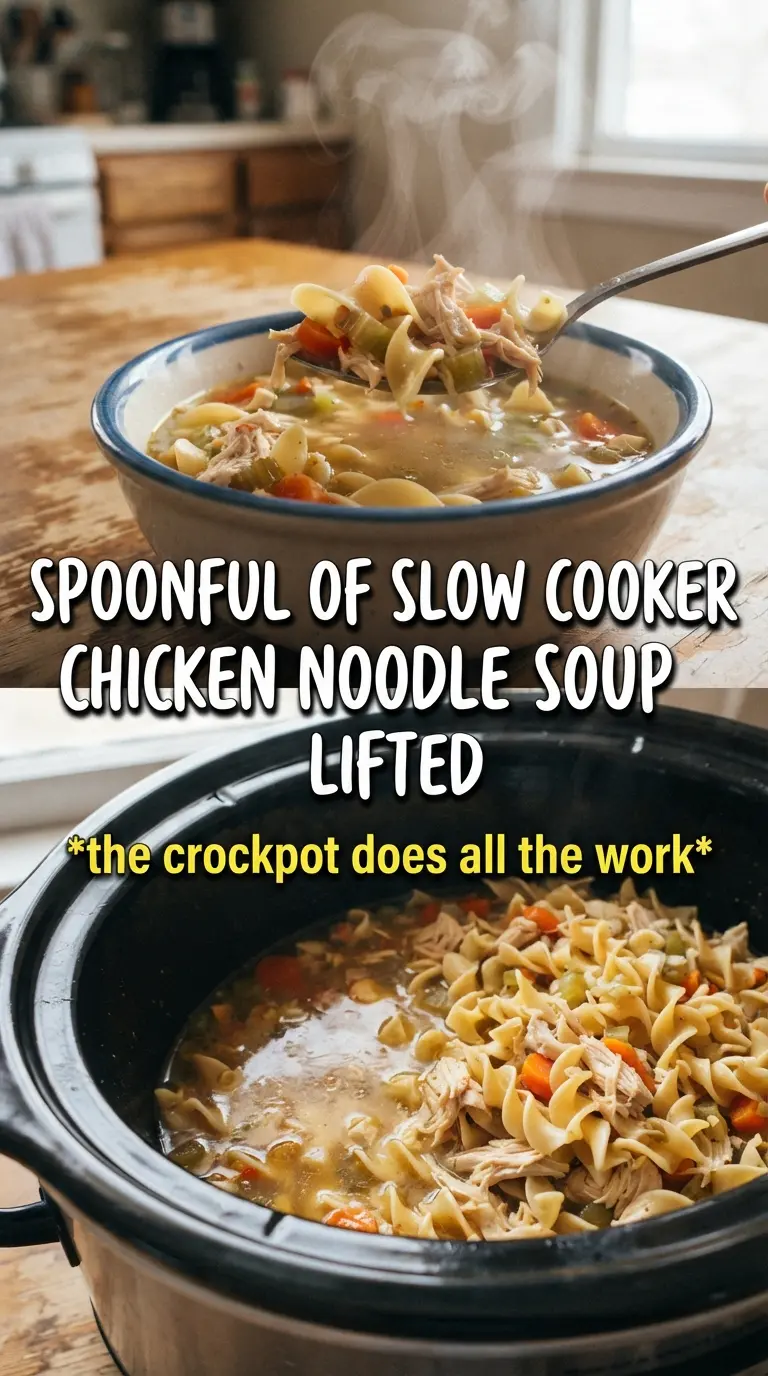
- Bone-in chicken thighs — These give the broth more body and better flavor than boneless chicken. The bones and darker meat stand up to the long cook, and the chicken stays moist enough to shred without turning stringy.
- Carrots, celery, and onion — This is the base that makes the soup taste like chicken noodle soup instead of chicken broth with pasta. Slice the vegetables evenly so they soften at the same pace and don’t leave you with half-melted onion and firm carrot coins.
- Garlic, thyme, dill, garlic powder, and onion powder — The fresh garlic and dried herbs build the savory backbone. Dill is especially important here; it gives the soup that classic bright finish, while the powdered seasonings reinforce the savory flavor in a way fresh aromatics alone won’t.
- Egg noodles — These are best added at the end because they cook fast and keep soaking up liquid even after they’re tender. If you only have a different pasta shape, use a small one and start checking early so it doesn’t overcook.
- Chicken broth — Use a broth you’d actually sip. Since the soup doesn’t rely on a roux or cream, the broth flavor is front and center the whole time.
Building the Soup So the Broth Stays Clear and the Chicken Stays Tender
Loading the Slow Cooker
Put the chicken thighs in first, then scatter the carrots, celery, onion, and garlic over the top. Pour the broth in last so the seasonings distribute evenly as the liquid settles around the ingredients. If the vegetables are piled too high above the liquid, they’ll steam unevenly, so press them down gently with a spoon.
Letting the Slow Cooker Do the Work
Cook on Low for 6 to 8 hours for the most tender chicken and the best broth flavor. High works when you’re short on time, but the low setting gives the vegetables time to soften without falling apart. The soup is ready for the next stage when the chicken shreds easily and the carrots are tender all the way through.
Shredding and Finishing with Noodles
Lift out the chicken, discard the skin and bones, and shred the meat into bite-size pieces. Pull the bay leaves out before they get buried in the soup, then return the chicken to the pot. Add the egg noodles last and cook just until they’re tender, checking early so they don’t go from soft to swollen in a hurry.
Seasoning at the End
Salt matters most after the noodles go in, because they dilute the broth a little as they cook. Taste the soup after the noodles are tender and season in stages until the broth tastes full and clean, not flat. Fresh dill or parsley on top gives the bowl a brighter finish right before serving.
How to Adapt This for the Pantry You Have on Hand
Gluten-Free Version
Swap the egg noodles for a gluten-free pasta that holds shape well, and add it only near the end. Gluten-free pasta can soften faster than wheat noodles, so start checking a few minutes early. The broth and chicken stay the same, but the texture is a little more delicate.
Using Chicken Breasts Instead of Thighs
Boneless chicken breasts work if that’s what you have, but they need less time. Pull them out as soon as they’re cooked through and shred them before they dry out. The broth will still be good, though it won’t have the same richness that thighs bring.
Extra Veggie Version
Add sliced mushrooms, peas, or chopped spinach near the end so they keep some texture and color. Mushrooms can go in earlier if you want them to melt into the broth, but peas and spinach only need a few minutes. This is an easy way to bulk up the soup without changing the base flavor.
Storage and Reheating
- Refrigerator: Store leftovers for up to 4 days. The noodles will continue to soften, so the soup gets thicker by day two.
- Freezer: Freeze the soup without the noodles for the best texture. Add fresh noodles after thawing and reheating, since frozen pasta turns mushy.
- Reheating: Warm it gently on the stove over medium-low heat until steaming. High heat can break the noodles apart and make the broth cloudy, so heat slowly and add a splash of broth if needed.
Questions I Get Asked About This Recipe
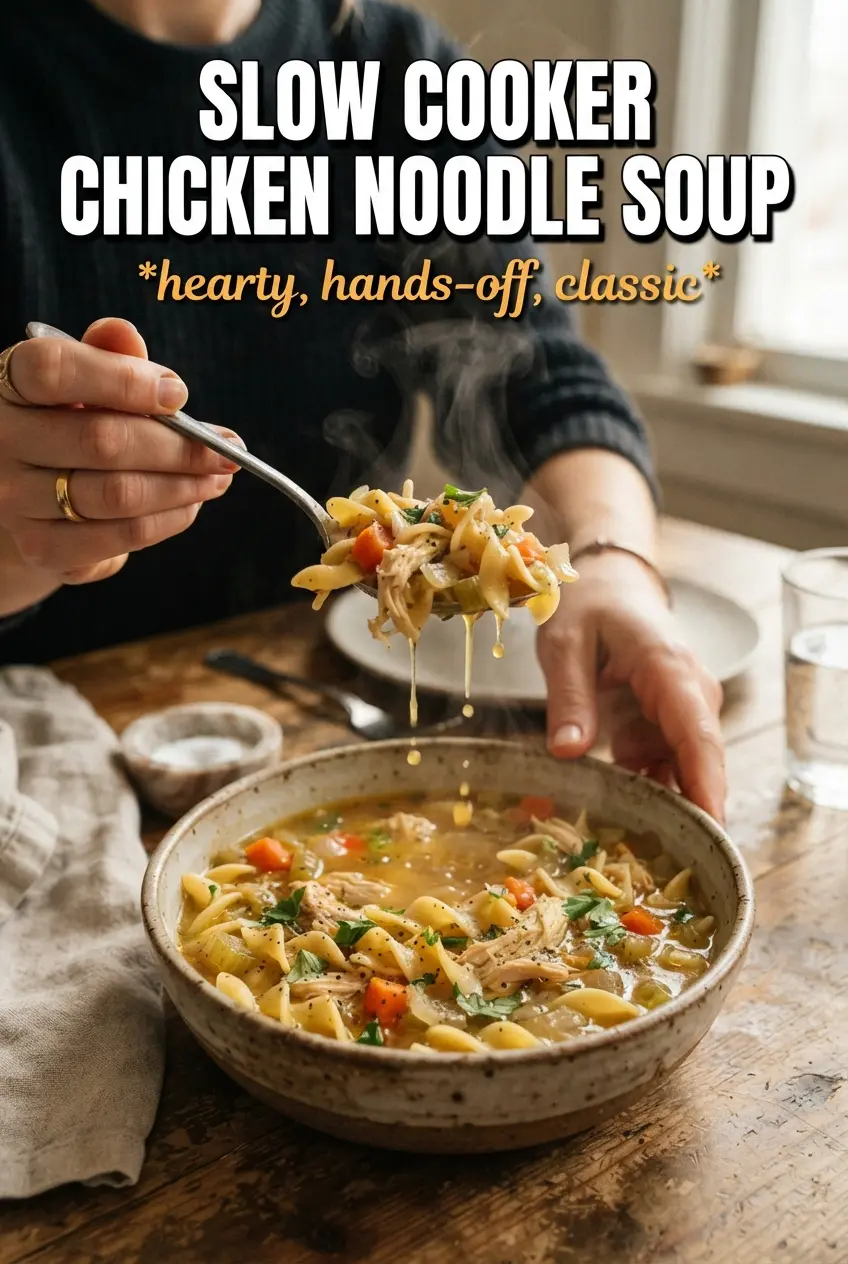
Slow Cooker Chicken Noodle Soup
Ingredients
Equipment
Method
- Place the chicken thighs in the Crockpot, then add the carrots, celery, onion, and garlic.
- Add the chicken broth, dried thyme, dried dill, bay leaves, garlic powder, and onion powder to the Crockpot.
- Cook on Low for 6-8 hours until the chicken is tender and easily pulls apart, with a steady simmer throughout.
- Remove the chicken, discard the skin and bones, and shred the meat.
- Remove the bay leaves from the soup, then return the shredded chicken to the slow cooker.
- Add the egg noodles and cook on High for 20-30 minutes until tender, stirring once halfway for even cooking.
- Season generously with salt and pepper, then garnish with fresh dill.