Slow cooker butter chicken turns out best when the chicken goes from firm to spoon-tender in a sauce that tastes like it simmered all day on the stove. The tomatoes, garam masala, ginger, and butter melt together into a deep orange-red base, and the long cook time softens the onion until it disappears into the sauce instead of sitting there in pieces. What you get at the end is rich, fragrant, and balanced enough to pile over rice without feeling heavy.
The trick is treating the slow cooker like a gentle braise, not a place to dump everything and hope for the best. Tomato paste needs time to lose its sharp edge, the spices need enough heat to bloom, and the cream or coconut milk belongs at the end so it stays silky instead of cooking down into something dull. Chicken thighs are the right cut here because they hold up to the long simmer and stay juicy even after shredding.
Below, I walk through the small decisions that keep this dish creamy instead of muddy and give you a few ways to adapt it without losing the character of the sauce.
The sauce was silky and the chicken shredded right into it after 6 hours on low. I added the cream at the end like you said and it stayed smooth instead of getting greasy.
Save this slow cooker butter chicken for a creamy dinner that builds deep flavor while the slow cooker does the work.
The Creamy Finish Depends on When You Add It
Butter chicken gets ruined most often by rushing the dairy. If you add cream or coconut milk at the start, it spends hours cooking down and can lose its clean, silky texture. The sauce still tastes good, but it turns flatter and sometimes a little oily. Adding the rich element at the end keeps the sauce bright, smooth, and glossy.
Another thing that matters here is the size of the chicken pieces. Boneless thighs hold up better than breast meat because they can sit in the cooker long enough to become tender without drying out. By the time you shred them, they should fall apart with almost no effort, and that shredded texture helps the sauce cling to every bite.
- Chicken thighs — These stay juicy through the long cook and shred cleanly into the sauce. Chicken breast will work, but it needs less time and can turn dry if you walk away from it too long.
- Garam masala — This is the backbone of the dish, not a garnish spice. Use a fresh jar if you can, because old garam masala tastes dusty instead of warm and aromatic.
- Tomato paste — This adds depth and gives the sauce that rounded, restaurant-style body. Cooking it with the other ingredients in the slow cooker is fine, but don’t skip it or the sauce tastes thin.
- Coconut milk or heavy cream — Coconut milk gives a slightly lighter finish and keeps the dish dairy-free. Heavy cream makes the sauce taste richer and more classic, but it should go in only after the chicken is done.
What Each Ingredient Is Actually Doing in This Recipe

- Primary ingredient (the star) — Quality matters most. Choose the best you can find.
- Cooking medium (oil, butter, or broth) — This carries flavors and prevents dryness.
- Seasonings (salt, pepper, spices, herbs) — Layer flavors so nothing overpowers. Build depth gradually.
- Aromatics (garlic, onion, herbs) — Cook with fat to bloom flavors. Become the foundation.
- Supporting ingredients — Complement the main ingredient without overpowering it.
- Sauce or liquid (if applicable) — Brings flavors together. Balance richness with acid.
- Acid (lemon, vinegar, wine, or other) — Brightens and prevents flat-tasting results.
- Final finish (garnish, glaze, or sauce) — Prevents one-dimensional taste and adds visual appeal.
Building the Sauce So It Stays Rich, Not Muddy
Let the Onions Melt Into the Base
The onion, garlic, and ginger need the full cook time to soften into the tomato base. When they’re done, you shouldn’t see sharp raw pieces floating around; they should mostly disappear into the sauce. If your onion is still crunchy at the end, it was cut too large or the cooker ran too cool. Dice it small so it breaks down cleanly.
Use the Slow Cooker for Tenderness, Not Browning
This dish doesn’t need a sear before it goes in. The goal is soft, braised chicken that absorbs the spices while it cooks in the sauce. Stir everything well at the start so the tomato paste and spices aren’t sitting in one dry clump on top of the chicken. You’re looking for a thick, rust-colored sauce around the meat before the lid goes on.
Finish With the Dairy and Give It Time to Tighten
Once the chicken is shredded, stir in the cream or coconut milk and let the sauce cook a little longer on high. That short finish helps everything come together without boiling the dairy too hard. If the sauce looks a little loose at first, that’s normal; it thickens as it heats through and settles. Salt it at the end so you can taste the actual balance instead of guessing before the sauce has finished changing.
What to Change When You Want a Different Kind of Butter Chicken
Dairy-Free Without Losing the Creamy Texture
Use full-fat coconut milk instead of heavy cream. It gives the sauce body and a little sweetness, which works well with the spices, though it won’t taste exactly like the classic dairy version. If you want a more neutral finish, add the coconut milk slowly and stop as soon as the sauce looks glossy.
Lower-Carb Serving Ideas
Serve the chicken over cauliflower rice instead of basmati rice. You still get the sauce and the full spice profile, but the meal feels lighter and keeps the carbs lower. The one thing you lose is the way basmati catches the sauce, so spoon a little extra sauce over the top.
If You Need It Milder
Cut the chili powder in half and keep the garam masala the same. That keeps the warm spice flavor intact without making the dish hot. If you go too far and remove the chili completely, the sauce can taste flat, so leave at least a small amount in place.
Storage and Reheating
- Refrigerator: Store in an airtight container for up to 4 days. The sauce thickens as it chills, and the spices taste even deeper the next day.
- Freezer: It freezes well for up to 2 months. Cool it completely first, then freeze in portioned containers; coconut milk holds up a little better than cream after thawing.
- Reheating: Warm gently on the stove or in the microwave at medium power, adding a splash of water or cream if the sauce seems too thick. High heat can make the dairy separate, so heat it slowly until it loosens again.
Answers to the Questions Worth Asking
The Process in the Crockpot
Place the chicken thighs in the slow cooker with the crushed tomatoes, onion, garlic, ginger, butter, tomato paste, garam masala, cumin, turmeric, chili powder, and coriander. Stir well so the spices are distributed through the sauce instead of sitting on top in a dry layer. The mixture will look thick and a little rough at first, and that’s fine.
Cook on Low for 5 to 6 hours or High for about 3 hours, until the chicken is very tender and pulls apart easily. If you cook it too long on high, the chicken can lose some moisture, so low and slow is the safer path here. Shred the chicken right in the sauce with two forks so every piece gets coated.
Stir in the coconut milk or heavy cream, then cook on High for 20 to 30 minutes until the sauce turns rich and creamy. Taste and add salt at the end, because the dairy softens the spice and changes the balance. Serve over basmati rice with naan and finish with fresh cilantro for that clean, bright contrast at the top.
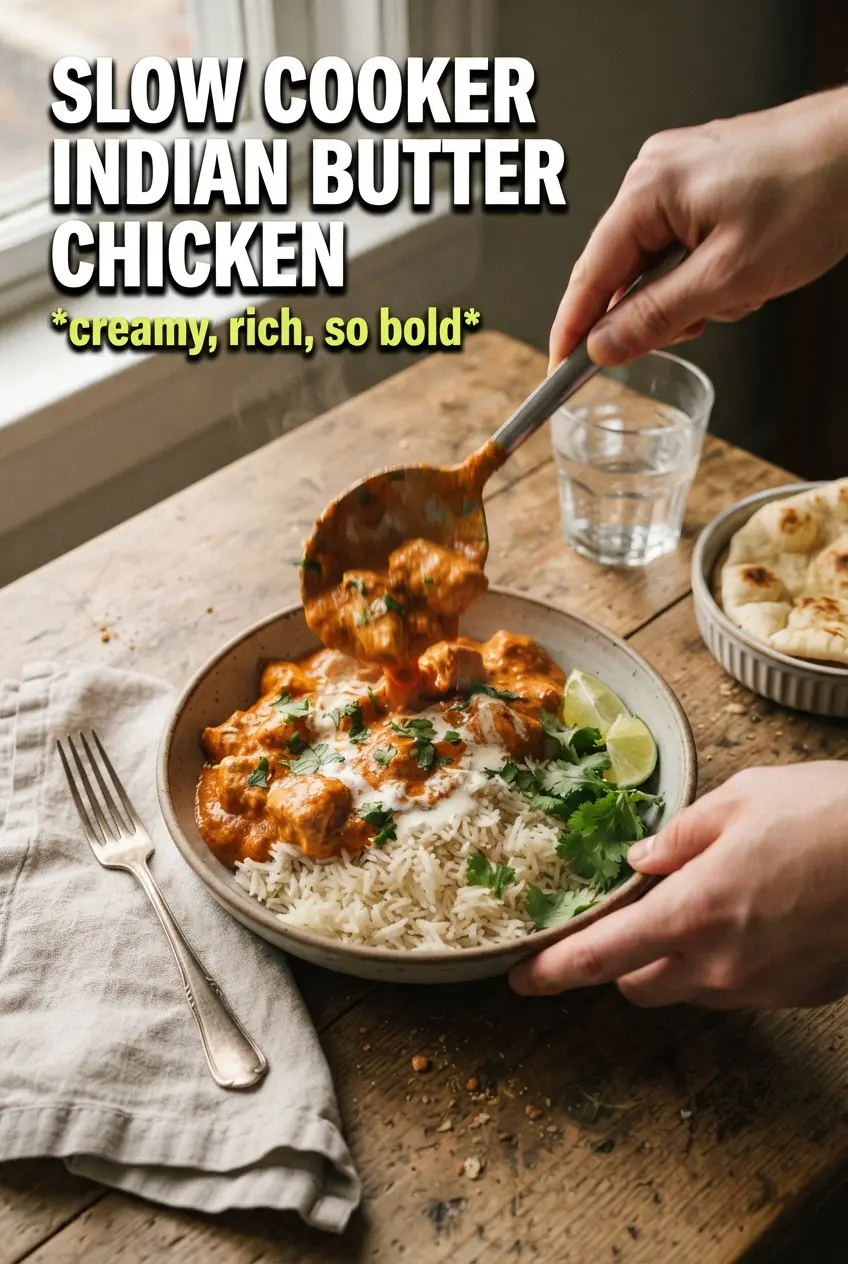
Slow Cooker Indian Butter Chicken
Ingredients
Equipment
Method
- Place the chicken thighs in the crockpot. Add crushed tomatoes, diced onion, minced garlic, grated ginger, butter, tomato paste, garam masala, cumin, turmeric, chili powder, and coriander, then stir until everything is evenly coated and no dry spice pockets remain.
- Cook on Low for 5-6 hours or on High for 3 hours, until the chicken is very tender and easily pulls apart. Keep the lid closed to maintain steady heat throughout cooking.
- Shred the chicken in the sauce using two forks, then stir to distribute it throughout the orange-red base. Make sure the chicken is coated and the mixture looks thick and cohesive.
- Stir in the coconut milk or heavy cream, then cook on High for 20-30 minutes until the sauce is rich and creamy. Watch for a smooth consistency and a glossy sheen in the sauce.
- Season with salt to taste and stir again so the flavor is balanced. Taste and adjust before serving.
- Serve the butter chicken over basmati rice with naan and garnish with fresh cilantro. Spoon extra sauce on top so the rice stays moist and flavorful.