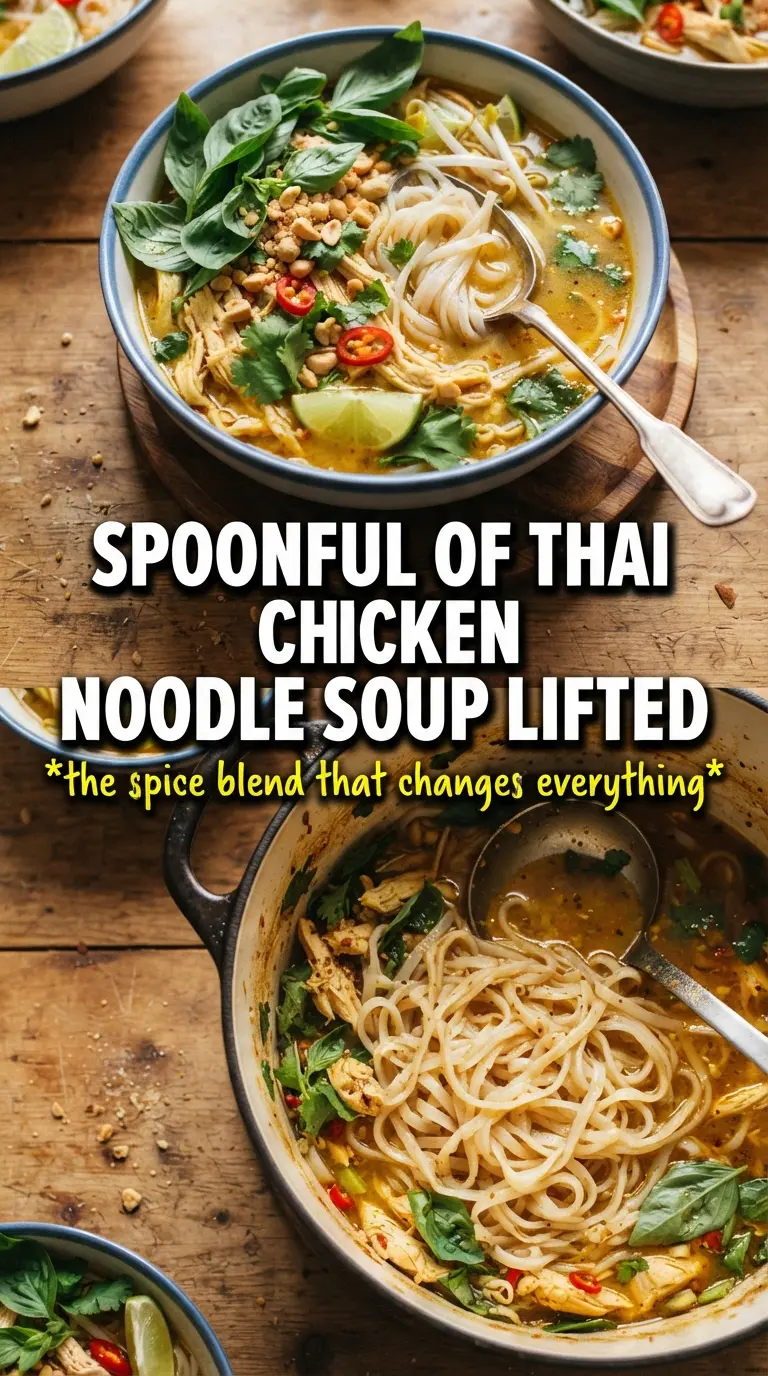
Silky coconut broth, tender chicken, and slippery rice noodles come together in a bowl that tastes like it took a lot more effort than it did. The broth is bright from lime and fish sauce, deepened with red curry paste, and rounded out by coconut milk so it lands rich without feeling heavy. Every spoonful gets a little crunch from bean sprouts and a hit of fresh herbs right at the end.
What makes this version work is the layering. The curry paste goes into the pot first, so it has a chance to bloom in oil before any liquid gets added. That step wakes up the spices and gives the soup its color and backbone. The noodles are soaked separately and added at the end, which keeps them from turning gummy in the broth. If you’ve ever had noodle soup collapse into a starchy bowl after sitting for a few minutes, that’s the detail that changes everything.
Below you’ll find the timing that keeps the chicken tender, the ingredient swaps that still keep the broth balanced, and the fixes I use when I want the soup a little richer, a little lighter, or a little sharper.
The curry paste bloomed beautifully in the oil, and the noodles stayed tender instead of turning mushy. I added extra lime at the table and my husband asked if I could put this in the weekly rotation.
Save this Thai Chicken Noodle Soup for the nights when you want a coconut-curry broth, tender chicken, and fresh herbs in one bowl.
The Trick to Keeping Thai Curry Soup Bright Instead of Flat
The most common mistake in a soup like this is letting the broth taste heavy instead of lively. Coconut milk brings body, but it also mutes seasoning if you stop there. That’s why the lime juice, fish sauce, and a little brown sugar matter together: salt, acid, and sweetness keep the curry from tasting one-note.
The other place people lose the dish is with the chicken. Thin slices cook quickly and stay tender, but they need a gentle simmer, not a hard boil. If the broth is bubbling aggressively when the chicken goes in, the meat tightens up and the noodles don’t get a chance to stay elegant.
What Each Ingredient Is Actually Doing in This Soup
- Red curry paste — This is the backbone of the soup. Frying it briefly in oil deepens the flavor and removes the raw, paste-like edge. Different brands vary a lot, so if yours is mild, you may want a touch more paste or extra chili on top.
- Coconut milk — Full-fat coconut milk gives the broth its body and silky finish. Light coconut milk works in a pinch, but the soup will taste thinner and less luxurious. Shake the can well before opening so the cream and liquid don’t stay separated.
- Fish sauce — This adds salt and depth in a way plain salt can’t. It shouldn’t taste fishy in the finished soup; it should taste round and savory. If you need a substitute, use soy sauce, but the broth will lose some of that Thai-style complexity.
- Lemongrass and galangal — These infuse the broth with that clean, citrusy Thai aroma. Bruising the lemongrass helps it release flavor, and keeping the pieces large makes them easy to remove later. Fresh ginger can stand in for galangal, though it tastes warmer and less floral.
- Rice noodles — Soaking them first keeps them from overcooking once they hit the hot broth. If they sit too long in the soup, they’ll keep soaking up liquid and turn soft fast. Add them only after the chicken is done.
- Fresh herbs and bean sprouts — These finish the soup with crunch and lift. Don’t cook them into the broth; they’re there to keep each bowl tasting fresh and bright.
Building the Broth, Then Adding the Noodles at the Right Moment
Blooming the Curry Paste
Heat the oil first, then stir in the red curry paste and let it sizzle for a minute or two until it smells fragrant and the oil starts to turn red-orange. That brief fry is what gives the broth its depth. If you skip it and dump the paste straight into liquid, the flavor stays sharp and a little raw instead of rounded.
Infusing the Aromatics
Add the garlic, bruised lemongrass, and galangal or ginger after the paste has bloomed. Stir them just until the garlic smells sweet and the pot smells vivid and spicy. If the garlic starts browning, lower the heat right away; burned garlic makes the broth bitter.
Simmering the Chicken Gently
Pour in the coconut milk and broth, then season with fish sauce, lime juice, and brown sugar before adding the chicken. Let the soup simmer, not boil, so the chicken cooks through without turning stringy. Thin slices usually need about 8 to 10 minutes, and they’re done when they’re opaque all the way through and no longer pink in the center.
Finishing With Noodles and Fresh Toppings
Pull out the lemongrass and galangal before the noodles go in. Add the drained rice noodles at the very end and heat them just until they’re tender and warmed through. Serve right away with bean sprouts, green onions, Thai basil, cilantro, lime wedges, and sliced chili so each person can build the bowl they want.
How to Adapt This for a Lighter, Spicier, or Dairy-Free Bowl
Dairy-Free and Naturally Gluten-Free
This soup already fits both of those needs as written, as long as your curry paste and fish sauce are gluten-free brands. Coconut milk gives the broth all the richness it needs, so there’s no dairy tradeoff to manage.
Use Chicken Thighs for a Deeper, Softer Bowl
Chicken thighs stay juicier and give the soup a little more body. Breast meat works well too, but it dries out faster if the broth boils hard or the chicken sits too long. If you want the most forgiving version, thighs are the better choice.
Make It Vegetarian
Swap the chicken broth for vegetable broth and replace the chicken with tofu, mushrooms, or both. You’ll lose a little of the savory backbone from the meat, so taste the broth at the end and add a bit more curry paste or soy sauce if it needs extra depth.
Turn Up the Heat Without Breaking the Balance
Add sliced red chili to the broth or use a hotter curry paste, then finish with fresh chili at the table. The key is keeping the lime and sugar in place; heat without acid and sweetness tastes blunt instead of layered.
Storage and Reheating
- Refrigerator: Store the soup for up to 4 days, but keep in mind the noodles will continue to soften.
- Freezer: Freeze the broth and chicken without the noodles for best texture. Rice noodles don’t freeze well once they’ve been mixed into the soup.
- Reheating: Reheat the broth gently over medium-low heat until hot, then add fresh or separately cooked noodles. Boiling the soup hard will tighten the chicken and make the coconut milk taste dull.
Answers to the Questions Worth Asking
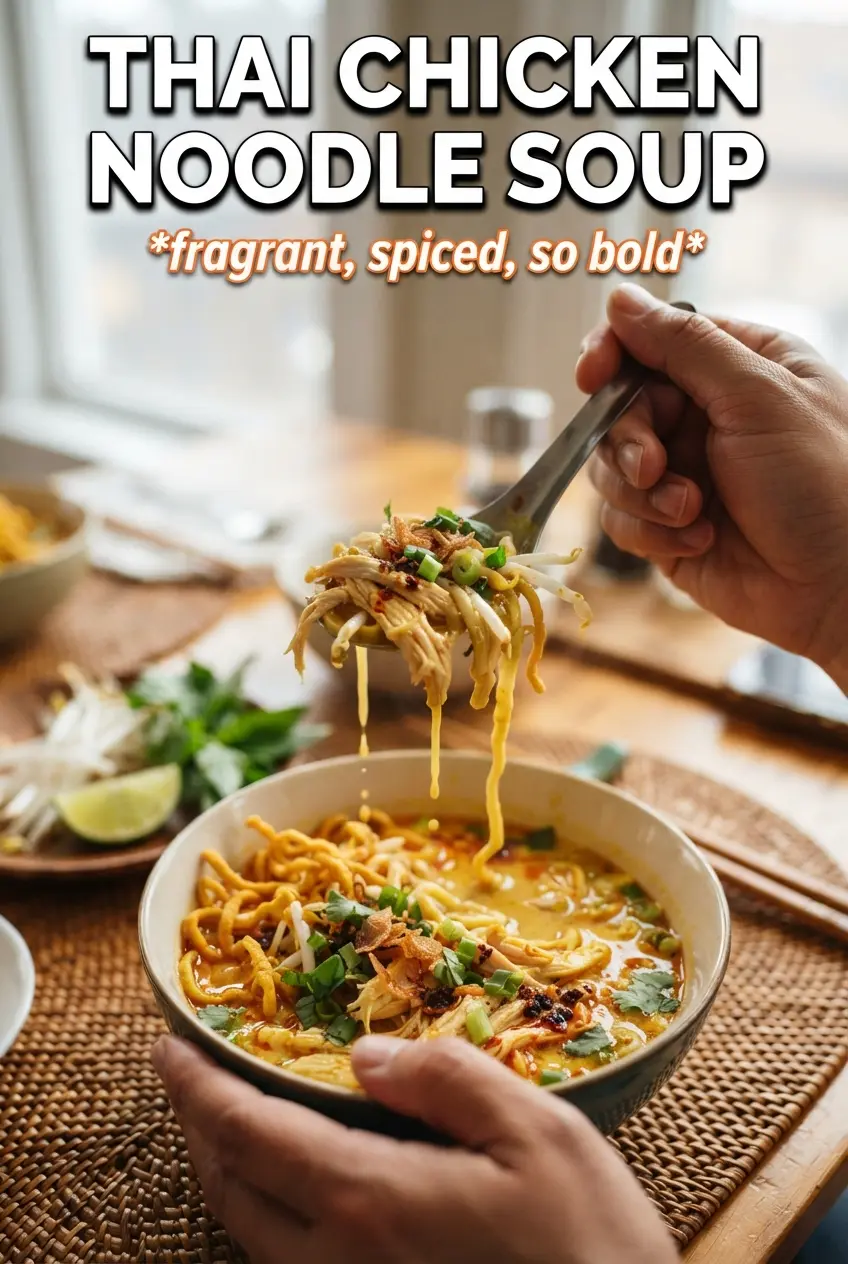
Thai Chicken Noodle Soup
Ingredients
Equipment
Method
- Soak rice noodles in warm water for 15 minutes, then drain and set aside for later heating.
- Heat 1 tablespoon oil in a large pot, then cook red curry paste for 1-2 minutes until fragrant, stirring constantly.
- Add minced garlic, bruised lemongrass, and galangal or ginger; cook for 1 minute to release aroma.
- Pour in coconut milk and chicken broth, then add fish sauce, lime juice, and brown sugar, stirring until combined.
- Simmer the broth for 10 minutes, then add sliced chicken and continue simmering for 8-10 minutes until cooked through, keeping the heat at a gentle simmer.
- Remove the lemongrass and galangal or ginger, then add the drained rice noodles and heat through for 2-3 minutes until tender.
- Serve immediately and top with bean sprouts, green onions, fresh Thai basil, cilantro, lime wedges, and sliced red chili.